China's Huawei Proposes Agentic MBB, Projecting 900 Billion Agents by 2035
en.Wedoany.com Reported - During a wireless analyst and media roundtable at the 2026 Mobile World Congress Shanghai, Huawei elaborated on its vision for Agentic MBB (Mobile Broadband). Eric Zhao, Vice President and Chief Marketing Officer of Huawei's Wireless Network Solutions, believes the wireless communications industry is undergoing a fundamental shift from pure data transmission to intelligent value distribution, with telecom networks entering a new era of evolution driven by the widespread integration of artificial intelligence (AI).
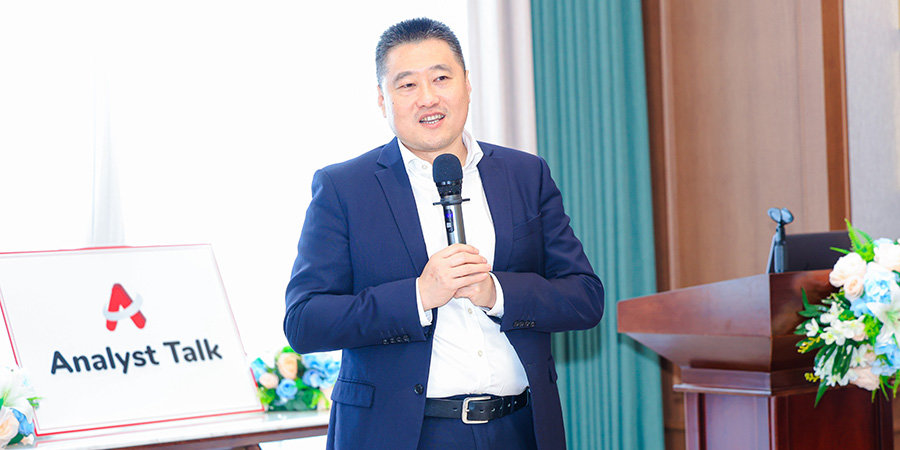
Zhao reviewed the history of early wireless communications built around voice and mobile core networks, as well as the transition from circuit-switched to packet-switched networks in the 3G and 4G eras. In the AI era, information collection will shift from traditional search to a combination of multimodal input and cloud-based AI reasoning. AI terminals will increasingly rely on diverse input methods such as cameras and voice, pushing devices beyond traditional touch interaction. The cloud has become a production center for tokens and intelligence, while the device side has diversified into AI entry terminals. This transformation imposes new requirements on network breadth, density, and quality. Huawei predicts that the number of agents will surge dramatically in the future, ultimately reaching 900 billion by 2035. Zhao noted that compared to the current situation where less than 1% of people are connected, the scale of connections will see significant growth, and the data flowing through the network will not only be information but also tokens processed through reasoning, making uplink/downlink capacity and network latency key requirements.
To achieve higher network productivity, Huawei has been gradually implementing a multi-layered AI integration strategy since 2024, focusing on network intelligence, network element intelligence, and service intelligence. At the network layer, Huawei's "Intelligent RAN, AI Everywhere" initiative integrates AI-enhanced emergency response into operations, maintenance, and energy efficiency. By introducing AI into network management, Huawei has managed over 1 million cells spanning 200,000 sites. The AI triangle concept introduced in 2025 covers AI effectiveness, AI reliability, and AI cost, guiding the integration of AI with network resources. The current roadmap has advanced to service-level AI, enabling operators to open network capabilities and create new services. At the network element layer, Huawei improves spectral efficiency through resource management, channel estimation, and beamforming, leveraging intelligent algorithms to enhance base stations. AI algorithms are integrated into traditional resource management, channel communication, and air interface management modes, ultimately boosting capacity and user experience. Three digital twin layers—device, network, and physical environment—are integrated into a unified twin system, transforming base stations into fully digital sites equipped with intelligent optical module monitoring and dynamic antenna units. Zhao explained that twin data makes AI reasoning more reliable, helping to address issues such as AI hallucinations and interpretability.
At the overall network layer, large models and dedicated computing power drive full autonomy. Network agents possess multiple skills, coordinated by a unified agent through the A2A-T interface to achieve intent-driven autonomous governance, enabling the network to intelligently identify problems, allocate resources, and perform self-maintenance. AI leverages spatial and temporal data overlay for precise network capacity estimation, generating detailed service capability maps. Based on 5G-Advanced large bandwidth, Huawei introduced the X-fold concept, providing baseline services for basic users and multiplier service levels for premium users. Dynamic slicing supports the allocation of dedicated service slices from the network, with resource allocation dynamically adjusted based on AI predictions of customer service conditions and network resource availability in the next moment. Operators can offer tiered packages, including basic data, X-fold options, and dedicated dynamic slices, to maximize network resource utilization. At the core network level, Huawei introduced Agentic Core, integrating AI computing, storage, and models, and adding an AI plane to core network interfaces. This core is supported by a new network element, the AI Service Function (AISF), designed to facilitate cross-domain management. New services enabled include AI-driven anti-fraud, call confidentiality, noise reduction, and dedicated secure private links.
Huawei's vision for Agentic MBB positions mobile communication networks as proactive intelligent entities rather than passive pipes. At the base station layer, AI algorithms enhance spectral efficiency and energy efficiency; at the network management layer, AI provides optimal resource allocation, autonomous maintenance, and enhanced user experience; at the service platform layer, AI launches new services and sustains existing ones, achieving comprehensive commercial capabilities for operators. Zhao concluded that these three layers are considered the intelligent layers of the AI era, collectively referred to as Agentic MBB, with the goal that each layer will distribute AI in the future, improving network efficiency and quality, and ultimately maximizing operators' commercial capabilities.
Related Products



MUX Series Communication Interface Device for Security and Stability Control System
Nanjing NR Electric Co., Ltd.
Industrial and Commercial Point-Type Gas Detector
Jinan Benan Technology Development Co., Ltd.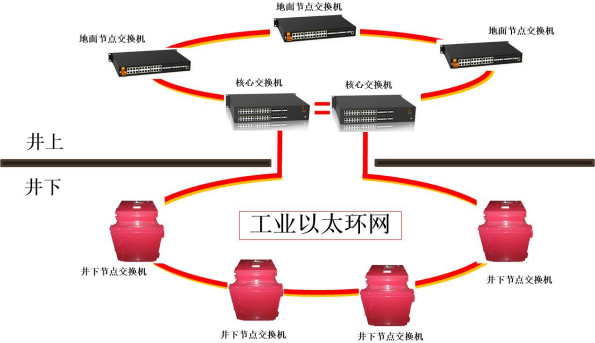
Mine Explosion-proof and Intrinsically Safe Industrial Ethernet Ring Network (10 Gigabit/Gigabit)
Chongqing Mas Sci&Tech Co., Ltd.
Automatic Aiming Laser Remote Obstacle Removal Robot
Pinggao Group Weihai High-Voltage Apparatus Co., Ltd.
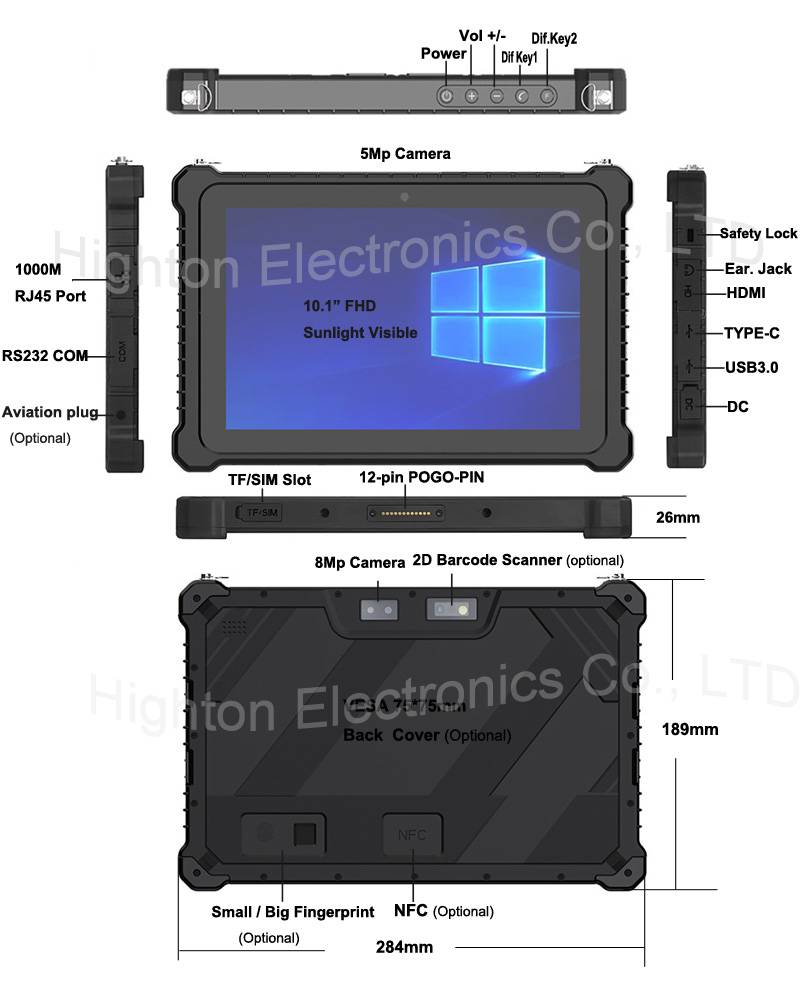
Hot Selling 10 Inch Intel N5100 I5 I7 FHD 8 +128GB 16+256GB Win10 Pro Win11 Pro 4G 5G Rugged Tablet PC Pad with NFC Barcode
Highton Electronics Co., Ltd.
Comprehensive Mining Automation Control System
Beijing Tianma Intelligent Control Technology Co., Ltd.