en.Wedoany.com Reported - French company TDF has recently launched a new round of 5G broadcast field experiments covering the areas around Paris, Reims, Bourges, and Le Havre. This technology allows smartphones to watch live TV without a SIM card, Wi-Fi, or any data consumption. However, the first compatible consumer smartphones are not expected to be available until 2027.
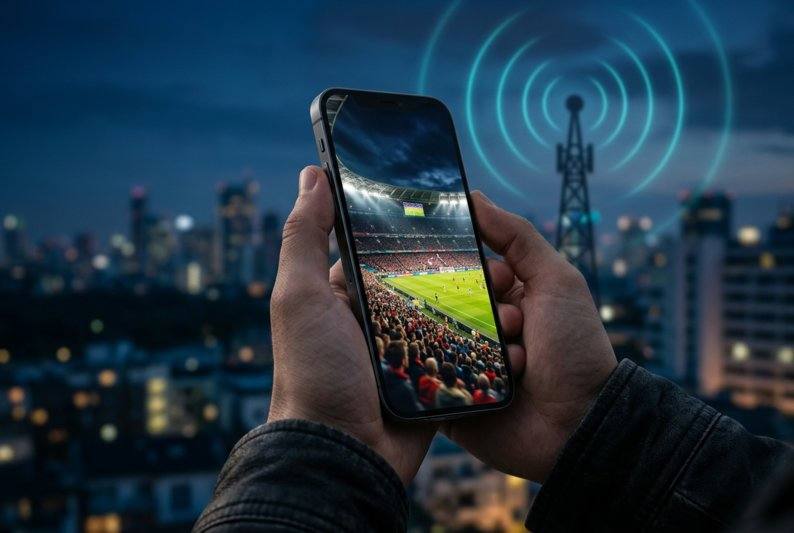
Unlike traditional internet TV, 5G broadcast uses a broadcast mode rather than a unicast mode. Currently, when watching live streams on YouTube, TF1+, or France.tv, the network needs to send a separate video stream to each user. If one hundred people watch the same match, one hundred streams must be transmitted in parallel. 5G broadcast, on the other hand, sends a single broadcast signal from the antenna that reaches all phones in the area simultaneously, similar to how digital terrestrial television (TNT) transmits signals via radio waves. Whether one hundred or one hundred thousand people watch at the same time, the signal stream will not become saturated due to an increase in the number of users.
5G broadcast uses a part of the 5G technical standard (3GPP) but operates in broadcast mode, without transmitting individual internet streams to each smartphone. Therefore, this technology does not consume mobile data, Wi-Fi, or SIM card data. Even after watching a two-hour live broadcast, the user's data plan remains unchanged. For mobile operators, 5G broadcast can reduce network saturation peaks during large events: by broadcasting a single stream instead of thousands to transmit live content, it frees up network capacity for calls, internet access, and messaging services.
Application scenarios for 5G broadcast include live streaming of major sports events, on-demand access to local channels, TV on transportation, and emergency alert channels. During crises or disasters, traditional mobile networks often become paralyzed due to traffic surges, while 5G broadcast can provide emergency information through an independent broadcast channel.
The main obstacle currently facing 5G broadcast is the lack of support from terminal devices. Almost no smartphones sold in France can receive 5G broadcast; manufacturers need to integrate this function at both the software and hardware levels. Calls have been made in 2025 to manufacturers such as Samsung, Xiaomi, Honor, and Motorola, with the hope of launching compatible models by 2027. Following the largest-scale test during the 2024 Paris Olympics, TDF's current experiment is verifying the service's readiness. Several major European broadcasters are preparing for commercial rollout around 2027, with France, Germany, and Italy leading the way in Europe. 5G broadcast will not replace digital terrestrial TV or streaming services in homes, but it makes it possible for free TV to be reborn on mobile devices. The turning point lies in whether mobile phone manufacturers will integrate the relevant chips into terminal devices.