Australia's Empire Metals Develops Process Plan for One of the World's Largest Titanium Mines
en.Wedoany.com Reported - Australian mining company Empire Metals recently announced that it has developed a comprehensive process plan for its Pitfield titanium project in Western Australia, aimed at directly converting ore into high-purity titanium dioxide pigment. Discovered about three years ago, the project is now recognized as one of the world's largest titanium ore systems.
The process flow diagram, disclosed in early June 2026, details for the first time all production steps from ore to finished pigment within a single plant site. The company plans to focus on engineering studies over the next six months to precisely assess capital expenditure and operating costs, with management targeting clear cost guidance by early 2027. In terms of market strategy, the company does not intend to compete in the low-price market dominated by China but will target high-end pigment buyers in the paint and coatings sector. Meanwhile, the long-term possibility of supplying raw materials to the titanium metal supply chain remains under exploration. In the third quarter of 2026, the company is expected to release an updated resource estimate based on its largest-ever drilling campaign, which sources say has further optimized average ore grades.
Globally, titanium dioxide (TiO2) pigment is a core raw material for industries such as paints, coatings, plastics, and paper, with a market value of hundreds of billions of dollars and an annual demand of approximately 8 to 9 million tons. Currently, China supplies about 60% of the world's TiO2 pigment, typically at lower prices. In contrast, Western producers are under dual pressure from rising costs and shrinking margins, with some companies facing financial difficulties. To protect domestic industries, the European Union has recently implemented anti-dumping measures against low-priced imports from China. Against this industry backdrop, Empire Metals, as a new entrant, has attracted attention for its Pitfield project due to its large, shallow, and high-grade titanium ore body.
Company Managing Director Shaun Bunn explained that the deposit was discovered about three years ago by accident during copper exploration. Since then, the company has focused all resources on this project and divested its Eclipse project. The Pitfield ore body is described as shallow, friable, and easy to excavate, requiring less energy for crushing compared to hard rock deposits. Bunn noted that as drilling progresses, the average ore grade continues to improve and is now seven times that of typical mineral sand deposits. This change directly increases the amount of titanium extracted per ton of ore without a corresponding rise in mining costs. The latest drilling campaign, double the scale of previous efforts, will support the third-quarter resource estimate update, which management expects to significantly expand the resource base and solidify Pitfield's global tonnage leadership.
The process flow diagram, resulting from approximately 12 months of metallurgical research and development, marks the integration of the company's technical route. The process begins with ore scrubbing and screening, followed by froth flotation to concentrate titanium minerals, allowing for the rejection of about 90% of gangue before leaching. These untreated waste materials can later be backfilled into mined-out areas, reducing the long-term environmental burden of tailings storage. The remaining concentrate undergoes a low-temperature, simple sulfuric acid leach that does not require autoclave equipment, with management stating that titanium recovery at this stage can reach 98%. Kaolin recovered from the flotation and leaching processes can be used to extract alumina as a byproduct, while the leach acid can be recycled. The company stated that the first three processing steps are innovative for the industry, while subsequent steps use mature chemical technologies from the titanium sector.
Although the technical path is established, Empire Metals has not yet disclosed capital or operating cost data. Over the next six months, the company will focus on advancing engineering design, including evaluating phased plant construction, capacity planning, and addressing infrastructure choices, such as whether to utilize the existing high-voltage power grid at the mine site or build a dedicated gas-fired power station using a nearby pipeline, and whether to import sulfuric acid directly or produce it on-site from imported sulfur. Bunn stated that the company expects to have a clear capital and cost plan by early 2027, at which point it will demonstrate Pitfield's position on the industry cost curve to the market.
In terms of sales strategy, the company appointed marketing director Michael Tamlin as early as 2025 to identify the most suitable end markets and long-term offtake customers before product output. Bunn clarified that the company's competitive approach is not to directly confront cheap Chinese supply but to target customers who purchase high-end pigments for paints and coatings and are willing to pay a premium of $3,500 to $4,000 per ton. Additionally, management sees potential for future involvement in the titanium metal market, initially not producing metal itself but considering partnerships with or raw material supply to Western metal producers, which could also help Pitfield's products gain critical mineral designation in jurisdictions like the United States.
To advance pilot work, Empire Metals plans to use existing third-party metallurgical laboratories in Perth for flotation and leach circuit testing in the second half of 2026, rather than building its own pilot plant. This approach aims to produce sufficient product samples in a shorter time for discussions with potential customers on product specifications. Regarding the pace of offtake agreements and financing, management emphasized that related discussions depend on the progress of both counterparties and the company itself. Bunn revealed that some commodity traders have offered capital in exchange offtake rights, but the company currently prefers to remain flexible and avoid early lock-in. The company also participated in a Western Australian government-led critical minerals delegation to the United States in February 2026 and plans further engagement with Japanese counterparts later this year.
Related Products


Industrial and Commercial Point-Type Gas Detector
Jinan Benan Technology Development Co., Ltd.

Mine Explosion-proof and Intrinsically Safe Industrial Ethernet Ring Network (10 Gigabit/Gigabit)
Chongqing Mas Sci&Tech Co., Ltd.
1050-1750mm Steel Strip Single-stand Reversible Cold Rolling Production Line
MCC-SFRE HEAVY INDUSTRY EQUIPMENT CO., LTD.
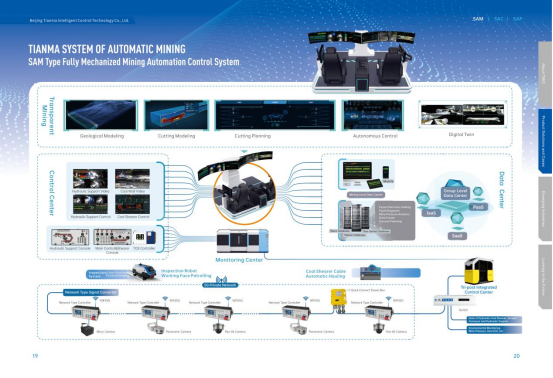
Comprehensive Mining Automation Control System
Beijing Tianma Intelligent Control Technology Co., Ltd.
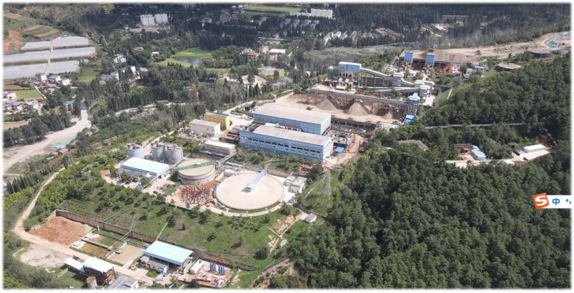
Yunnan Phosphorus Chemical Group Co., Ltd. 2 Million t/a Phosphorus Ore Mining and Beneficiation Project
China Bluestar Lehigh Engineering Corporation