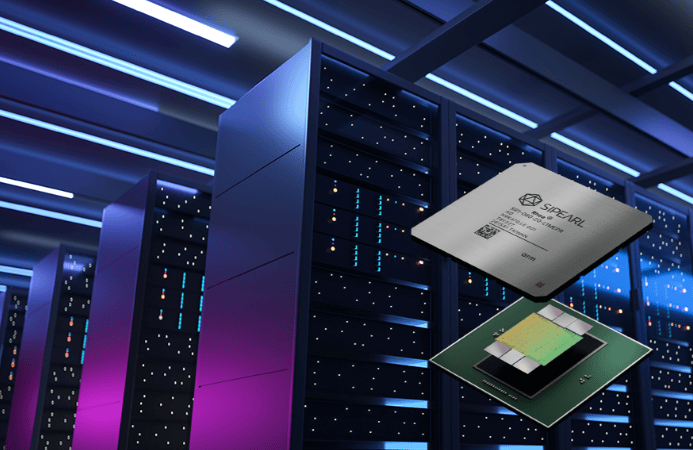
South Korea's LG Electronics Launches ASIC Design Service Based on TSMC's 6nm Process
en.Wedoany.com Reported - LG Electronics has officially entered the custom semiconductor (ASIC) design service market, opening its system-on-chip (SoC) design capabilities, previously primarily used in its own products, to external customers. The company's business model is similar to that of US semiconductor companies Broadcom and Marvell Technology, targeting domestic and international fabless companies.
According to semiconductor industry sources, LG Electronics has launched its design service business, centered around the SoC (System-on-Chip) Center under its Chief Technology Officer (CTO). Design service involves converting semiconductor design circuits into physical circuits that meet the requirements of wafer foundry production lines.
Unlike general design service companies, LG Electronics offers ASIC design services, which are consistent with its self-developed SoC capabilities such as DQ-C. The first outcome of this business is a robot vacuum cleaner chipset mass-produced as part of the national "K-Edge AI Semiconductor" project. This chip, manufactured using TSMC's 6nm (nanometer) process based on orders from a domestic fabless company, was subsequently repurchased by LG Electronics' HS Business Division and integrated into robot vacuum cleaners. It is reported that LG Electronics is discussing design service collaborations with multiple domestic and international clients.
A source from the semiconductor industry commented that LG Electronics' SoC Center is a large-scale, specialized organization supporting its home appliance and automotive electronics businesses, with independent IP development capabilities. From a business diversification perspective, utilizing internal high-level design talent for external design services is a strategy that offers competitiveness in both technical stability and operational efficiency. LG Electronics already possesses an IP portfolio for processes below 6nm and plans to expand its service scope to the 3nm (N3) process within the next three years, based on customer demand.
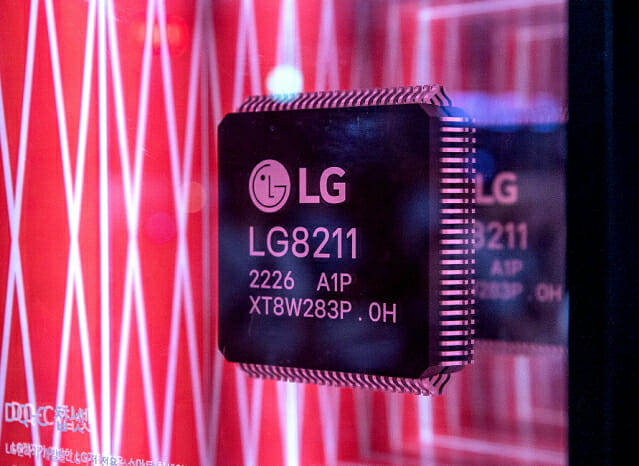
LG Electronics' emphasized cost competitiveness lies in its internal workforce structure. Existing design service companies often rely on outsourced personnel, leading to higher labor costs. LG Electronics' structure, where internal engineers directly handle design, can reduce additional labor expenses. In terms of experience, LG Electronics retained its design organization after selling LG Semiconductor in 1999, effectively operating as a fabless company. Since the early 2000s, LG Electronics has outsourced chip production to TSMC, with a partnership spanning over 20 years. Industry insiders predict that LG Electronics will leverage its long-term relationship with TSMC to provide clients with support such as wafer allocation.
An anonymous industry insider from a fabless company stated that most design service companies utilize outsourced personnel due to insufficient in-house manpower, resulting in higher labor costs. LG Electronics does not have this labor cost burden and has a long-standing trust relationship with TSMC, making it an attractive option. However, LG Electronics is not a TSMC VCA (Value Chain Alliance). VCA refers to partner design service companies that have established a cooperative system with TSMC. According to TSMC policy, only one VCA is allowed per country outside of Taiwan. In South Korea, ASICLAND is the TSMC VCA.
There is also an industry view that Samsung Electronics' reduction of mature process nodes in its foundry business indirectly benefits LG Electronics' design service business. A semiconductor industry source predicted that after Samsung's foundry reduces mature processes, some clients may shift to TSMC, which has a rich portfolio of mature processes. If LG Electronics capitalizes on this trend, it could attract a significant portion of domestic demand. An LG Electronics representative declined to comment on this news.
Related Products



GYTA Type Non-Self-Supporting Aerial/Duct Optical Cable
TONGDING INTERCONNECTION INFORMATION CO., LTD.
20 Inch 1600*900 Full HD 60Hz TFT LED Monitor with VGA and DP Interfaces for Desktop Computers-Business Use
Guangzhou Zanying Optoelectronics Technology Co., Ltd.
Automatic Aiming Laser Remote Obstacle Removal Robot
Pinggao Group Weihai High-Voltage Apparatus Co., Ltd.



Multi-function Marine Monitoring Low-altitude Detection Radar Sea-air Boundary Ocean Dynamic Environment Measurement
Chengdu Dixin Technology Co., Ltd.