en.Wedoany.com Reported - Korea Nuclear Fuel (KNF) is focusing on small modular reactor (SMR) fuel as a new business priority and plans to expand overseas fuel supply to further enter the global nuclear fuel market. The company's long-term goal is to increase the share of overseas business from the current approximately 28.5% to 40%.
At a press conference held on June 29, KNF President Jeong Chang-jin stated that the company is currently jointly developing SMR cores, systems, and fuel, and has applied for relevant licenses earlier this year, with the target of obtaining them by 2028. Once the licenses are secured, the company will proceed with research and development related to modular manufacturing and construction.
Jeong Chang-jin explained that according to the South Korean government's 11th Basic Plan for Electricity Supply and Demand, South Korea plans to develop an SMR domestically. KNF will participate in this private project, responsible for fuel design and fuel supply.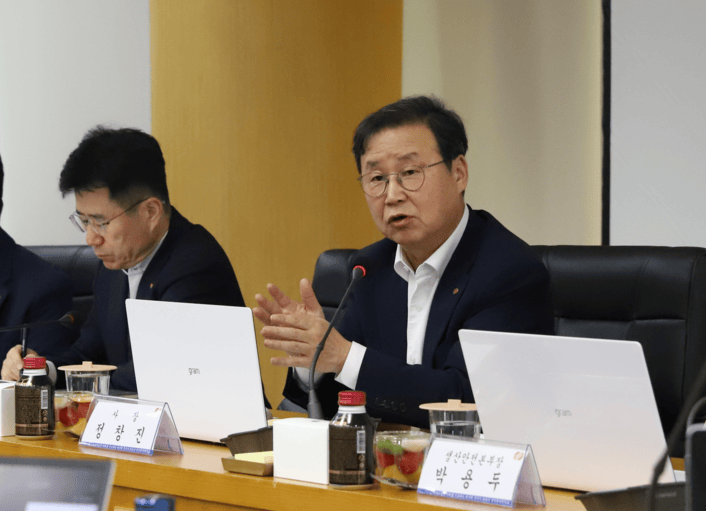
He explained that SMR fuel differs structurally from fuel used in existing large nuclear power plants, requiring the development of new technologies. "SMR fuel is smaller in size and has a different design," he said. He noted that traditional nuclear power plants typically use control rods to control neutrons, while SMRs adopt different methods, prompting the company to conduct related technology research and development.
In terms of overseas business, KNF plans to supply fuel for various reactor types. Jeong Chang-jin stated that the company is developing fuel required for multiple reactor types, including not only pressurized water reactor-type SMRs but also gas-cooled reactors and molten salt reactors (MSRs). The future business model will involve reactor developers handling reactor development, while the company produces and supplies the fuel used in them.
He also said that the company aims not only to supply fuel after project completion but to participate from the SMR development stage, coordinating with system design and providing models. Currently, the company is already involved in overseas companies' SMR projects from the basic design stage, and if related projects proceed, it will participate in subsequent construction by manufacturing and supplying fuel.
Discussing overseas business targets, Jeong Chang-jin said the current share of overseas business is about 28.5%, with a long-term goal of increasing it to 40%. If related projects such as those in the Czech Republic are launched, the company's overseas business share may change further.
Regarding recent uranium price fluctuations, Jeong Chang-jin said that increased demand for nuclear energy affects natural uranium prices. During the Ukraine war, uranium prices once rose to $120 per pound but have since fallen to around $80 per pound, though conversion and enrichment costs continue to rise. He also mentioned that since the conversion market is concentrated in Russia, France, and the UK, companies need to pay attention to supply chain changes. In South Korea, raw material procurement is handled by Korea Hydro & Nuclear Power, and KNF also participates in supply chain management.