South Korean government pledges up to 20 trillion won for southwestern semiconductor hub
en.Wedoany.com Reported - The South Korean government plans to invest up to 20 trillion won to address electricity and water infrastructure issues for the planned southwestern semiconductor industrial complex, in order to advance the project.
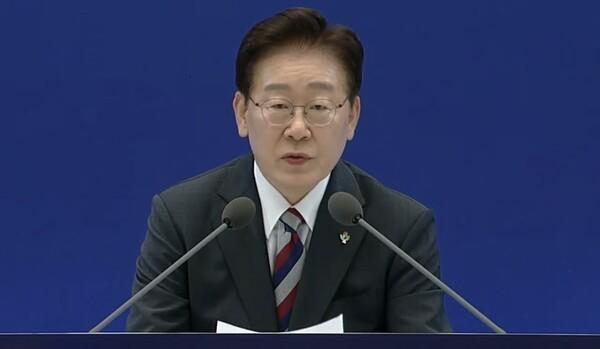
President Lee Jae-myung stated at a national briefing on June 29 that the proposed Semiconductor Special Act provides a legal basis for prioritizing support for regional projects, and the government will fully assume responsibility for costly infrastructure such as electricity and water. Reliable electricity and water supply are critical for semiconductor manufacturing, as production lines operating around the clock consume large amounts of ultrapure water and require stable power. Existing semiconductor hubs in the Seoul metropolitan area, including Yongin and Pyeongtaek, are already facing constraints in accessing electricity and water resources.
K-water stated that the Honam region can secure approximately 1 million tons of water per day for semiconductor production. Through existing surplus capacity and operational adjustments of K-water dams, about 500,000 tons can be supplied. Of this, 350,000 tons can be directly supplied through existing water systems, and water channel adjustments can increase supply to 650,000 tons. Additionally, an extra 350,000 tons can be obtained using hydropower and agricultural reservoirs operated by local governments. Officials also proposed utilizing approximately 600,000 tons of treated wastewater from the Gwangju wastewater treatment facility as industrial water. K-water CEO Yoon Seog-dae noted that Israel's wastewater reuse rate exceeds 70%, indicating this is an efficient way to secure water resources, and K-water will lead water infrastructure development in cooperation with the Ministry of Climate, Energy and Environment.
Mayor-elect Min Hyung-bae of the proposed Gwangju-Jeonnam Special City expressed strong support for the plan. President Lee Jae-myung stated that Mayor Min is prepared to allocate all government support funds designated for the special city—estimated at up to 5 trillion won annually, with a cumulative cap of 20 trillion won—to address electricity and water issues.
The government also pledged to ensure stable electricity supply. Climate, Energy and Environment Minister Kim Sung-hwan stated that 6.3 gigawatts (GW) of power will be supplied uninterruptedly to the Honam semiconductor complex, with additional power capacity prepared in advance, and a regional electricity pricing system will be introduced to enhance the competitiveness of advanced industries outside the Seoul metropolitan area. The Honam region already generates substantial electricity through nuclear power plants, solar farms, and wind farms, but historically, local demand has been limited, with most power transmitted to the Seoul metropolitan area. The new plan will supply electricity directly to the semiconductor complex, reducing transmission costs and improving efficiency. The government also proposed passing on savings from reduced transmission costs to businesses to lower electricity prices.
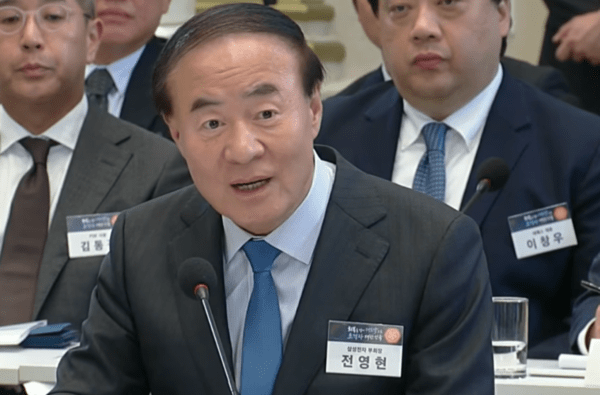
Companies including Samsung Electronics and SK hynix have called on the government to improve administrative support and living conditions around the new industrial complex. Samsung Electronics Vice Chairman Jun Young-hyun stated that fast, one-stop administrative support is crucial for accelerating investment. President Lee Jae-myung responded by saying that a dedicated team will be established within the presidential office to ensure rapid one-stop administrative procedures, and he will personally oversee the project throughout his term.
The new organization within the presidential office is expected to coordinate with the planned Presidential Special Committee on Strengthening Semiconductor Competitiveness, serving as the control tower for the government's three major leap-forward projects. These three projects encompass investment plans by the government, industry, academia, and research institutions in the fields of semiconductors, physical artificial intelligence (physical AI), and artificial intelligence (AI) data centers.
Related Products
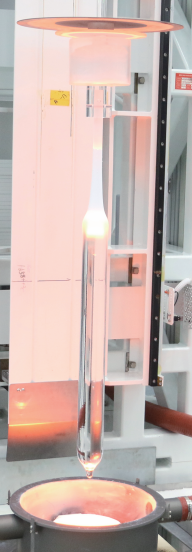

G.652.D Wavelength-extended Non-dispersion Shifted Single-mode Optical Fiber
HONGAN GROUP CO., LTD.
MUX Series Communication Interface Device for Security and Stability Control System
Nanjing NR Electric Co., Ltd.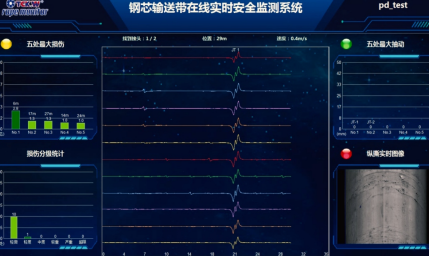
Conveyor Belt Intelligent Monitoring System
LUO YANG WIRE ROPE INSPECTION TECHNOLOGY CO., LTD.
TWP16 P-Band Tropospheric Wind Profile Radar
China Huayun Meteorological Technology Group Co., Ltd.
Multi-function Marine Monitoring Low-altitude Detection Radar Sea-air Boundary Ocean Dynamic Environment Measurement
Chengdu Dixin Technology Co., Ltd.

Industrial and Commercial Point-Type Gas Detector
Jinan Benan Technology Development Co., Ltd.

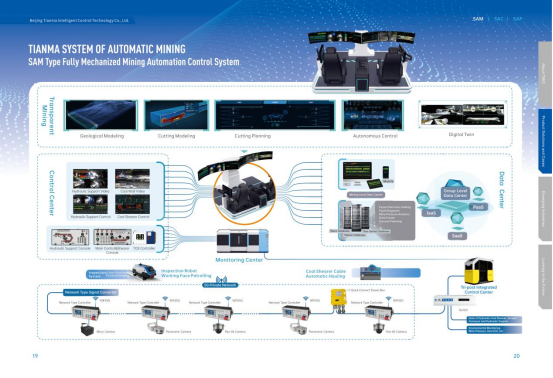
Comprehensive Mining Automation Control System
Beijing Tianma Intelligent Control Technology Co., Ltd.