IBM Unveils World's First 0.7nm Chip
en.Wedoany.com Reported - IBM released the world's first sub-1nm chip technology on Thursday. This marks another significant advancement in the semiconductor field since IBM introduced its 2nm chip based on the nanosheet architecture in 2021.
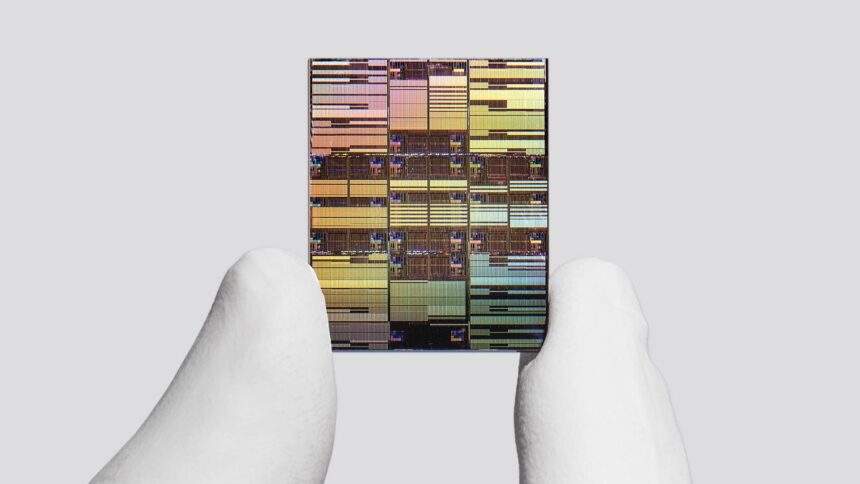
The chip adopts a new transistor architecture called Nanostack, achieving an exact 0.7nm (7 angstroms) scale. By enabling the stacking of transistors, Nanostack goes beyond mere size reduction and improvements in materials and manufacturing processes, paving the way for next-generation processors designed for artificial intelligence, high-performance computing, and data centers. Jay Gambetta, Director of IBM Research and IBM Fellow, stated that semiconductors are the foundation of modern life, powering AI systems, cloud infrastructure, as well as various devices, networks, and critical systems.
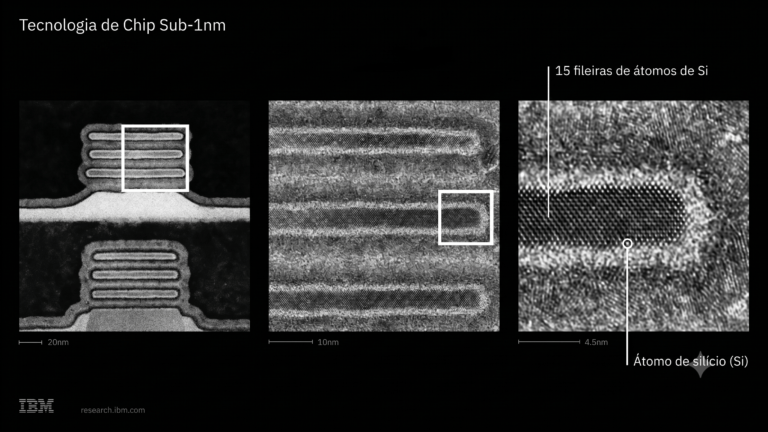
Nanostack accommodates nearly 100 billion transistors on a chip the size of a fingernail, doubling the density of the 2nm chip released in 2021. The more transistors a chip can hold, the greater its ability to perform complex tasks, and the industry challenge lies in continuing to increase transistor count without enlarging the chip or raising manufacturing costs.
Data released by IBM shows that, depending on design configuration choices, the Nanostack architecture can deliver up to a 50% performance improvement or up to a 70% increase in energy efficiency. Preliminary tests indicate a 40% improvement in SRAM memory scaling compared to 2nm technology, a milestone the company claims has not been achieved in the past 12 years. In the context of AI computing, where energy costs have become a major bottleneck for data centers, the solution of reducing power consumption by 70% is particularly noteworthy. IBM emphasized that Nanostack is applicable to CPUs, GPUs, mobile chips, and custom circuits, with its modular structure enabling a level of customization unattainable in previous generations.
Related Products


20 Inch 1600*900 Full HD 60Hz TFT LED Monitor with VGA and DP Interfaces for Desktop Computers-Business Use
Guangzhou Zanying Optoelectronics Technology Co., Ltd.




TWP16 P-Band Tropospheric Wind Profile Radar
China Huayun Meteorological Technology Group Co., Ltd.

Mine Explosion-proof and Intrinsically Safe Industrial Ethernet Ring Network (10 Gigabit/Gigabit)
Chongqing Mas Sci&Tech Co., Ltd.

Industrial and Commercial Point-Type Gas Detector
Jinan Benan Technology Development Co., Ltd.