OHB Sweden Develops Orbital and Deep Space Propulsion Systems
en.Wedoany.com Reported - OHB Sweden is advancing spacecraft propulsion technology through a comprehensive portfolio covering electric propulsion, liquid propulsion, and cold gas propulsion systems. These systems support spacecraft from early development through launch, in-orbit operations, and end-of-life disposal. The company develops complete propulsion subsystems for commercial, institutional, and scientific missions, encompassing mission definition, system design, manufacturing, integration, testing, and operational support for low Earth orbit, geostationary orbit, and interplanetary exploration.
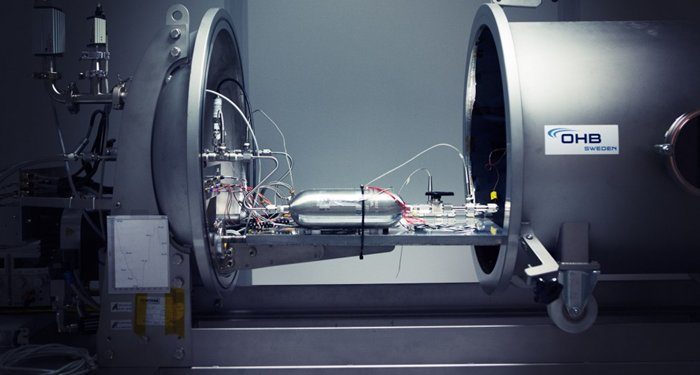
The company's propulsion technology spans the entire propulsion system lifecycle, including propulsion architecture definition, hardware procurement, propulsion component integration, tubing routing, thermal-hydraulic analysis, plume impingement analysis, spacecraft charging assessment, control algorithm development, failure mode effects and criticality analysis, fault detection isolation and recovery safety analysis, and subsystem integration and testing. OHB Sweden works closely with its mission analysis, attitude and orbit control system, and assembly, integration and verification teams to optimize propulsion systems to meet specific mission performance and operational requirements.
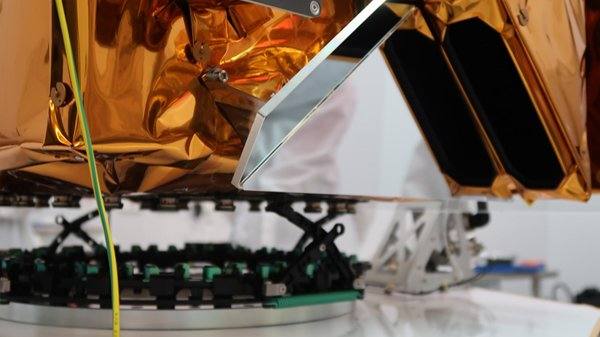
Electric propulsion is a key focus of OHB Sweden's portfolio, providing orbit transfer and station-keeping capabilities while significantly reducing spacecraft mass to increase payload capacity. The company has supplied electric propulsion subsystems for multiple platforms, including the SmallGEO telecommunications satellite series and the all-electric Electra platform, where electric propulsion enables orbit transfer and long-term station-keeping. Additionally, the company has extensive experience in monopropellant, bipropellant, and cold gas propulsion technologies, enabling tailored propulsion solutions for various spacecraft and mission profiles.

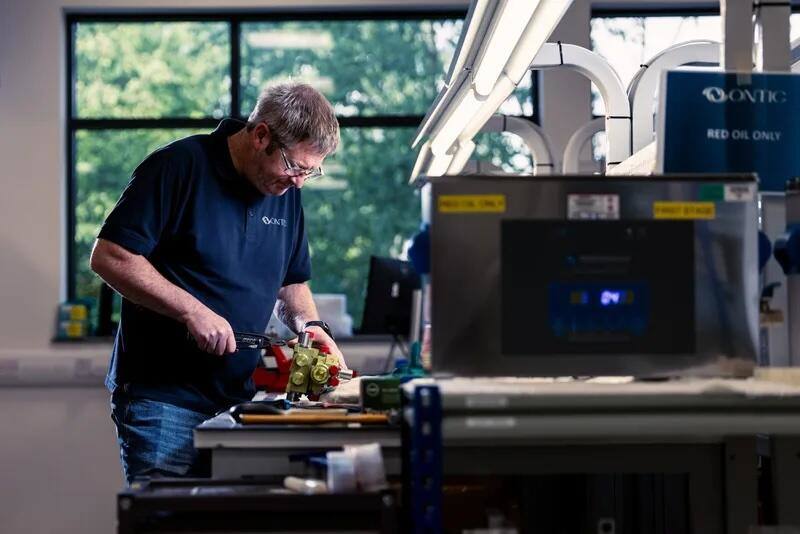
OHB Sweden complements propulsion system development with in-house manufacturing, assembly, integration, and testing capabilities. These capabilities include tube etching, bending, marking and welding, radiographic inspection of all welds, cleanliness verification, precision pre-assembly on dedicated fixtures, thermal hardware installation, global and local leak testing, transport condition handling, and, when necessary, final spacecraft-level propulsion subsystem integration. These manufacturing capabilities enable the company to maintain quality control throughout the production and qualification process of propulsion systems.
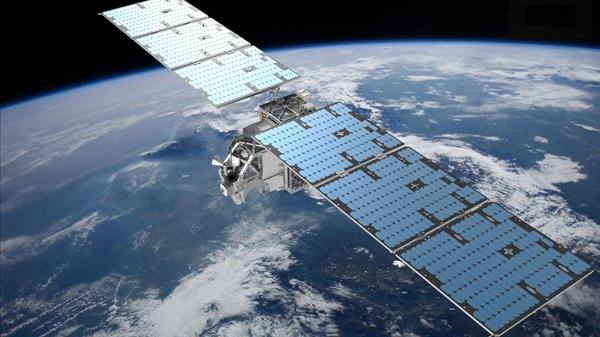
The company's propulsion technology has supported numerous European space missions. OHB Sweden implemented electric propulsion technology for the European Space Agency's (ESA) SMART-1 lunar mission and provided propulsion systems for missions such as Solar Orbiter, Euclid, PLATO, Biomass, Ariel, and CHORUS. The company has also deployed Hall effect thrusters on geostationary telecommunications satellites such as Hispasat AG1 and Electra, while providing propulsion solutions for orbit transfer, station-keeping, collision avoidance, orbital maneuvers, and end-of-life passivation in scientific, commercial, and telecommunications missions.
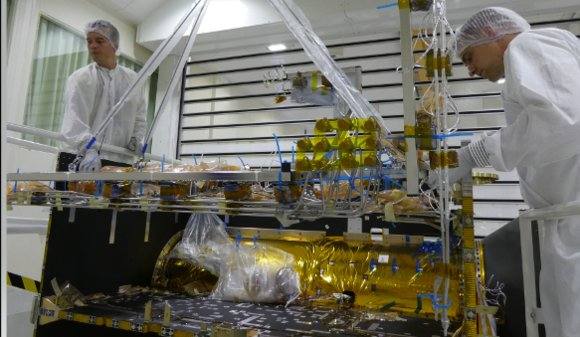
By combining electric propulsion, liquid propulsion, monopropellant, bipropellant, and cold gas propulsion technologies with advanced engineering, manufacturing, and qualification capabilities, OHB Sweden provides integrated propulsion systems for modern spacecraft. Its end-to-end approach supports customers from mission concept through operational phases, delivering reliable propulsion performance for Earth observation, telecommunications, scientific exploration, and deep space missions.
OHB Sweden is a Swedish space company headquartered in Kista, Stockholm, and a subsidiary of OHB SE. The company develops complete satellite missions, spacecraft subsystems, propulsion systems, and attitude and orbit control systems for commercial, scientific, and institutional customers. With over thirty years of experience, OHB Sweden has contributed to numerous European and international space missions, covering Earth observation, telecommunications, lunar exploration, and deep space science.
Related Products


CLW5180TXSD6 Dongfeng Tianjin Washing and Sweeping Truck
ChengLi Special Automobile Co., Ltd.
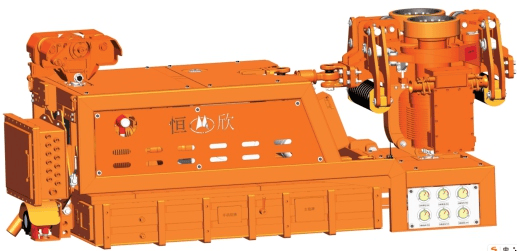
Explosion-proof lithium battery dispatching monorail crane locomotive (permanent magnet frequency conversion integrated machine)
Xiangtan Hengxin Industrial Co., Ltd.

"Shunyi 1600" Deep-submerging Bottom-sitting Multi-functional Wind Power Engineering Vessel
Zhengli Offshore Engineering Co., Ltd.
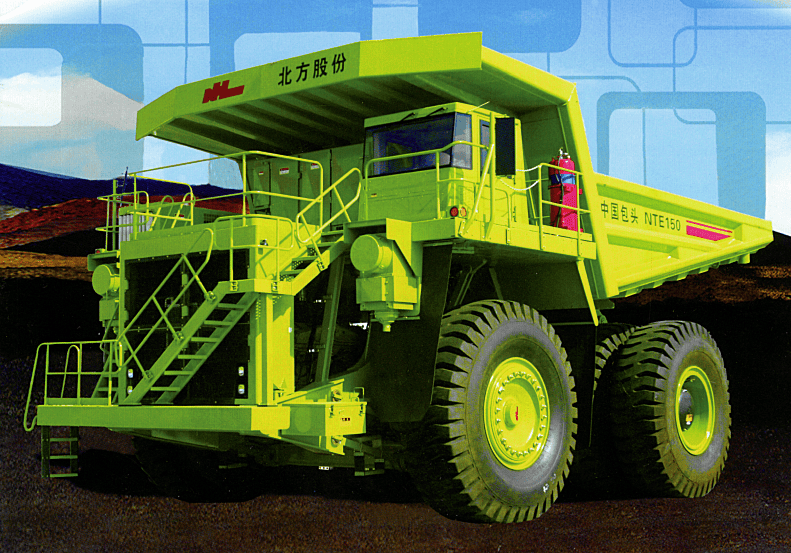
NTE150 Electric Drive Mining Dump Truck
Inner Mongolia North Heavy Industries Group Co., Ltd.
GSR6-27.5kV SF6 Free Gas-insulated Metal-enclosed Switchgear
Zhejiang Juhonkia Intelligent Electric Co., Ltd.