Microsoft's AI Division Annualized Revenue Exceeds $37 Billion, Growth Rate Reaches 123%
en.Wedoany.com Reported - Microsoft (MSFT) Artificial Intelligence division has surpassed $37 billion in annualized revenue, with a growth rate of 123%. This business holds a significant share within Microsoft Cloud, which has exceeded $54 billion in quarterly revenue. The Intelligent Cloud segment, which includes these AI services, saw revenue grow by 30%, reaching $34.7 billion in the quarter.

Revenue has grown at a compound annual growth rate of 15.2%, rising from $318.3 billion to $486.5 billion over three years. This growth rate is lower than the 17.9% growth over the last twelve months (LTM), and the current acceleration is unlikely to persist for the full three years. The profit margin has slightly declined from 39.3% to 38.3%, while earnings have increased from $125.2 billion to approximately $186.1 billion, a gain of 49%. The model assumes a constant price-to-earnings (P/E) multiple of 21.9x, with the stock price approaching $547.83 and market capitalization rising from $2.7 trillion to $4.1 trillion, approximately 49% higher than the current stock price.
The next wave of growth may come from a shift in the business model, as management explains that the per-user billing model will transition to a dual billing model based on both users and usage. The number of new Microsoft 365 Copilot (Microsoft 365 Copilot) seats has increased by 250% year-over-year. The main concern lies in the scale of investment required to support growth, with management expecting approximately $190 billion in capital expenditures for the 2026 calendar year. This spending pace has made investors uneasy about the timing of returns. Revenue needs to maintain a compound annual growth rate close to 15.2%, without requiring significant changes in the price-to-earnings (P/E) multiple. Profit margins are expected to be at or near three-year peaks, and a return to long-term averages would make calculations more difficult. The shift to usage-based pricing provides a clear revenue catalyst, but the planned $190 billion in capital investment also introduces significant short-term risks.
Related Products


Industrial and Commercial Point-Type Gas Detector
Jinan Benan Technology Development Co., Ltd.
Multi-function Marine Monitoring Low-altitude Detection Radar Sea-air Boundary Ocean Dynamic Environment Measurement
Chengdu Dixin Technology Co., Ltd.
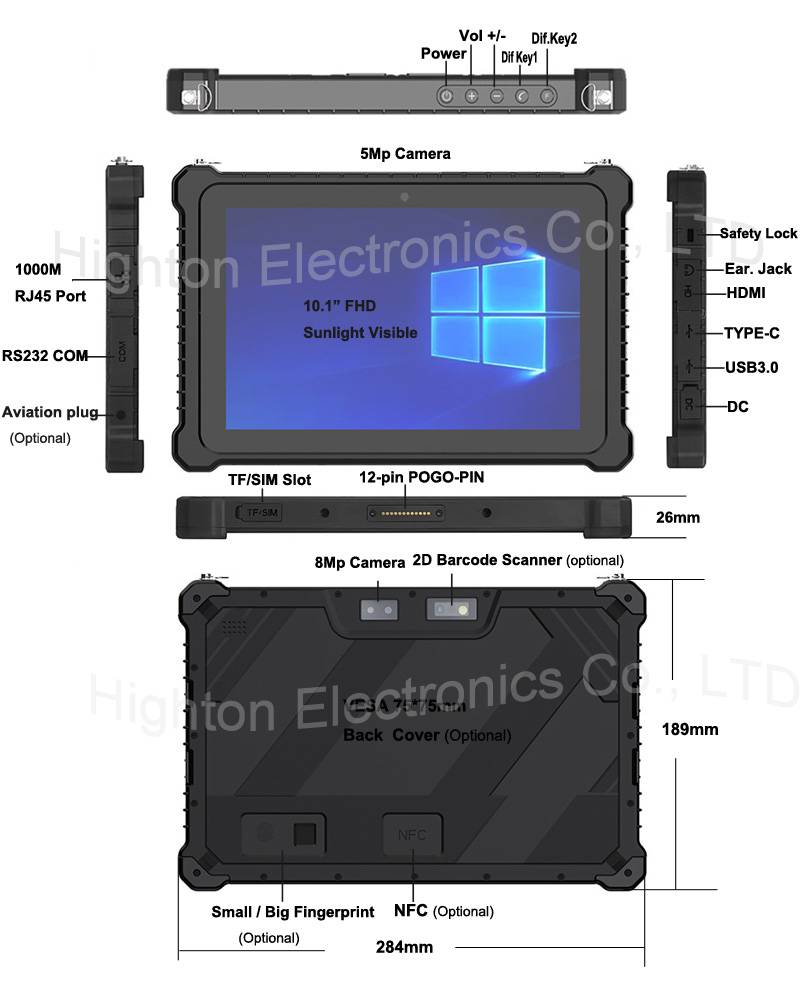
Hot Selling 10 Inch Intel N5100 I5 I7 FHD 8 +128GB 16+256GB Win10 Pro Win11 Pro 4G 5G Rugged Tablet PC Pad with NFC Barcode
Highton Electronics Co., Ltd.

Automatic Aiming Laser Remote Obstacle Removal Robot
Pinggao Group Weihai High-Voltage Apparatus Co., Ltd.
20 Inch 1600*900 Full HD 60Hz TFT LED Monitor with VGA and DP Interfaces for Desktop Computers-Business Use
Guangzhou Zanying Optoelectronics Technology Co., Ltd.
Mine Explosion-proof and Intrinsically Safe Industrial Ethernet Ring Network (10 Gigabit/Gigabit)
Chongqing Mas Sci&Tech Co., Ltd.