FANUC's 250 Robot Products All Support Physical AI
en.Wedoany.com Reported - FANUC's stance on Physical AI is that it does not intend to specifically develop robots supporting this technology, but rather believes that its approximately 250 existing robot products can all achieve Physical AI capabilities. Kenichiro Abe stated that the company's starting point was not "to do Physical AI," but rather to transform robots from fixed repetitive movements to observing the surrounding environment, confirming situations, and having AI perform calculations—a solution later termed Physical AI by the industry. As a robot manufacturer, FANUC addresses social issues, particularly labor shortages, through robots and controllers, which is also the company's value and the joy of its engineers.
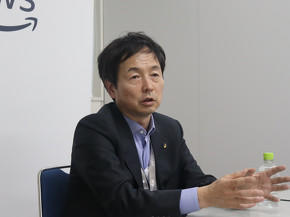
Labor shortages are not only a problem in Japan; India's manufacturing sector also faces difficulties in securing stable workers and recruitment. Automation is seen as a solution to this issue, leading to increased demand for robots. FANUC's current lineup of approximately 250 robot products stems from responding to automation needs across various global industrial factories. Its development approach is not to design robots first and then find sales channels, but to first understand the specific challenges faced by each industry and then commercialize solutions that are as universal as possible. Therefore, when launching new products, market demand is generally already known.
By adding sensors such as vision systems and intelligent functions to existing robots, tasks that cannot be accomplished by robots alone become achievable—this is the essence of Physical AI. In the implementation process, relying solely on user needs and FANUC's robot technology is insufficient; partner involvement is required, such as the collaboration with AWS (Amazon Web Services) to jointly achieve user goals. Physical AI is not suitable for all scenarios; if a rule-based approach can solve the problem, it should be prioritized. Particularly in work scenarios outside factories, where tasks are still performed by humans, many situations require Physical AI.
Related Products


GYTA Type Non-Self-Supporting Aerial/Duct Optical Cable
TONGDING INTERCONNECTION INFORMATION CO., LTD.
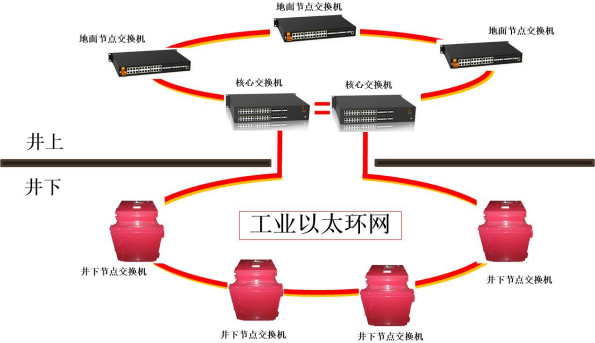
Mine Explosion-proof and Intrinsically Safe Industrial Ethernet Ring Network (10 Gigabit/Gigabit)
Chongqing Mas Sci&Tech Co., Ltd.



TWP16 P-Band Tropospheric Wind Profile Radar
China Huayun Meteorological Technology Group Co., Ltd.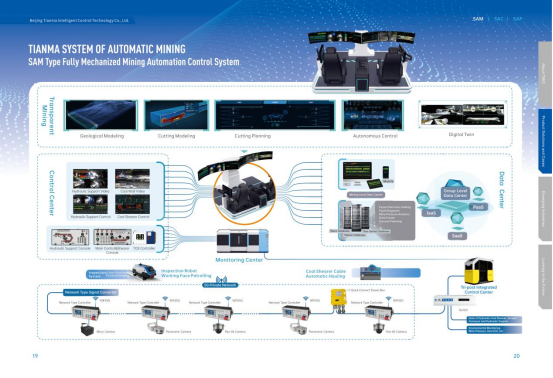
Comprehensive Mining Automation Control System
Beijing Tianma Intelligent Control Technology Co., Ltd.
G.652.D Wavelength-extended Non-dispersion Shifted Single-mode Optical Fiber
HONGAN GROUP CO., LTD.


MUX Series Communication Interface Device for Security and Stability Control System
Nanjing NR Electric Co., Ltd.