Microsoft Advances Quantum Security Transition Timeline to 2029
en.Wedoany.com Reported - Microsoft has advanced its quantum security transition timeline to 2029, marking a shift by a major technology provider in treating post-quantum cryptography deployment as a near-term engineering challenge rather than a distant technological risk. According to a blog post by Mark Russinovich, Chief Technology Officer of Microsoft Azure, the company plans to migrate key products and services to post-quantum cryptography systems by 2029. This initiative integrates quantum security requirements into Microsoft's broader security engineering program, the "Secure Future Initiative."
This timeline adjustment reflects growing concerns among governments and industries that future quantum computers could potentially break current mainstream public-key encryption systems. Such encryption systems underpin core aspects of modern computing, including internet traffic, software updates, digital identities, and financial transactions. Although quantum computers capable of such attacks do not yet exist, researchers and security agencies warn that migrating to more secure encryption systems will take years.
Microsoft stated that advancements in quantum research have made the risk timeline more urgent than previously anticipated. The company urges organizations to begin preparations immediately, as the transition will involve extensive modifications across applications, networks, certificates, keys, identity systems, and hardware. Relevant guidelines from the U.S. government and France have already required some high-risk systems to adopt quantum-safe cryptography starting in 2030, reflecting regulators' efforts to incorporate post-quantum security into planning requirements.
Post-quantum cryptography refers to encryption methods resistant to attacks from both classical computers and future quantum computers. The current risk is that sufficiently powerful quantum computers could exploit vulnerabilities in existing algorithms to break current public-key systems, including those used for web security browsing, software signing, and digital certificates. Microsoft's 2029 target aims to provide more buffer time for customer migration. The company notes that for most organizations, the biggest challenge is not selecting new algorithms but identifying where encryption algorithms are embedded within systems, as encryption technology is often distributed across software, cloud services, APIs, databases, identity systems, mobile devices, and legacy applications, and is frequently hard-coded.
Microsoft's accelerated plan focuses on three key areas: network encryption, stored data, and the encryption trust chain. For data in transit over networks, the company recommends organizations upgrade protocols, such as broader deployment of TLS 1.3, to lay the foundation for future hybrid and post-quantum key exchanges. For stored data, organizations need to achieve cryptographic agility—the ability to replace encryption methods without rebuilding entire systems—including making encryption settings configurable, improving key rotation, and removing hard-coded algorithms. For the trust chain, the work is more complex, involving code signing, certificate issuance, key protection, and software update pipelines, requiring hardware-backed key protection, updated certificate policies, and shorter certificate lifecycles.
Microsoft also highlighted the risk of "harvest now, decrypt later," where attackers collect encrypted data now and store it for decryption when future technology matures. This threat is particularly relevant for governments, healthcare institutions, financial companies, and enterprises holding long-term sensitive data. The company recommends organizations approach the transition iteratively, prioritizing long-term sensitive data, building cryptographically agile new systems, and conducting cryptographic discovery projects.
Microsoft emphasized that organizations should first designate responsible personnel, set milestones, establish real-time inventories of cryptographic dependencies, and drive protocol modernization. Notably, Microsoft's announcement does not imply that quantum computers capable of breaking existing encryption are imminent. The field still faces significant technical hurdles, including error correction, scale, reliability, and cost, with considerable uncertainty in timelines. Additionally, the U.S. National Institute of Standards and Technology has initiated standardization of post-quantum algorithms, but widespread adoption in commercial systems will take time, and organizations must test the performance, compatibility, and operational risks of new encryption methods in advance.
Related Products

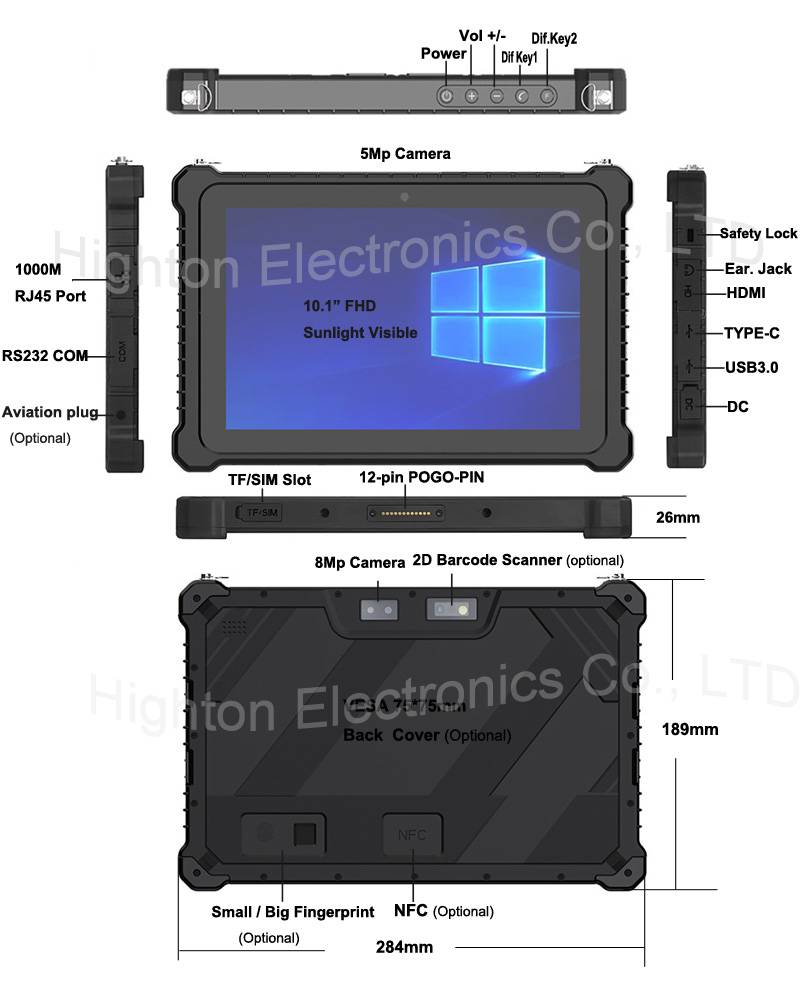
Hot Selling 10 Inch Intel N5100 I5 I7 FHD 8 +128GB 16+256GB Win10 Pro Win11 Pro 4G 5G Rugged Tablet PC Pad with NFC Barcode
Highton Electronics Co., Ltd.

Automatic Aiming Laser Remote Obstacle Removal Robot
Pinggao Group Weihai High-Voltage Apparatus Co., Ltd.
Flat Portable Satellite Terminal 0.35m Aperture Manual Portable Terminal
China Starwin Science & Technology Co., Ltd.
G.652.D Wavelength-extended Non-dispersion Shifted Single-mode Optical Fiber
HONGAN GROUP CO., LTD.


Multi-function Marine Monitoring Low-altitude Detection Radar Sea-air Boundary Ocean Dynamic Environment Measurement
Chengdu Dixin Technology Co., Ltd.