China's Dawei Technology Plans to Raise 109 Million Yuan to Advance Embedded Memory R&D and Industrialization
en.Wedoany.com Reported - On July 2, China's Dawei Technology issued a prospectus for a simplified process stock issuance to specific investors in 2026, planning to raise total funds not exceeding 109 million yuan. After deducting issuance expenses, all proceeds will be used for embedded memory R&D and industrialization projects. The issuance targets include seven specific investors such as China Universal Asset Management, Yang Zonglin, and Wu Di, with an issuance price of 33.80 yuan per share and an issuance volume of 3.2101 million shares.
The allocation of these funds is relatively focused, with the core purpose not being to supplement working capital but to build R&D testing, production testing, and industrialization capabilities around embedded memory. Public information shows that approximately 92.63% of Dawei Technology's raised funds will be invested in software and hardware equipment to enhance the company's R&D testing and production testing capabilities in the embedded memory field. Embedded memory is typically integrated into terminal devices or system boards for operating systems, applications, cached data, configuration files, and business data storage. Application scenarios include smart TVs, network communications, tablets, commercial displays, in-vehicle devices, industrial control, and some smart terminals.
Dawei Technology's existing semiconductor storage business is primarily conducted through its wholly-owned subsidiary Dawei Chuangxin. Its product line includes DDR3, DDR4, DDR5, LPDDR4X commercial-grade and wide-temperature DRAM products, as well as NAND Flash products such as eMMC, BGA NAND Flash, and UFS, covering consumer-grade and industrial-grade storage.
The challenges of the embedded memory R&D and industrialization project lie not only in storage chip procurement and packaging and mounting but also in solution design, firmware development, main control chip and storage chip adaptation, substrate circuit design, packaging and testing solutions, and system-level testing. End customers are not focused solely on individual memory parameters but on capacity, read/write speed, power consumption, stability, compatibility, lifespan, and batch delivery consistency. Particularly in scenarios such as network communications, commercial displays, in-vehicle devices, and industrial control, higher requirements are placed on temperature range, long-term operation, power-off protection, data integrity, and product reliability. By directing the raised funds toward embedded memory R&D and industrialization, Dawei Technology aims to extend its accumulated storage distribution, customer channels, and supply chain resources toward building its own branded storage product capabilities.
This issuance adopted a market-based bidding method for pricing, with the final issuance price set at 33.80 yuan per share. According to information reprinted by East Money from Securities Times, the planned issuance scale of 108.5 million yuan was fully subscribed after counting the subscription amounts of the seventh investor. China Universal Asset Management became the largest subscriber, with Noah Fund and Caitong Fund also participating. The total subscription amount from these three public funds was close to 61 million yuan, accounting for approximately 56% of the total raised funds.
The project construction will also focus on the testing system. Before embedded storage products enter customer devices, they need to undergo R&D testing, production testing, system-level testing, and customer platform verification. Different customers have significant variations in main control platforms, operating systems, interface standards, load patterns, and application environments. The same eMMC, UFS, or DRAM product must also be verified for compatibility across various terminal devices. By purchasing R&D testing, production inspection, and related software and hardware equipment, Dawei Technology can bring some key testing processes in-house, reducing the cycle uncertainty associated with relying entirely on external testing resources. This also helps in earlier detection of firmware issues, compatibility problems, and batch quality fluctuations.
The project directions disclosed in the prospectus also include strengthening the R&D team and product structure. Dawei Technology's previous plan mentioned that the project would introduce R&D equipment and high-quality talent, with a focus on enhancing market supply capabilities for products such as eMMC, DDR, and LPDDR, while improving system testing capabilities for storage products. The company also noted that DDR and LPDDR products maintain stable sales, with some products already entering the supply system of domestic operators. Meanwhile, it continues to deliver 32GB and 64GB eMMC products, refining its embedded storage product layout.
The industrialization boundary corresponding to this fundraising is relatively clear: Dawei Technology is not building a new wafer fab or directly entering the storage original manufacturer model. Instead, it focuses on embedded storage product solution design, own branding, outsourced processing, testing and verification, and customer sales. Its business model is closer to "storage product solution design + supply chain integration + testing capabilities + brand sales." Upstream, the company needs to coordinate storage wafers, main control chips, and auxiliary materials; midstream, it requires cooperation in packaging, mounting, and testing; downstream, it delivers storage products to customers in smart TVs, network communications, tablets, commercial displays, personal computers, in-vehicle devices, industrial control, medical, and rail transit sectors.
Related Products
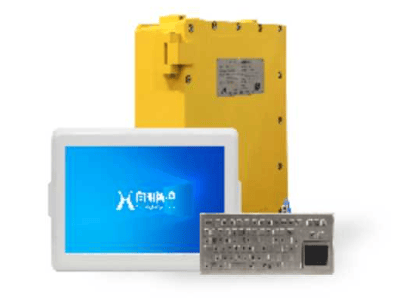

KJD127(A) Mining Explosion-Proof and Intrinsically Safe Computer
Taiyuan Xiangming Intelligent Control Technology Co., Ltd.

Automatic Aiming Laser Remote Obstacle Removal Robot
Pinggao Group Weihai High-Voltage Apparatus Co., Ltd.
One-Stop Steward Service for the Entire Logistics System Integration Chain
Zhongding Intelligent (Wuxi) Technology Co., Ltd.
MUX Series Communication Interface Device for Security and Stability Control System
Nanjing NR Electric Co., Ltd.
Flat Portable Satellite Terminal 0.35m Aperture Manual Portable Terminal
China Starwin Science & Technology Co., Ltd.