Microsoft and Singapore's Lightstorm to Build I-2SEA Submarine Cable Connecting India and Southeast Asia
en.Wedoany.com Reported - On July 2, a technology consortium led by Microsoft and Singapore telecommunications infrastructure company Lightstorm announced plans to build the I-2SEA submarine cable, connecting India, Malaysia, and Singapore. Targeting AI, cloud computing, and hyperscale data center workloads, the project aims to enhance cross-border data transmission capacity between India and Southeast Asia.
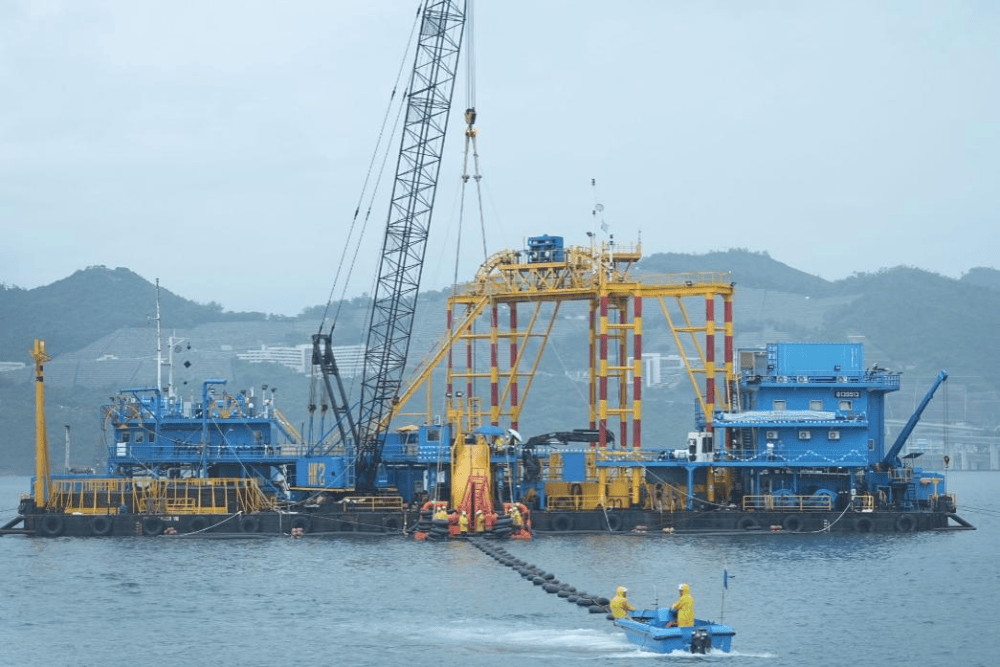
The I-2SEA submarine cable spans approximately 3,600 kilometers and will have a landing point in Machilipatnam, Andhra Pradesh, India. This region is emerging as a new data center hub in southern India, with major tech companies already deploying data center resources locally. Once completed, I-2SEA will provide a new international communication channel for Indian cloud services, AI training, enterprise data processing, and regional internet traffic.
The consortium includes not only Microsoft and Lightstorm but also India's Tata Communications, Singapore Telecommunications, Singapore's ASEAN Cableship, and Japan's NEC. Each participant brings distinct capabilities: Microsoft represents global cloud and AI computing demands, Lightstorm operates AI and cloud regional connectivity networks within India, Tata Communications and Singtel possess cross-border communication resources, and NEC has long been involved in submarine cable system construction. Submarine cable projects typically require marine surveys, cable manufacturing, landing station construction, cable laying, network operations, and coordination of international communication resources—tasks that a single company can hardly complete independently across the entire chain.
The expansion of AI infrastructure is reshaping the logic of communication network construction. In the past, submarine cables primarily served internet access, enterprise private lines, and international communication traffic. Now, AI training clusters, cloud computing platforms, and hyperscale data centers require higher capacity, lower latency, and more stable cross-regional links. India's data market is growing rapidly, with local data center capacity, cloud service demand, and AI application development all expanding. However, insufficient cross-border links could affect model training data transmission, cloud service scheduling, disaster recovery synchronization, and international business access quality.
Lightstorm currently connects 19 AI and cloud regions in India via terrestrial fiber networks. After the new submarine cable becomes operational, this number is expected to increase to 29. This shift indicates that I-2SEA is not an isolated marine communication project but is intended to integrate with India's terrestrial fiber backbone, data center campuses, cloud service nodes, and enterprise customer networks, forming a more comprehensive data infrastructure coverage.
The project is scheduled to become operational in the fourth quarter of 2029. This timeline aligns with the typically long cycle of submarine cable engineering, which includes route design, regulatory approvals, landing station arrangements, marine surveys, equipment manufacturing, laying construction, and system testing. For the equipment supply chain, the project will involve submarine cables, optical amplifiers, landing station equipment, transmission systems, network management platforms, fiber optic testing instruments, and maintenance vessel services.
India currently has 17 operational submarine cables with a maximum potential capacity of approximately 960 Tbps, and at least 10 additional publicly announced new cable plans. With the addition of I-2SEA, cloud and AI infrastructure connectivity between India and Southeast Asia will be further strengthened, particularly in data transmission capacity between Indian domestic data centers and regional hubs such as Singapore and Malaysia. For cloud service providers and AI infrastructure companies, submarine cables are evolving from backend communication resources into a critical engineering condition for AI data center deployment.
Related Products


TWP16 P-Band Tropospheric Wind Profile Radar
China Huayun Meteorological Technology Group Co., Ltd.



20 Inch 1600*900 Full HD 60Hz TFT LED Monitor with VGA and DP Interfaces for Desktop Computers-Business Use
Guangzhou Zanying Optoelectronics Technology Co., Ltd.
Multi-function Marine Monitoring Low-altitude Detection Radar Sea-air Boundary Ocean Dynamic Environment Measurement
Chengdu Dixin Technology Co., Ltd.
Conveyor Belt Intelligent Monitoring System
LUO YANG WIRE ROPE INSPECTION TECHNOLOGY CO., LTD.