en.Wedoany.com Reported - On July 20, 2026, the first direct submarine cable between Cambodia and China, the SHV-HK submarine fiber optic cable (Sihanoukville-Hong Kong), successfully landed at China Unicom's Hong Kong Tseung Kwan O L2 cable landing station. With a total length of nearly 3,000 kilometers and a design capacity of 80 Tbps, this cable is a landmark project of China-Cambodia joint digital infrastructure under the Belt and Road Initiative.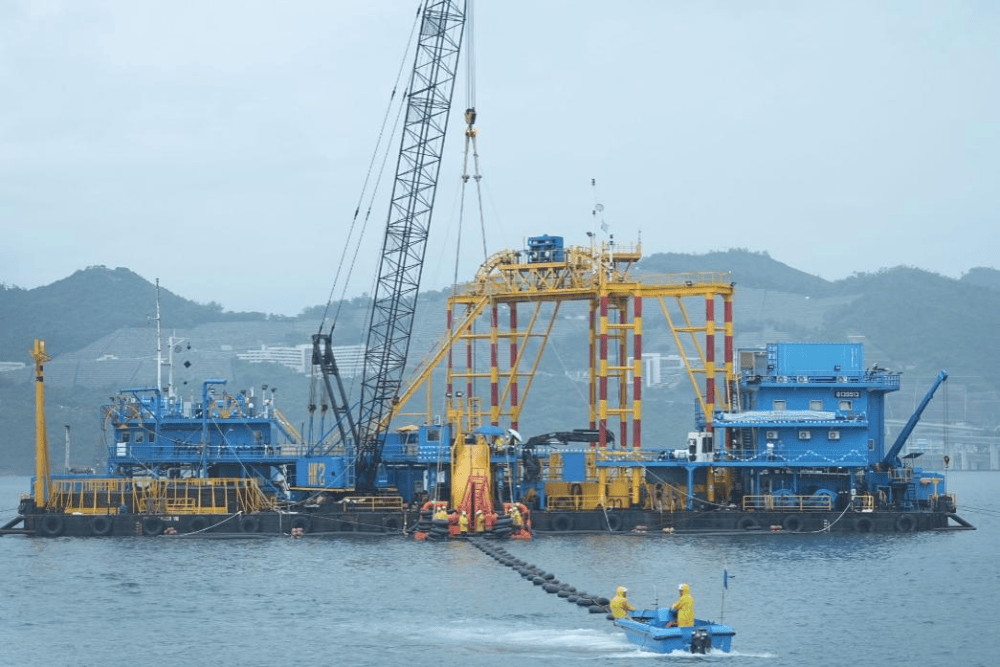
China United Network Communications Group Co., Ltd. (referred to as "China Unicom") is one of China's three major telecom operators, providing comprehensive telecom services including fixed communications, mobile communications, data communications, network access, and value-added telecom services. The SHV-HK submarine cable, which landed this time, was built jointly by China Unicom and relevant Cambodian telecom operators, making it the first high-capacity international submarine fiber optic cable directly connecting China and Cambodia.
Once completed, this submarine cable project will significantly enhance Cambodia's international internet security assurance capabilities, address local shortcomings in digital infrastructure, and open a high-speed data transmission channel connecting Southeast Asia to the international information hub and computing center in Hong Kong, China. This will further promote high-quality coordinated development of the digital economy between China and Cambodia. China Unicom and the Cambodian side signed a landing cooperation statement in October 2023, and the successful landing of this cable marks the successful achievement of this cooperation goal.
China Unicom's Hong Kong Tseung Kwan O L2 cable landing station, officially put into operation in December 2025, is the core hub node connecting China Unicom's "New Eight Vertical and Eight Horizontal" national backbone fiber optic network to the international submarine cable system. The station has already completed the connection of the SEA-H2X submarine cable (Southeast Asia-Hainan, China-Hong Kong, China). With the successful landing of the direct China-Cambodia submarine cable, China Unicom has formed a parallel networking pattern of more than six physically independent, high-capacity international submarine cables in the direction from Hong Kong, China to ASEAN. This new three-dimensional submarine cable network, together with the China-Laos-Cambodia terrestrial transmission system, achieves "north-south mutual support, sea-land coordination," effectively enhancing the network resilience of Cambodia's national internet exit, and can further extend coverage to important ASEAN nodes such as the Philippines, Indonesia, Singapore, and Malaysia.
The completion of this project will further consolidate Hong Kong, China's strategic position as an international financial center and information and communication hub, providing solid support for building a high-speed, secure, and stable China-ASEAN digital communication system.