China's Rushi Robot Secures Hundred-Million-Yuan Pre-A Round to Advance Embodied Intelligence Deployment in Elderly Care
en.Wedoany.com Reported - July 3 news – Shanghai Rushi Robot Technology Co., Ltd. recently announced the completion of a hundred-million-yuan Pre-A funding round at the end of April. This round was jointly invested by Qingsong Capital, Runze Technology, and Pinghu Zexin, with funds to be used to accelerate the deployment of embodied intelligence in elderly care institutions and home-based scenarios.
Rushi Robot's application focus is concentrated on elderly care scenarios. Nursing homes and home-based care face not single action tasks, but continuous service needs such as mobility assistance, companionship, health monitoring, rehabilitation training, item delivery, night patrols, and anomaly alerts. For robots to enter such scenarios, they need to understand the elderly person's condition, spatial environment, care procedures, and safety boundaries, while also adapting to different room layouts, bed and chair heights, corridor widths, caregivers' work habits, and individual differences among the elderly. The difficulty of embodied intelligence in elderly care lies not only in the robot itself but also in real-world data accumulation, long-term stable operation, human-robot interaction safety, task scheduling, and subsequent service operations. With this funding round, Rushi Robot will directly invest in institutional and home-based deployments, allowing the product to continue iterating within real care workflows.
The structure of this round's investors carries industrial synergy characteristics. Qingsong Capital leans toward healthcare resources, Runze Technology has a computing infrastructure background, and Pinghu Zexin provides support for industrial implementation. For elderly care robot companies, understanding healthcare, computing power support, and scenario resources are all crucial. The former relates to whether care services align with real needs, while the latter concerns whether model training, data feedback, and system updates can operate continuously.
Rushi Robot has previously launched embodied intelligence products for elderly care and has accumulated over 1,000 hours of real-world elderly care scenario operation data. If elderly care robots remain in demonstration environments for too long, it is difficult to identify detailed issues in night care, elderly movement, sudden anomalies, spatial obstructions, device misoperations, and caregiver collaboration. Robot operation in real institutions must handle complex locations such as elevators, corridors, bedside areas, bathrooms, dining halls, and rehabilitation zones, while also addressing situations like slow elderly movement, significant posture changes, and unstable speech expression. The closer the data accumulation is to real workflows, the more targeted the robot's subsequent improvements in perception, planning, obstacle avoidance, interaction, and service orchestration will be.
After deploying funding into elderly care institutions and home scenarios, Rushi Robot needs to simultaneously advance product deployment and operational system construction. Institutions focus more on centralized management, service efficiency, caregiver collaboration, and safety responsibility boundaries; home scenarios prioritize device price, installation convenience, home space adaptability, elderly usage habits, and remote monitoring connectivity. The customer structure, service frequency, and payment methods differ between the two scenarios. Robot companies cannot merely sell single devices but must also build capabilities in training, maintenance, data updates, remote operations, and after-sales response.
Against the backdrop of China's aging population, elderly care services are transitioning from purely human care to a combination of "human services + smart devices + data platforms." Rushi Robot's hundred-million-yuan Pre-A funding round will help the company expand real-world deployment density and continue validating the usability of embodied intelligence in elderly care institutions and home-based care. Whether subsequent products can expand their application scope will depend on safety and stability, care workflow adaptation, institutional procurement willingness, home usage costs, and long-term service quality.
Related Products




GYTA Type Non-Self-Supporting Aerial/Duct Optical Cable
TONGDING INTERCONNECTION INFORMATION CO., LTD.
Conveyor Belt Intelligent Monitoring System
LUO YANG WIRE ROPE INSPECTION TECHNOLOGY CO., LTD.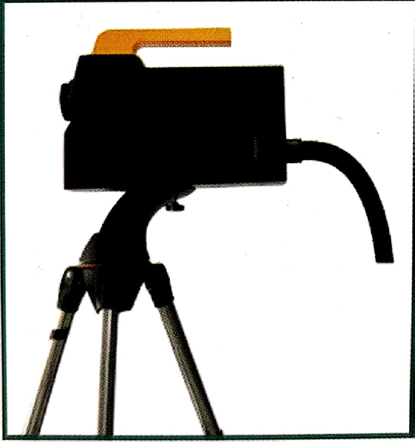
Automatic Aiming Laser Remote Obstacle Removal Robot
Pinggao Group Weihai High-Voltage Apparatus Co., Ltd.
20 Inch 1600*900 Full HD 60Hz TFT LED Monitor with VGA and DP Interfaces for Desktop Computers-Business Use
Guangzhou Zanying Optoelectronics Technology Co., Ltd.
G.652.D Wavelength-extended Non-dispersion Shifted Single-mode Optical Fiber
HONGAN GROUP CO., LTD.
TWP16 P-Band Tropospheric Wind Profile Radar
China Huayun Meteorological Technology Group Co., Ltd.