en.Wedoany.com Reported - Africa data center investment is expected to reach an additional $8.76 billion by 2031, with a compound annual growth rate of approximately 15.76%. This forecast comes from a report released on June 24, 2026, by market consulting and research firm Arizton Advisory & Intelligence, driven by factors including improved network connectivity, the widespread adoption of cloud computing and artificial intelligence across industries, increased demand for local data processing, and growing investment in renewable energy and submarine cables.
The report, titled "Africa Data Center Market Landscape 2026-2031," indicates that the colocation data center segment is growing more rapidly, with a projected compound annual growth rate of 23.74% by 2031, as enterprises increasingly seek scalable and carrier-neutral infrastructure. The four traditional hubs—South Africa, Kenya, Nigeria, and Egypt—will continue to concentrate a significant portion of Africa's data center investment. These markets benefit from mature telecommunications ecosystems, strong international connectivity, thriving digital economies, and growing enterprise demand for cloud computing and colocation services. Among them, Egypt, with construction costs ranging from $8 to $10 per watt, remains one of the most profitable markets for new development projects.
Meanwhile, emerging markets are gaining traction. Morocco and Tunisia, due to their strategic proximity to Europe and extensive submarine cable connectivity, are seen as key interconnection hubs linking Europe, Africa, and the Middle East. Fast-growing markets such as Morocco, Djibouti, Ethiopia, Ghana, Tanzania, Uganda, Mozambique, and Gabon are expected to collectively attract approximately $1.36 billion in data center investment by 2031.
The rapid development of emerging technologies such as artificial intelligence, machine learning, big data, and the Internet of Things is driving demand for AI-ready data centers. International tech giants like Microsoft and Google have announced multi-billion-dollar investments in AI infrastructure and data centers in Africa. AI-dedicated data centers are being built around GPU clusters rather than traditional CPU-based configurations. For example, NVIDIA plans to build an "AI factory" in Kenya over the next three to four years, deploying 12,000 graphics processing units in the new facility. In November 2025, Atlancis Technologies deployed the first GPU-powered AI hub in East and Central Africa through its Servernah Cloud platform, hosted within iXAfrica's data center.
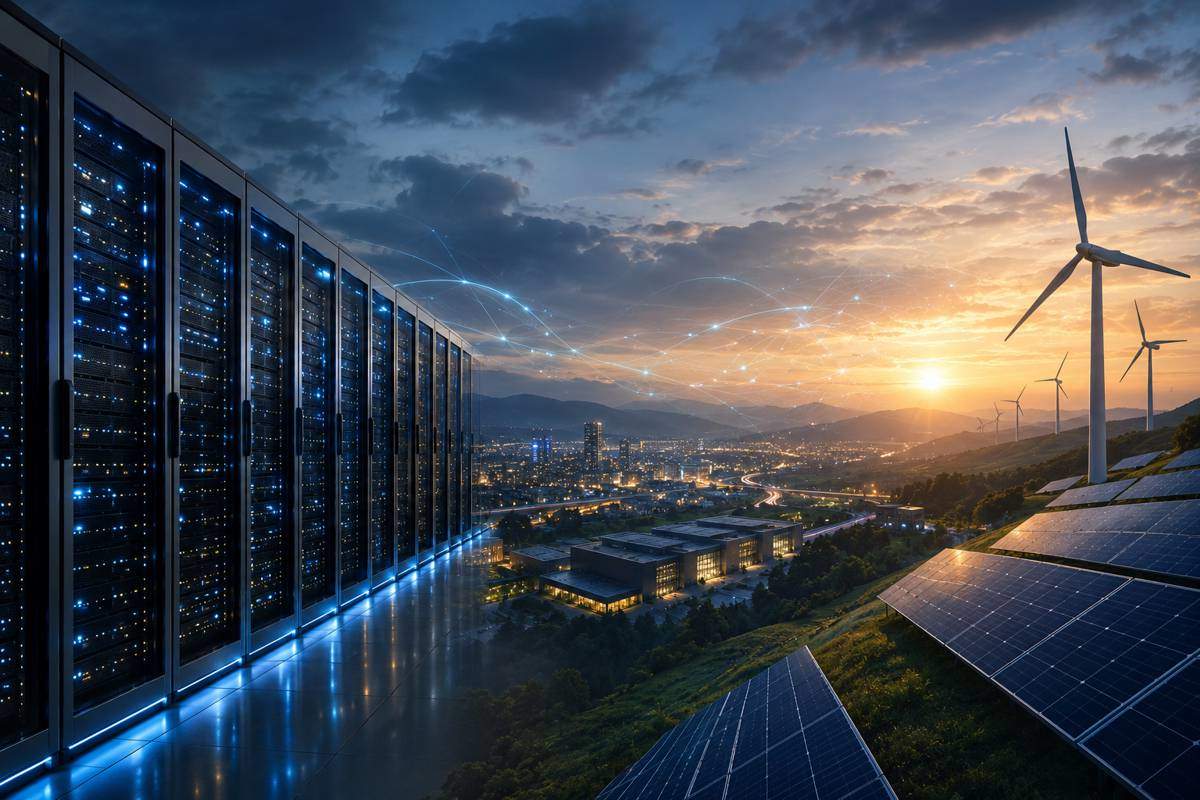
In terms of cooling technology, most African data centers currently use traditional air cooling systems. However, as demand for AI-centric data centers grows, rack power density is expected to increase, prompting operators to shift toward liquid cooling and immersion cooling solutions to effectively manage heat and support high-performance workloads. In Kenya, Cloudoon's Masinga Cloud Data Center has adopted water cooling technology to minimize environmental impact and reduce operational costs, powered by a combination of hydropower and on-site solar generation. Power availability is becoming a determining factor for future data center investments, with operators increasingly integrating renewable energy into long-term strategies. In 2025, Teraco signed a wind power purchase agreement in South Africa, while Egypt is developing solar and wind power projects dedicated to the data center industry.
The expansion of submarine cables is creating favorable conditions for data center deployment. Egypt, with 17 operational submarine cables and six additional systems under development, remains a strategically interconnected digital gateway for Africa. Kenya has also strengthened its international connectivity through new submarine cable investments. Multiple large-scale submarine cable failures in West Africa in 2024 highlighted the importance of network diversity and redundancy, making resilience a key criterion for future digital infrastructure investments and supporting the continued expansion of Africa's data center ecosystem.