US GPU and AI Architecture Company OXMIQ Completes $35 Million Series A Funding
en.Wedoany.com Reported - OXMIQ Labs Inc., a unified GPU and AI architecture company founded by Raja Koduri, has completed a $35 million Series A funding round, bringing its total cumulative funding to $60 million. The proceeds will be used to expand its licensable GPU architecture, OxCore™, enabling semiconductor companies and AI system builders to create custom AI chips without undertaking full chip projects.

This round was co-led by Fundomo and Samsung Catalyst Fund, with participation from financial and strategic investors including MediaTek, AM Intelligence Labs, Pegatron Venture Capital, CDIB-TEN, Darwin Ventures, and Morgan Creek Digital. Intel Capital joined as a strategic IP partner, enhancing OXMIQ's design and engineering depth. OXMIQ's business spans the complete AI stack, from renewable energy and data center infrastructure to silicon IP, Electronic-to-Token Machines (ETMs™), and software for running AI factories and agents.
OXMIQ believes that token demand is outpacing the global capacity to build infrastructure. The company aims to re-architect the GPU stack from Atoms to Agents™, building silicon IP, configurable systems, and a software platform to reduce the cost of intelligence at every layer of the stack. Its architectural core is OxCore™, a scalable, licensable GPU core integrating three compute engines: a CUDA®-compatible GPU engine, a tensor processing engine, and an orchestration engine (CPU). OxCore tightly couples compute functions typically spread across three chips, designed for near-memory computing to reduce data movement and improve compute and energy efficiency for AI workloads. Its architecture scales from single-core AI deployments to large-scale data center configurations. OxCore is currently running on FPGAs and available for live demonstrations.
OXMIQ's chiplet integration architecture, OxQuilt™, integrates heterogeneous compute chiplets and memory into a single package. Unlike most AI silicon designs locked to specific foundries and memory types, OxQuilt adapts to any supply chain, with configuration tools allowing customers to design across logic process nodes, memory types, interconnect standards, and advanced packaging options. The architecture is also designed to integrate emerging interconnect technologies, such as silicon photonics, once they reach production readiness.
OXMIQ's IP-first model is built for capital efficiency. By focusing on new architectural IP rather than full SoC development, the company generates revenue from customer engagements while preserving capital for building the stack. Its software stack includes OxCapsule™ for advanced orchestration and underlying kernel optimizations. OxPython™ enables running existing CUDA® and PyTorch® code on OxCore without code changes, providing developers with cross-hardware portability. This software stack supports emerging silicon architectures for large-scale inference optimization and has been validated by third-party platforms.
David (Dede) Goldschmidt, Senior Vice President and Managing Director at Samsung Catalyst Fund, stated that OXMIQ's AI core and software platform enable heterogeneous computing, delivering efficient, customized inference solutions for large-scale agent workloads. Rajeev Surati, Partner at Fundomo, noted that while most compute IP forces customers to align their memory, packaging, and foundry around the chip, OXMIQ does the opposite, turning cost centers into leverage.
Lawrence Loh, Senior Vice President at MediaTek, said that MediaTek is actively driving advanced AI capabilities from the edge to the cloud, and the investment in OXMIQ underscores this push, combining its AI ambitions with OXMIQ's flexible GPU architecture to unlock unprecedented on-device AI performance across all technology platforms.
OXMIQ has also strengthened its board and advisory team. Jim Keller, CEO of Tenstorrent, joined the board, working alongside existing board member Dr. Ker Zhang. Dr. Valluri (Bob) Rao, retired Intel Fellow from the Process Technology Group, joined as an advisor. Jim Keller stated that OXMIQ's open, configurable foundation is the direction computing is heading, and its team is creating an open GPU architecture, a key step in removing artificial boundaries to AI innovation. Raja Koduri, Founder and CEO of OXMIQ, said that a licensable core and open architecture mean design teams worldwide can build the custom AI silicon they need for their work, and lowering compute costs allows more people to participate in building.
On the investor side, AM Intelligence Labs, part of the AM Green Group, focuses on clean energy generation, energy storage systems, green hydrogen molecule markets, and AI infrastructure and token delivery factories, expanding the 5GW AI factory plan that includes AMI's 3GW renewable energy-driven AI computing platform under construction in India. CDIB-TEN is a joint fund established by CDIB Capital and TEN Capital. Pegatron Venture Capital adds manufacturing and system depth to advancing chiplet AI accelerator designs from architecture to deployment. Morgan Creek Digital joins this round based on the thesis that computing power and architectural choices will define the AI economy of this decade. Darwin Venture Management invests in the Taiwan-Silicon Valley technology corridor. OXMIQ is currently collaborating with semiconductor companies, new cloud service providers, AI system builders, and physical AI/robotics companies. For licensing and collaboration inquiries, contact licensing@oxmiq.ai.
Related Products


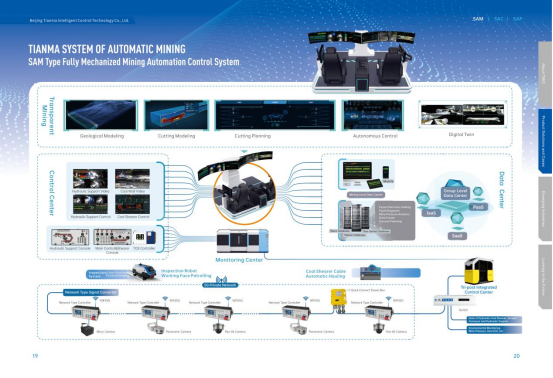
Comprehensive Mining Automation Control System
Beijing Tianma Intelligent Control Technology Co., Ltd.
Hot Selling 10 Inch Intel N5100 I5 I7 FHD 8 +128GB 16+256GB Win10 Pro Win11 Pro 4G 5G Rugged Tablet PC Pad with NFC Barcode
Highton Electronics Co., Ltd.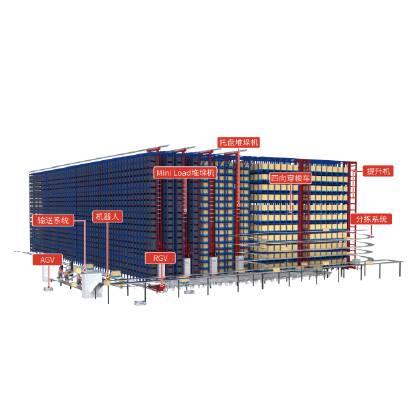


20 Inch 1600*900 Full HD 60Hz TFT LED Monitor with VGA and DP Interfaces for Desktop Computers-Business Use
Guangzhou Zanying Optoelectronics Technology Co., Ltd.
Industrial and Commercial Point-Type Gas Detector
Jinan Benan Technology Development Co., Ltd.

MUX Series Communication Interface Device for Security and Stability Control System
Nanjing NR Electric Co., Ltd.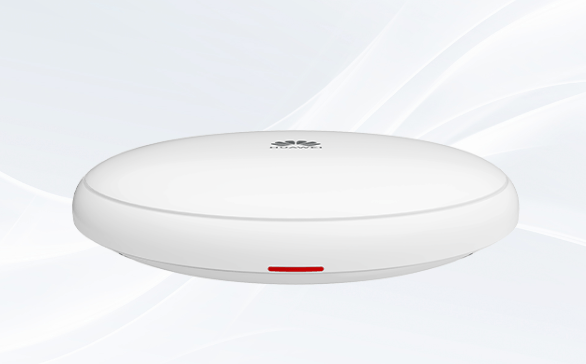
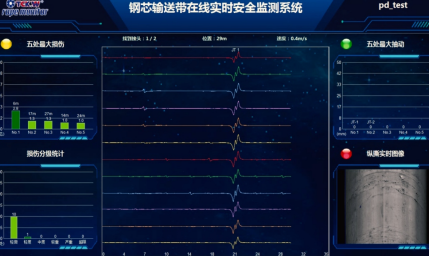
Conveyor Belt Intelligent Monitoring System
LUO YANG WIRE ROPE INSPECTION TECHNOLOGY CO., LTD.
Automatic Aiming Laser Remote Obstacle Removal Robot
Pinggao Group Weihai High-Voltage Apparatus Co., Ltd.