Canada's Prairie Lithium Advances 150-Tonnes-Per-Year DLE Project
en.Wedoany.com Reported - Prairie Lithium (ASX:PL9, formerly Arizona Lithium) is shifting its focus from portfolio exposure to building a North American production base, aiming to capitalize on the sentiment recovery in the first half of 2026. The current lithium price is near $24,000 per tonne, nearly three times higher than the low point 12 months ago.
The rebranding signifies more than just a change of address; it is a calculated bet on the scalability of Direct Lithium Extraction (DLE) technology, which is moving from the lab to commercial deployment. The company's center of gravity has decisively shifted north. Prairie's core asset is now its Saskatchewan lithium brine project, transforming its narrative from a US sedimentary lithium project to a DLE growth story. Big Sandy remains part of its legacy. Managing Director Paul Lloyd advanced the Arizona project before agreeing to sell it to an entity affiliated with the Navajo Transitional Energy Company (NTEC). Now, the company is guiding investors to focus on Prairie: a fully permitted Phase 1 project, a binding offtake agreement, a commercial-scale plant, and a phased production pathway.
Before the name change to Prairie, Arizona Lithium was built around two North American assets: Big Sandy in Arizona and Prairie in Saskatchewan. For Australian investors, Big Sandy was a large US sedimentary lithium project with domestic critical mineral appeal, but its development path required time, capital, and patience. Under Lloyd's leadership, Arizona Lithium expanded Big Sandy's resource base, completed technical studies, advanced permitting, and shaped the project into an asset attractive to strategic buyers. The NTEC acquisition priced those efforts. For Lloyd, it also reinforced the lessons that now guide Prairie. Lloyd stated that Big Sandy was a great project but took a long time, and from that process, he learned the need to find a project without indigenous affairs or environmental issues. Prairie, located on an existing oil field, had those issues resolved long ago. This experience ultimately pivoted Prairie's focus to Saskatchewan. Lloyd noted that comparing Big Sandy to the Prairie project, Prairie's application of DLE technology in an oil field environment will place it in the lowest quartile of operating costs in the lithium industry.
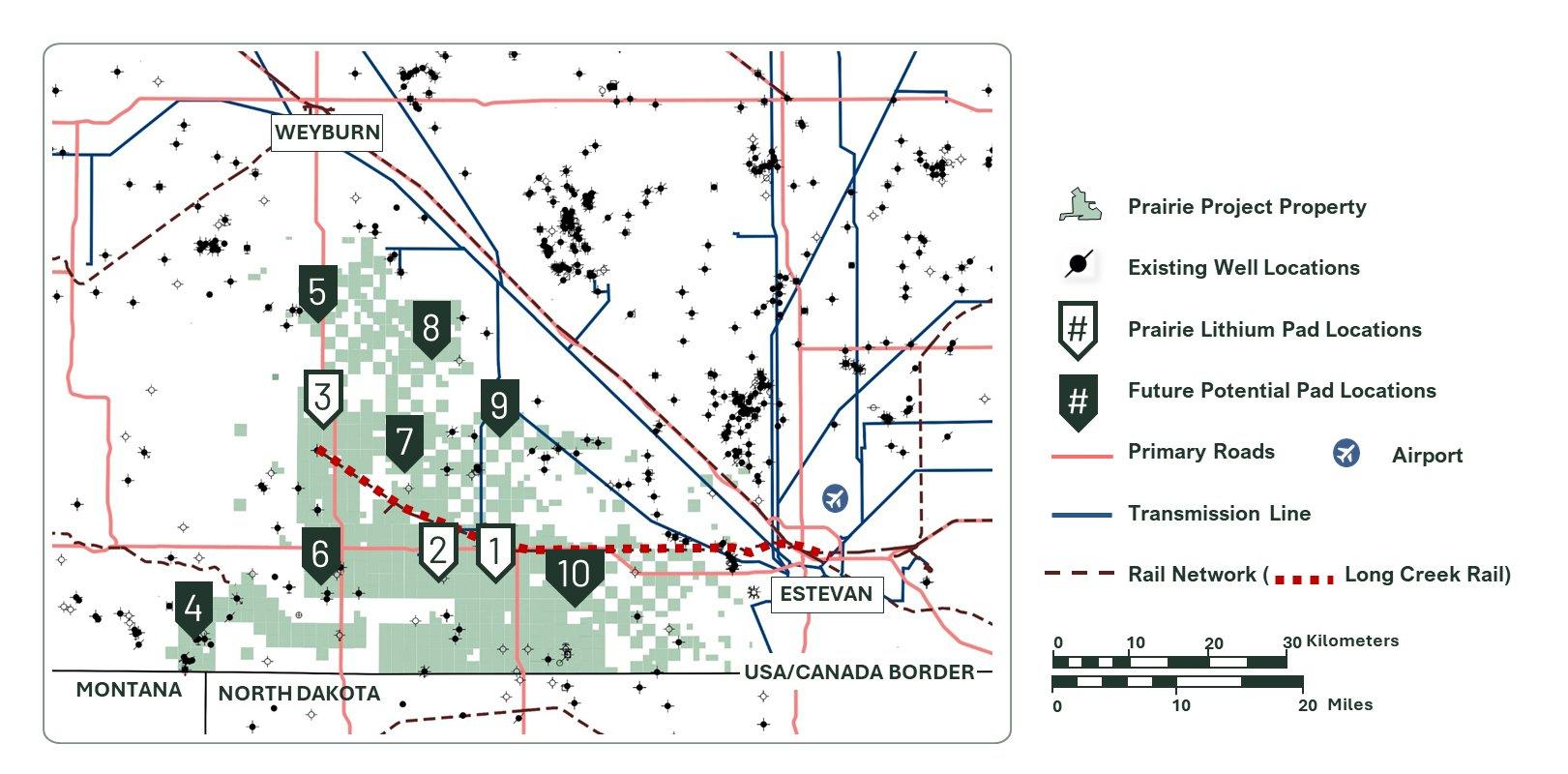
Jurisdiction is a key change. Lloyd stated that Saskatchewan offers a clearer development equation than Big Sandy. Prairie is located in a mature oil field area, just 14 kilometers from the US-Canada border, where drilling, pumping, injection, and subsurface regulation are well-established. Prairie is not pursuing a traditional mine; its model uses technologies familiar to the oil and gas industry to extract lithium-bearing brine from deep aquifers. DLE is almost perfectly suited for oil fields: it monetizes produced water by converting costly disposal costs into revenue. Its smaller footprint, faster processing speed, and closed-loop design are also ideal for infrastructure-dense areas with wells, pipelines, and subsurface expertise but lacking large evaporation ponds. Lloyd stated that this is why companies like Equinor, Exxon, Chevron, and Rio Tinto are entering this space; they know it can produce high-quality products at very low operating costs. Prairie's value proposition lies in proving whether its brine, DLE technology, well sites, and downstream partners can work together at commercial scale. The company has partnered with Koch Technology Solutions for DLE development, has a binding Phase 1 offtake agreement with Korea's Hydro Lithium, and expects Hydro to support downstream refining equipment and capabilities in the initial production model.
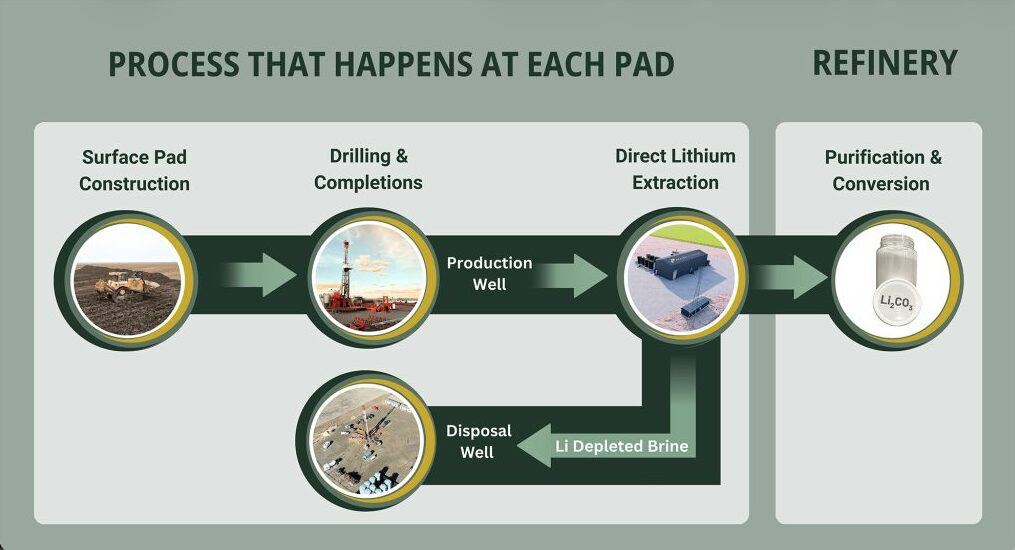
The appeal of DLE lies in offering a faster, smaller-footprint alternative to traditional brine evaporation. Many companies have shown encouraging lab or pilot-scale results, but few have proven DLE can operate reliably at commercial scale. Prairie believes its advantage lies in its relatively clean brine, which simplifies processing. The company has begun factory acceptance testing of its commercial-scale DLE unit, the final step before shipment to Saskatchewan for Phase 1 installation. Prairie states its four-column system is the largest built in North America, roughly four times the size of Standard Lithium's single commercial-scale column in Arkansas. Lloyd stated that the testing means Prairie has a larger platform for scaling up as it moves toward initial production. He noted that technology suitable for Prairie's brine may not work for other brine types, and their brine is very clean with minimal impurities, aiding processing. The initial production target is 150 tonnes per year, based on the offtake agreement with Hydro Lithium. Lloyd stated the company deliberately chose a smaller first phase to avoid the capital burden of traditional large-scale development and upfront construction. They expanded the pre-feasibility study to include a 150-tonne pilot plant, enabling a modular approach to bring the project into production. If successful, Prairie will transition from a DLE concept to operational proof, with a scalable modular model. Prairie plans to drill approximately 2,400 meters of production wells to bring lithium-rich brine to the surface, filter and process it via DLE, and then inject the remaining brine back underground.
Hydro Lithium is central to the near-term plan. The binding offtake agreement provides Prairie with a customer for its initial lithium chloride product and reduces the need to build full downstream refining capacity from the start. Lloyd stated that when they signed the offtake agreement with Hydro, it changed the company's risk profile and capital requirements; they chose to focus on extraction and concentration while relying on a partner with refining expertise. The current binding offtake agreement covers the initial 150 tonnes of production from the first plant, but Lloyd stated that Dr. Chong of Korea's Hydro Lithium wants Prairie to scale up quickly to 10,000 tonnes per year. This is the core of the modular plan. Once the first plant operates for a few months, Prairie plans to add production wells, disposal wells, and plant capacity. Each well site is expected to support approximately 2,000 tonnes per year of lithium carbonate equivalent, with plans for 10 well sites in the area. Lloyd stated the company has a large land position of 345,000 acres, with a Phase 1 target of 150 tonnes per year of lithium carbonate equivalent. The phased approach aims to avoid overbuilding in the early stages. The next six months will test Prairie's case: its permitted Phase 1 pathway, binding offtake agreement, and commercial-scale DLE unit are heading toward deployment. Lloyd stated that construction, DLE unit delivery, well re-entry, pump installation, and the first flow of brine through the plant will be the main content of near-term news flow. The company is deep into the construction phase, and the next six months will be an active period.
Related Products


Hydraulic Plate and Frame Filter Press
Guangdong Leimeng Intelligent Equipment Group Co., Ltd.
High-temperature Equal Wall Thickness High-power Screw Drilling Tool
Orient Energy & Technologies Co., Ltd.
Quick-Change Single-Seat Control Valve / Quick-Change High-Pressure Single-Seat Control Valve
Beijing Consen Automation Technology Co., Ltd.

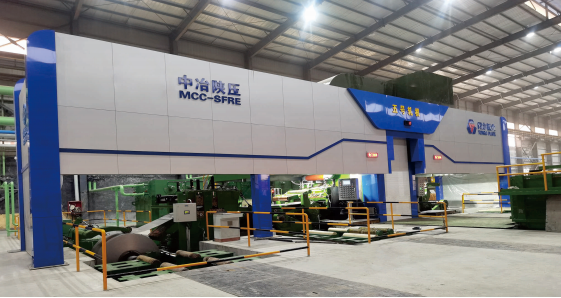
1050-1750mm Steel Strip Single-stand Reversible Cold Rolling Production Line
MCC-SFRE HEAVY INDUSTRY EQUIPMENT CO., LTD.