MIT Develops New Method for Screening Electrochemical Ammonia Synthesis Catalysts
en.Wedoany.com Reported - Researchers at the Massachusetts Institute of Technology (MIT) have developed a new method for screening catalysts for electrochemical ammonia synthesis, which dramatically shortens the time needed to find efficient catalysts from a vast array of alloy combinations by identifying key physical properties that drive catalytic activity, providing support for low-emission ammonia production routes that could replace the traditional Haber-Bosch process.
Ammonia is an important chemical with an annual production volume second only to sulfuric acid, primarily used in fertilizer manufacturing. Currently, ammonia production accounts for approximately 2% of global energy consumption and about 1.5% of greenhouse gas emissions. Over 90% of existing production still relies on the Haber-Bosch process, which has been in use for over a century and depends on fossil fuels to provide reaction heat, with the hydrogen production step also primarily fossil-fuel-based. Electrochemical ammonia synthesis avoids high-temperature and high-pressure conditions, but its yield and reaction efficiency have so far been insufficient to support industrial-scale application. With global annual ammonia usage at approximately 200 million metric tons, finding more energy-efficient and low-carbon production methods has become an industry priority.
The research team focused on transition metal nitride material systems. The intrinsic nitrogen in these compounds participates in the reaction, providing partial energy for subsequent steps and helping to overcome the main bottleneck of the nitrogen reduction reaction—the high energy required to break the strong bond in nitrogen molecules. However, the overall reaction pathway remains limited by steps such as nitrogen dissociation and hydrogen transfer. Bilge Yildiz, a professor in MIT's Department of Nuclear Science and Engineering and Department of Materials Science and Engineering, stated that the team first evaluated the relationship between material microstructural properties and nitrogen reduction activity, then used density functional theory simulations and machine learning to identify reaction bottlenecks and predict which alloy combinations are likely to overcome them.
Traditional catalyst development relies on trial-and-error testing across millions of alloys, a process that takes years. The new method shifts the screening scope from random searching to physics-based targeted prediction. Athanitis noted that if catalysts can be found that simultaneously lower the energy required for the reaction and improve ammonia selectivity, it would be possible to increase ammonia yield while reducing side reactions.
Dane Morgan, an engineering professor at the University of Wisconsin, commented that this work helps elucidate the relationship between fundamental electronic properties of materials and their catalytic effects, potentially guiding the design of a new generation of ammonia production catalysts. He also noted that the research remains at a theoretical stage, as the materials have not yet been physically fabricated and tested, and numerous subsequent steps are required to move from computational screening to practical catalysts. The research team's next step is to build working reaction cells to evaluate the ammonia production performance of candidate materials under real operating conditions.
Related Products

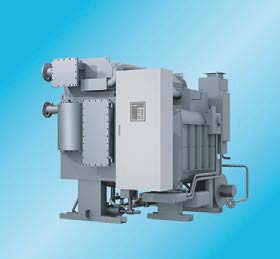
IGBT Hydrogen Production Power Supply - High Power Air Cooling
Beijing Zhengzhuo Engineering Technology Co., Ltd.
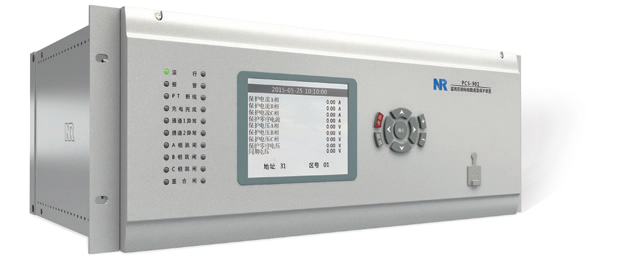
PCS-901 Series Ultra (Extra) High-voltage Transmission Line Complete Protection Device
Nanjing NR Electric Co., Ltd.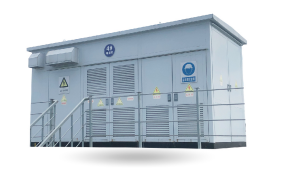
Smart Photovoltaic Prefabricated Substation
Shanghai Jinyou Jinhong Intelligent Electric Co., Ltd.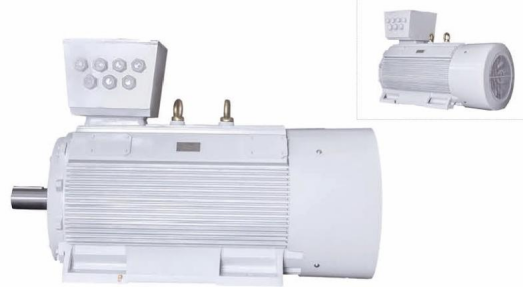
YE3 Series Low Voltage High Power Three-Phase Asynchronous Motor
Shandong Lijiu Electrical Machinery Co., Ltd.
Yingping Mining Section Open-pit Tailings Backfill Treatment of Goaf Ecological Restoration EPC Project
China Bluestar Lehigh Engineering Corporation