Argentina Proposes Legislation to Create AI-Driven Companies
en.Wedoany.com Reported - Argentine President Javier Milei submitted a bill to Congress last month proposing the creation of "non-human companies" operated by artificial intelligence. While the idea has sparked controversy, legal experts note that such companies would still require human involvement in management.

In a column for the Financial Times, Milei described a new type of company that could operate without human employees, with AI agents or robots making "independent judgments in unpredictable environments." Several legal experts said Argentina would become the first country in the world to establish a specific legal category for AI-operated companies through legislation. Milei claimed this move would "open the doors of commerce," but Israeli historian Yuval Noah Harari criticized it, warning that granting too much power to AI could weaken corporate accountability.
Corporate lawyers argue that the reality is not as revolutionary as it appears. The "automated company" introduced in the proposed reform is part of a comprehensive bill aimed at reducing bureaucracy and modernizing corporate law. Under the bill, such companies must have a human manager to oversee operations. The legislation also allows company management to use AI for decision-making but does not exempt managers from responsibility for overseeing outcomes.
Lawrence Cunningham, director of the Weinberg Center for Corporate Governance at the University of Delaware, said "completely abandoning human agency would be too aggressive an initial step," but he also described Milei's proposal as bold. "We're not here to change the world, but to acknowledge that you can run a business without human resources. This is the beginning of something," Cunningham said.
Diego Duprat, a law professor and co-author of the bill, noted that automated companies already exist in some forms, such as AI-powered cashierless supermarkets. The bill stipulates that companies are liable for damages caused by AI or algorithmic systems. A representative from the President's office said there are currently no companies or investment commitments tied to the bill, but described the initiative as aiming to "make Argentina an attractive jurisdiction for automated companies," emphasizing that "the project is crucial for creating better conditions to attract investment."
Milei has significantly reduced inflation and introduced incentives to attract foreign investors. He has repeatedly promoted Argentina as a future AI hub, highlighting Patagonia's cold weather and energy supply as suitable for data centers. OpenAI and Sur Energy announced plans in October to build a data center with an investment of up to $25 billion.
Maria Gisele Cano, a corporate lawyer in Buenos Aires Province, said that a law merely mentioning the core use of AI in companies could attract investors. She has already received over a dozen inquiries from entrepreneurs in Argentina and abroad about the proposal. "These companies will have a clearer and more predictable framework when operating in such an environment," she said. Yonathan Arbel, a professor at the University of Alabama School of Law who studies AI, believes that if Argentina creates a favorable environment for AI businesses, it could gain a "significant competitive advantage." He also noted that the bill would be more implementable if it explicitly required AI agents to have digital IDs when interacting with people and companies.
The proposal also allows for the creation of blockchain-based decentralized autonomous organizations (DAOs), enabling members to vote on proposals using digital tokens. Argentina is a major cryptocurrency market in Latin America. Ricardo Mihura Estrada, former president of Bitcoin Argentina, said the proposal's requirement for identity verification and registration of token users would pose a challenge for an industry built around anonymity. "I think it's well-intentioned, but I see difficulties in its adoption in the blockchain world," he said. A representative from the President's office stated that identifying token users is a minimum security requirement, adding: "DAOs that wish to maintain a fully anonymous structure can continue to operate outside this framework, but they will not be able to access the legal benefits it provides."
Milei's concept of "non-human companies" echoes the vision of OpenAI CEO Sam Altman, who said in 2024 that AI would enable single-person companies to reach a $1 billion valuation. Emerald Greywoode, a fellow at the Weinberg Center, said several U.S. states, including Texas and Utah, have established legal frameworks for businesses experimenting with AI, which may include guidelines requiring greater human oversight of AI operations during initial testing phases.
Experts believe that current technological capabilities have not yet reached the point where AI agents can make fully autonomous business decisions. However, according to Lan Xuezhao, managing partner of Basis Set Ventures, a venture capital firm investing in AI startups, Silicon Valley entrepreneurs are increasingly shifting budgets from hiring employees to purchasing AI computing power to accomplish the same tasks. She said AI entrepreneurs are most concerned about the availability and cost of computing power, chips, and energy, and noted that as U.S. and European regulators impose stricter rules on AI use, looser regulations could become attractive. However, Lan believes that Milei's bill alone is unlikely to transform Argentina into an AI hub: "The most important thing is whether talent flows to Argentina; people follow talent."
Related Products


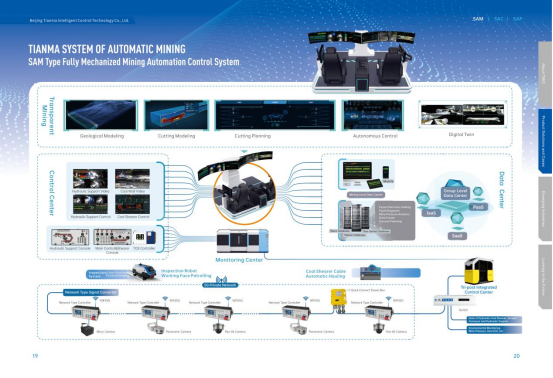
Comprehensive Mining Automation Control System
Beijing Tianma Intelligent Control Technology Co., Ltd.
Flat Portable Satellite Terminal 0.35m Aperture Manual Portable Terminal
China Starwin Science & Technology Co., Ltd.
Industrial and Commercial Point-Type Gas Detector
Jinan Benan Technology Development Co., Ltd.



MUX Series Communication Interface Device for Security and Stability Control System
Nanjing NR Electric Co., Ltd.

Conveyor Belt Intelligent Monitoring System
LUO YANG WIRE ROPE INSPECTION TECHNOLOGY CO., LTD.
Automatic Aiming Laser Remote Obstacle Removal Robot
Pinggao Group Weihai High-Voltage Apparatus Co., Ltd.