China's Embodied Intelligence Industry Sees 22.4% Revenue Growth in First Five Months of 2026
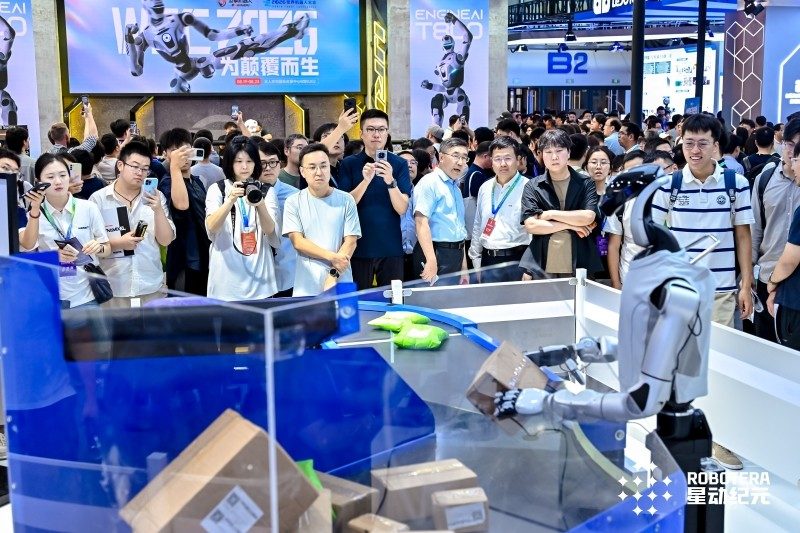
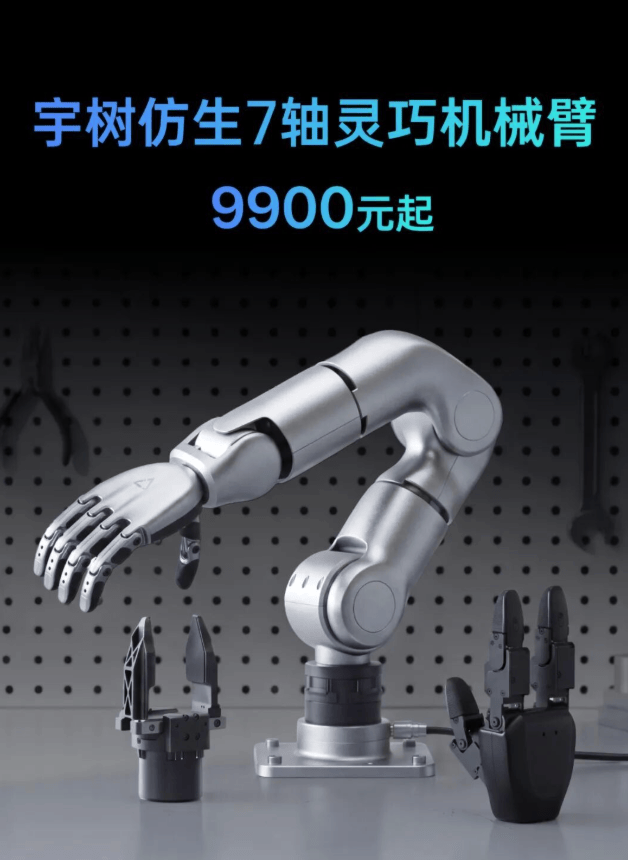
en.Wedoany.com Reported - In the first five months of 2026, China's embodied intelligence industry saw a 22.4% year-on-year increase in sales revenue, accelerating further from last year's high base. As intelligent agents equipped with physical carriers that can perceive, make decisions, and take action, embodied intelligence is moving from laboratories to factory floors and industrial frontlines, becoming a significant real-world driver for economic transformation, upgrading, and the cultivation of new quality productive forces.
The development of embodied intelligence marks the transition of artificial intelligence from virtual algorithms to the physical world. Unlike general-purpose large models lacking physical execution carriers, embodied intelligence integrates robot hardware, multimodal perception, and autonomous decision-making large models, forming a complete closed loop of "perception-thinking-action." It can perform millimeter-level assembly and round-the-clock quality inspection on precision production lines, and replace repetitive and high-risk manual labor in warehousing, logistics, scientific research experiments, and service scenarios, providing practical intelligent tools for the digital transformation of traditional industries. The sustained growth in industry revenue indicates that market demand is being unleashed, while technological maturity and commercialization capabilities are simultaneously improving.
Nearly 90% of China's embodied intelligence enterprises are concentrated in five major provinces and cities: Guangdong, Beijing, Shanghai, Zhejiang, and Jiangsu. Differences in regional innovation resources, manufacturing foundations, and digital ecosystems have formed a division-of-labor and collaborative industrial landscape. Among them, Guangdong Province accounts for 78.7% of the industry's sales revenue, firmly holding the leading position. The Guangdong-Hong Kong-Macao Greater Bay Area boasts the most comprehensive manufacturing categories in China, with trillion-level industrial clusters such as 3C electronics, new energy vehicles, and high-end equipment providing vast real-world industrial scenarios. From servo motors, reducers, and 3D vision sensors to complete machine integration and algorithm development, the region has formed a complete and independently controllable upstream and downstream industrial chain, with nearby component supply significantly shortening product iteration cycles. Shenzhen, Guangzhou, and Dongguan have formed an industrial linkage matrix, with multiple local enterprises achieving mass production of humanoid robots at the ten-thousand-unit level, continuously activating industrial innovation vitality through market entities.
Data shows that the embodied intelligence industry's share of sales revenue from downstream software and information technology services has risen to 25.5%, and its share from scientific research and technical services has reached 12.7%, revealing the deep logic of "hardware entities driving software development, and physical scenarios feeding back technological innovation." The mass production of embodied intelligence complete machines has driven demand for industrial software, simulation platforms, and machine vision algorithms, forcing the iterative upgrading of the information technology service industry. Interaction data accumulated from massive real-world operational scenarios provides ample experimental samples for cutting-edge research. Research institutions leverage industry application scenarios to optimize foundational large models and break through core technologies such as motion control and tactile perception. The manufacturing end produces physical intelligent equipment, the service end provides digital technology support, and the research end completes technological iteration breakthroughs. These three aspects nurture each other, building a sustainable development closed loop of "manufacturing-application-innovation."
Tax authorities stated that they will continue to implement a series of tax support policies for the embodied intelligence industry, covering additional deductions for R&D expenses, tax reductions for high-tech enterprises, and tax incentives related to high-end equipment manufacturing, comprehensively reducing corporate R&D investment and large-scale expansion costs. For the embodied intelligence industry in its growth and expansion phase, tax dividends help startups increase investment in core component research, leading companies accelerate the construction of smart factories and expand cross-industry application scenarios, and small and medium-sized enterprises lower the threshold for market trial and error, accumulating long-term innovation momentum for the industry.
As a key future industry nurtured by China, embodied intelligence carries the mission of shaping new competitive advantages in the industrial sector and promoting high-quality economic development. Leveraging the differentiated development of the five major industrial clusters in the east, Guangdong continues to play its leading role in manufacturing supporting industries, while Beijing, Shanghai, Jiangsu, and Zhejiang rely on their scientific and educational resources to delve into algorithms, simulation, and high-end service fields. Regional synergy continuously improves China's industrial landscape. With the deepening integration with high-tech service industries, the dual-driven cycle system of technological innovation and industrial application is becoming increasingly stable. Coupled with long-term tax policy support, China's embodied intelligence industry is expected to maintain a high-speed growth trend.
Related Products




Automatic Aiming Laser Remote Obstacle Removal Robot
Pinggao Group Weihai High-Voltage Apparatus Co., Ltd.
Industrial and Commercial Point-Type Gas Detector
Jinan Benan Technology Development Co., Ltd.

Multi-function Marine Monitoring Low-altitude Detection Radar Sea-air Boundary Ocean Dynamic Environment Measurement
Chengdu Dixin Technology Co., Ltd.

TWP16 P-Band Tropospheric Wind Profile Radar
China Huayun Meteorological Technology Group Co., Ltd.