India's Jio Platforms Files Draft IPO Prospectus
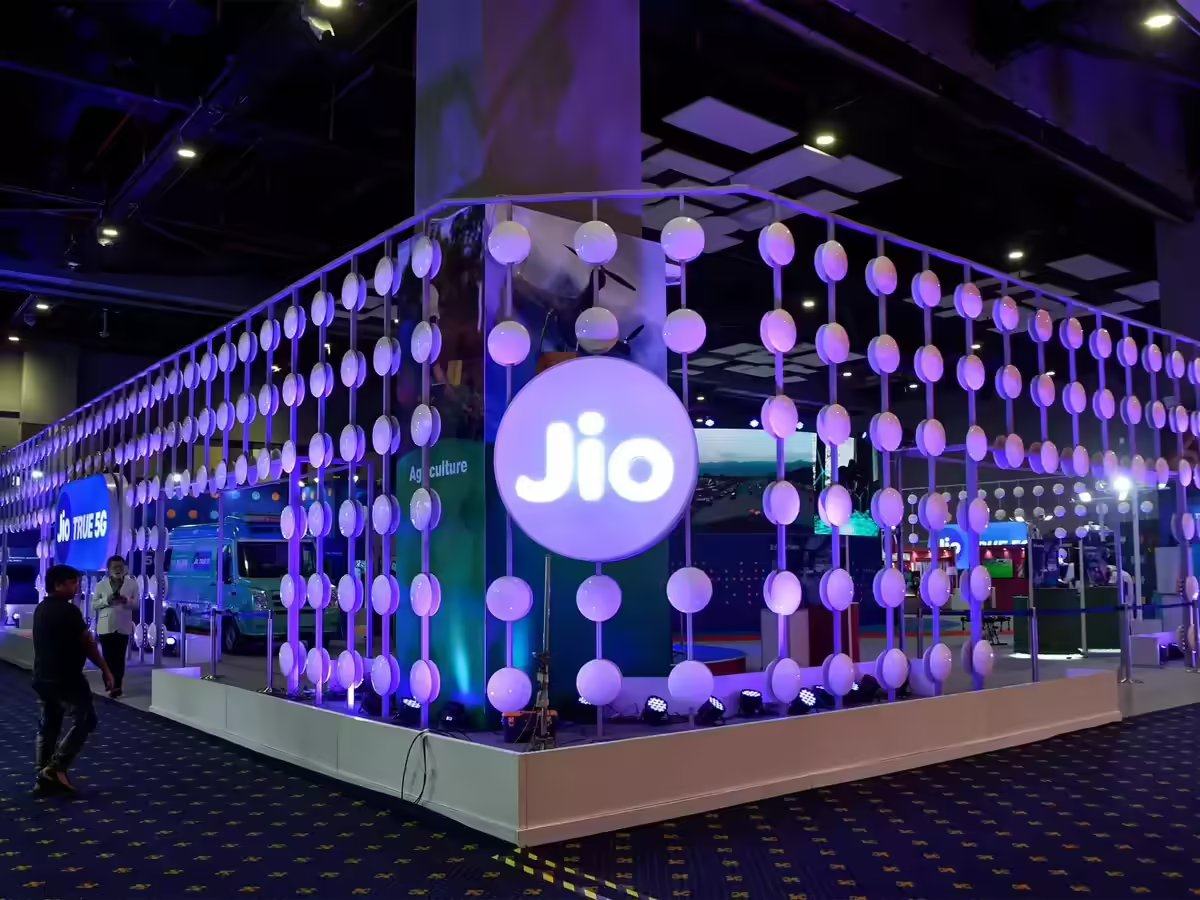
en.Wedoany.com Reported - Jio Platforms has submitted a draft initial public offering (IPO) prospectus to the Securities and Exchange Board of India. Expected to take place in the coming quarters, this offering is set to be a significant event in India's telecommunications sector. By subscriber count, its telecom business, Reliance Jio Infocomm, is the largest telecom operator in India, and this IPO will provide investors with direct exposure to this asset.
The IPO comes at a time when the industry cycle is strengthening, primarily driven by rising average revenue per user (ARPU), steady growth in data consumption, and easing capital expenditure intensity. Investor optimism in the telecom sector has already been reflected in recent market performance. The BSE Telecom Index has delivered a year-to-date return of 14.5% in 2026, making it the third-best performing sector index after power and capital goods, while the benchmark BSE Sensex index has declined by 9.9% over the same period (based on closing data as of June 29, 2026).
The offering will primarily consist of new shares, meaning most of the proceeds will flow into the company, contrasting with the proposed IPO of the National Stock Exchange of India (NSE), which is an offer for sale. Jio Platforms plans to use the IPO proceeds to reduce its telecom business debt, while also investing in network expansion, artificial intelligence (AI) infrastructure, and the growth of its digital services ecosystem. Gaurav Bhandari, CEO of Monarch Networth Capital, stated that the listing will give investors direct exposure to India's largest telecom and digital platform, while also enhancing transparency and capital allocation discipline. He expects the IPO to accelerate investments in adjacent digital businesses, with industry competition remaining rational as operators focus on returns.
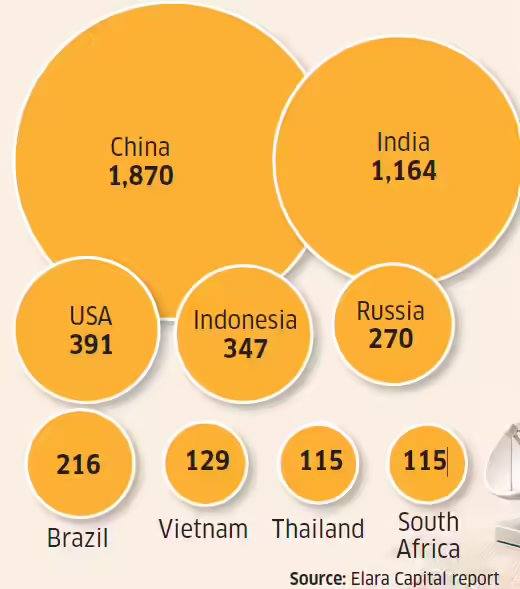
India is one of the largest telecom markets globally. In terms of mobile telecom subscriber base, the Indian market ranks among the top worldwide.
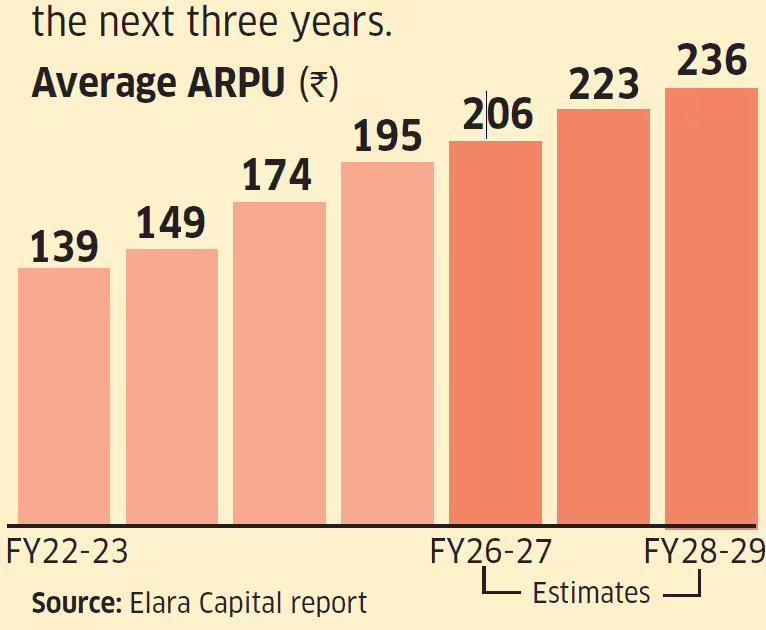
In terms of industry revenue, India's average revenue per user (ARPU) is expected to grow at a compound annual growth rate of 7% over the next three years.
India is the world's second-largest mobile connectivity market, but mobile broadband penetration stands at 68.5%, indicating room for growth. Rising disposable incomes, an improving device ecosystem, and the proliferation of new digital use cases are expected to deepen user engagement and accelerate adoption. Analysts anticipate stable growth for the telecom sector in the fiscal year (FY) 2026-27, supported by potential tariff hikes, ongoing premiumization, and a healthier 4G/5G subscriber mix. Network coverage expansion, enhanced monetization of 5G services, and growth in broadband and enterprise businesses are expected to remain key drivers. The expansion of enterprise services is also expected to aid margin improvement and support profitability. A June 2026 report from Axis Direct estimates industry revenue growth of 11-13% during this period. Leading players such as Bharti Airtel and Reliance Jio are focusing on monetizing 5G investments through fixed wireless access, enterprise solutions, and premium data products.
According to a June 2026 report from Elara Capital, the telecom sector is in a multi-year recovery phase, supported by rising ARPU, structural growth in data demand, and reduced incremental capital expenditure. The brokerage expects ARPU to grow at a compound annual growth rate of 7% between FY26 and FY29, driving earnings upgrades, balance sheet deleveraging, and stronger free cash flow generation. Experts advise viewing the sector as a story of structural cash flow and pricing power rather than a high-growth theme. Anil R., Senior Research Analyst at Geojit Investments, recommends allocating 5-10% of a portfolio to the sector, subject to valuation comfort, and emphasizes higher allocation to market leaders with strong balance sheets. On valuations, Bhandari noted that while telecom stocks may not appear cheap in absolute terms, they are reasonable when assessed against improving industry fundamentals such as rising ARPU, growing data consumption, and long-term digital infrastructure opportunities. He advises investors to consider accumulating quality telecom businesses during market corrections.
Despite the long-term outlook for the telecom sector remaining optimistic, analysts warn that delays in tariff hikes pose a key near-term risk. In a June 2026 report, UBS stated that operators may postpone tariff increases due to macroeconomic pressures, including conflicts in West Asia and high inflation. The brokerage expects a 10% tariff hike in the third quarter of the current fiscal year but warns that it could be delayed to FY28 if conditions remain unfavorable. Anil R. also highlighted Vodafone Idea's financial stress as a key factor affecting industry competitive intensity, and mentioned risks such as potential short-term valuation-driven dislocations from the proposed Jio IPO, as well as regulatory interventions that could impact pricing power or ARPU realization.
The positioning of the three major telecom operators is as follows: Bharti Airtel reported strong revenue growth for the March 2026 quarter, driven by steady momentum in its India operations and a solid contribution from its Africa business; it continues to invest in network quality and capacity expansion while diversifying into adjacent businesses such as data centers (targeting 1GW capacity), NBFC-led financial services, and sovereign cloud offerings; ARPU growth is likely supported by a better subscriber mix, including postpaid upgrades, ongoing migration from 4G to 5G, and rising data consumption; the Africa business offers long-term opportunities, supported by favorable demographics and increasing smartphone penetration. Elara Capital stated that a progressive dividend policy, improving returns, and stable earnings growth could drive valuation re-rating over time. Reliance Jio contributed 88% of Jio Platforms' consolidated revenue, underscoring its pivotal role in the group's digital ecosystem; the company reported 13% year-on-year revenue growth and 8% ARPU growth in FY26; free cash flow improved in the current year, aided by efficient working capital management and slower spending; Motilal Oswal expects Jio to remain a key growth driver for Reliance Industries, with EBITDA projected to grow at an 18% compound annual growth rate between FY26 and FY28; future growth is expected to be led by tariff hikes, market share gains, and expansion in home broadband and enterprise businesses. Vodafone Idea reported 5% year-on-year revenue growth for the March 2026 quarter, supported by subscriber stability; management remains confident in repaying liabilities through internal cash generation between FY26 and FY29; analysts warn that sustained improvement will depend on tariff hikes, subscriber stability, and further relief on spectrum payments.
Related Products




Flat Portable Satellite Terminal 0.35m Aperture Manual Portable Terminal
China Starwin Science & Technology Co., Ltd.




Multi-function Marine Monitoring Low-altitude Detection Radar Sea-air Boundary Ocean Dynamic Environment Measurement
Chengdu Dixin Technology Co., Ltd.

TWP16 P-Band Tropospheric Wind Profile Radar
China Huayun Meteorological Technology Group Co., Ltd.