AI Demand Drives Data Center Delivery to Under 9 Months
en.Wedoany.com Reported - Artificial intelligence demand is profoundly reshaping expectations for data center capacity delivery. Constraints are no longer limited to power supply or the availability of GPUs and TPUs; the ability to bring infrastructure into operation in a shorter timeframe is becoming critical.
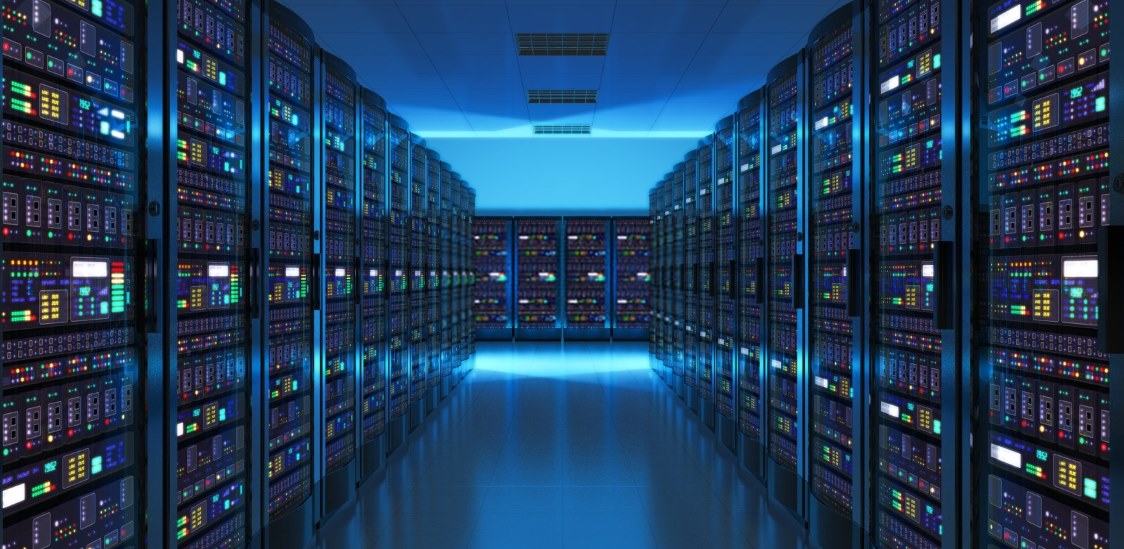
Enterprises, hyperscale cloud providers, and AI platform companies are seeking deployment solutions for large-scale GPU-intensive capacity that were considered impractical just a few years ago. Tasks that once took months to complete are now expected to be finished in weeks, and traditional delivery models struggle to meet such demands. Delivering AI-ready infrastructure on an accelerated timeline requires not only faster construction but also a fundamental rethinking of how projects are planned and executed from start to finish.
Traditional data center delivery models are often optimized for predictability rather than speed. Design, permitting, construction, and the agreement on power and cooling architectures typically follow a linear sequence, which, while reducing change orders, introduces delays at each stage. AI workloads impose fundamentally different requirements on infrastructure delivery: the power density needed for GPU-intensive environments can exceed 50 to 100 kilowatts per rack, requiring integration of liquid cooling technologies and a design approach that treats computing and infrastructure as a unified system. If these considerations arise late in the process, teams are forced into redesigns, change orders, or compromises that impact performance and delivery timelines.
Faced with this paradox, operators must adopt new approaches to project execution. Experienced delivery teams treat design, permitting, power integration, and construction as parallel workflows rather than sequential phases. This includes advancing detailed design while permitting is underway, coordinating with utilities before rack layouts are finalized to ensure substation capacity and switchgear procurement align with long-term density requirements, and sequencing construction so that core infrastructure becomes operational while auxiliary spaces are still being built. This approach can compress projects from 12 to 18 months down to under 9 months, but its success depends on early team alignment and experience in managing complexity.
In AI-focused builds, misalignment between facility infrastructure and actual computing requirements is a common cause of delays. GPU clusters have fundamentally different demands for power distribution, cooling redundancy, network topology, and physical rack layout compared to traditional enterprise deployments. Accelerated delivery requires these decisions to be made early and continuously stress-tested. The most successful projects treat infrastructure and computing as a single integrated system, with design reviews incorporating dual perspectives and decisions made with a clear understanding of their interdependencies.
Rapid acceleration introduces risks, but experience can mitigate them. Compressed timelines leave less room for error, and teams that have previously delivered high-density GPU-optimized environments are better equipped to anticipate bottlenecks and validate assumptions early. In accelerated builds, quality assurance processes become even more critical, necessitating component-level validation, rack-to-deployment testing, and phased commissioning plans. Speed comes from knowing which activities can run in parallel, which decisions must be made early, and where to retain flexibility.
External coordination is another factor that distinguishes successful projects from delayed ones. Close collaboration with utilities, municipalities, and local stakeholders impacts delivery timelines. Projects that engage early, communicate clearly, and align expectations are more likely to maintain momentum when navigating approvals and infrastructure dependencies. Partnerships across the infrastructure ecosystem are equally important; when all parties agree on standards and sequencing, execution becomes more predictable. For example, the ability to deploy 1,000 GPUs within weeks depends on the entire chain—from power and cooling to networking and computing—being designed to operate in lockstep. Recent cases, including Prime's LAX01 deployment in Vernon, California, and Lambda's deployment, demonstrate what can be achieved when these elements are aligned from the project's outset.
Artificial intelligence is not only reshaping what data centers are built for but also how they are built. Accelerated timelines are becoming the norm, and meeting this demand requires a shift from traditional linear delivery models to more integrated approaches. Operators will be judged not just on the capacity they can provide, but on their ability to bring it online reliably and predictably. The challenge lies in repeating this delivery at scale without sacrificing performance, resilience, or long-term operational success.
Related Products

Comprehensive Mining Automation Control System
Beijing Tianma Intelligent Control Technology Co., Ltd.


Hot Selling 10 Inch Intel N5100 I5 I7 FHD 8 +128GB 16+256GB Win10 Pro Win11 Pro 4G 5G Rugged Tablet PC Pad with NFC Barcode
Highton Electronics Co., Ltd.

Multi-function Marine Monitoring Low-altitude Detection Radar Sea-air Boundary Ocean Dynamic Environment Measurement
Chengdu Dixin Technology Co., Ltd.

Industrial and Commercial Point-Type Gas Detector
Jinan Benan Technology Development Co., Ltd.
MUX Series Communication Interface Device for Security and Stability Control System
Nanjing NR Electric Co., Ltd.
GYTA Type Non-Self-Supporting Aerial/Duct Optical Cable
TONGDING INTERCONNECTION INFORMATION CO., LTD.