China's Alipay AI Open Platform Launches, Enabling Merchants to Access Phones, Car Systems, and AI Glasses via "Abao"
en.Wedoany.com Reported - On July 7, China's digital payment and lifestyle service platform Alipay announced the official launch of its AI Open Platform, opening invitation-based testing to enterprise developers and third-party development service providers. Through the Alipay AI Open Platform, merchants and institutions can integrate the intelligent assistant "Abao," or opt for cross-device connectivity, enabling access to smart terminals and large model platforms such as phones, car systems, AI glasses, and IoT devices via "Abao," achieving one-time integration, multi-device distribution, and unified management.
The key focus of this launch is Alipay's opening of merchant service capabilities toward AI-driven and multi-device distribution. Previously, merchants within the Alipay ecosystem primarily reached users through mini-programs, lifestyle accounts, and service components. With the launch of the AI Open Platform, existing mini-programs, API interfaces, and service capabilities can be upgraded into AI-callable MCPs, Skills, or Agents. When users make requests, "Abao" can understand their intent and invoke merchant services to complete actions such as inquiries, orders, processing, reservations, and after-sales support. Merchants do not need to build complete AI applications from scratch; instead, they can transform their existing service capabilities into modules that can be invoked by intelligent agents.
Cross-device connectivity is another key capability of this platform. Alipay aims not only to keep merchant services within the Alipay app but also to enable services to reach phones, car systems, AI glasses, IoT devices, and other large model platforms through "Abao." For example, services such as transportation, bill payments, healthcare, government affairs, dining, retail, and local lifestyle services can be intelligently invoked based on the user's device and context in the future. Users can initiate route and refueling requests on car systems, use translation or payment services in AI glasses, and complete reservations and order confirmations on phones, all connected through the same set of service capabilities.
For enterprise developers and third-party development service providers, the invitation-based testing means Alipay is entrusting the ability to build AI services to ecosystem partners. Third-party development service providers can help merchants package existing services into callable capabilities, while enterprise developers can build AI services around payments, memberships, orders, customer service, marketing, data management, and business system interfaces. With unified access and management provided by the platform, merchants no longer need to adapt separately to different terminals, large models, or entry points; service launch, distribution, invocation, and operations can be centrally managed.
Alipay has a vast array of scenarios in local lifestyle services, financial payments, government affairs, and commercial services, which hold practical value for the implementation of AI agents. Compared to simple Q&A AI applications, merchant services require the ability to "understand needs and invoke real business capabilities." If users need to check bills, book stores, process transactions, generate travel plans, or query order statuses, the AI agent must be able to connect to real service systems rather than just providing text-based answers. With the launch of the Alipay AI Open Platform, "Abao" will take on a role closer to a service scheduling hub, connecting user intent, merchant capabilities, and multi-device scenarios.
After the platform opens, changes in the Alipay AI ecosystem will first be reflected in the number of service capabilities integrated, developer participation, and multi-device invocation scenarios. As enterprise developers, third-party development service providers, and merchant institutions enter the invitation-based testing phase, existing mini-programs, interfaces, and business capabilities will gradually be transformed into AI-callable modules. Phones, car systems, AI glasses, IoT devices, and large model platforms will become new distribution channels for these services. The launch of the Alipay AI Open Platform marks the transition of "Abao" from a single intelligent assistant to an AI service platform connecting merchant services with multi-device scenarios.
Related Products


Automatic Aiming Laser Remote Obstacle Removal Robot
Pinggao Group Weihai High-Voltage Apparatus Co., Ltd.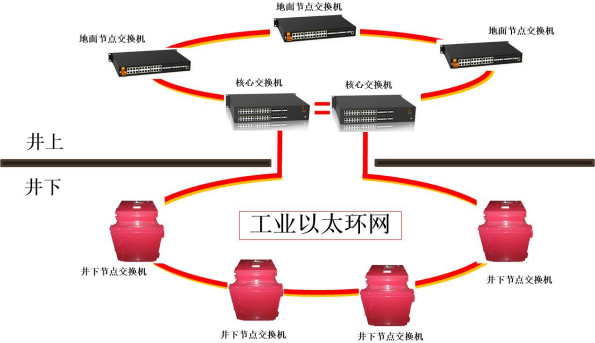
Mine Explosion-proof and Intrinsically Safe Industrial Ethernet Ring Network (10 Gigabit/Gigabit)
Chongqing Mas Sci&Tech Co., Ltd.
G.652.D Wavelength-extended Non-dispersion Shifted Single-mode Optical Fiber
HONGAN GROUP CO., LTD.
Conveyor Belt Intelligent Monitoring System
LUO YANG WIRE ROPE INSPECTION TECHNOLOGY CO., LTD.
MUX Series Communication Interface Device for Security and Stability Control System
Nanjing NR Electric Co., Ltd.


Multi-function Marine Monitoring Low-altitude Detection Radar Sea-air Boundary Ocean Dynamic Environment Measurement
Chengdu Dixin Technology Co., Ltd.


Hot Selling 10 Inch Intel N5100 I5 I7 FHD 8 +128GB 16+256GB Win10 Pro Win11 Pro 4G 5G Rugged Tablet PC Pad with NFC Barcode
Highton Electronics Co., Ltd.