UK VodafoneThree Launches £11 Billion 5G Network Construction Project
en.Wedoany.com Reported - Following the merger of Vodafone UK and Three UK, UK VodafoneThree has launched a mobile network construction project totaling £11 billion. The project aims to expand the coverage of the UK's 5G standalone network by integrating, modernizing, and upgrading mobile communication sites nationwide. It plans to achieve 5G standalone network coverage for 99% of the UK population by 2030, increasing to 99.96% by 2034.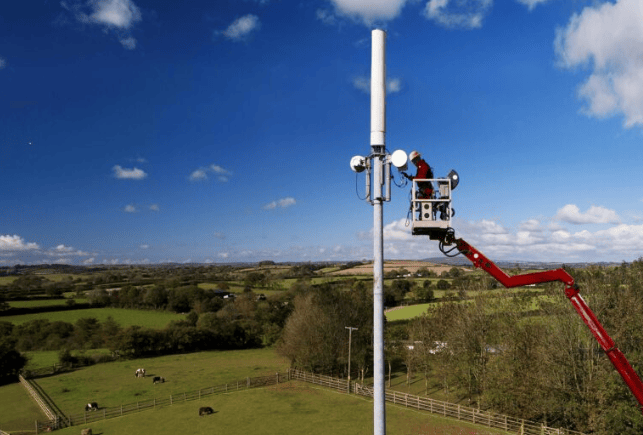
UK VodafoneThree was formed through the merger of Vodafone UK and Three UK, making the combined entity one of the UK's major mobile network operators. This £11 billion investment is not a single base station expansion project but a long-term integration of national mobile network assets. The project includes merging existing Vodafone and Three network sites, optimizing duplicate sites, enhancing capacity in key areas, upgrading the core network, deploying 5G standalone networks, improving communication dead zones, and strengthening coverage in remote regions. For the UK mobile communications market, the focus of this project is to reorganize two existing mobile network resources into a single national network with broader coverage, higher capacity, and more stable service.
The 5G standalone network is the core objective of this project. Compared to non-standalone networks, 5G standalone networks no longer rely on the 4G core network, enabling lower latency, higher reliability, more flexible network slicing, and stronger IoT connectivity. UK VodafoneThree plans to achieve 5G standalone network coverage for 99% of the UK population by 2030, meaning the project must serve not only major cities like London, Manchester, and Birmingham but also towns, transportation corridors, industrial parks, rural communities, and areas with poor communication conditions. By 2034, coverage will increase to 99.96%, further targeting remote and low-coverage areas for network supplementation.
The project construction will involve extensive communication infrastructure upgrades. Mobile site upgrades typically include antenna systems, radio frequency equipment, base station equipment, power systems, transmission links, tower or pole structures, cabinets, fiber backhaul, core network nodes, and network management systems. As 5G standalone network deployment progresses, sites must not only "emit 5G signals" but also meet higher requirements for capacity, latency, reliability, and network slicing. Large-scale site integration will also bring engineering challenges such as construction scheduling, site permits, equipment replacement, network switching, and continuity of user services.
UK VodafoneThree has previously stated that by integrating the networks of the two companies and upgrading thousands of sites, UK users and businesses will benefit from faster speeds and more stable coverage. The project is also designed as a long-term, regulated, and financially committed network construction plan aimed at addressing shortcomings in the UK's mobile communication infrastructure. Some areas of the UK have long suffered from weak mobile signals, insufficient network capacity, and "not spots" (communication dead zones), affecting residents' internet access, business operations, public services, and transportation connectivity. After the £11 billion investment is implemented, improvements in mobile coverage will first be seen in the integration of existing sites and network sharing areas, followed by the gradual construction of new sites, expansion of 5G standalone networks, and coverage supplementation in remote areas.
From a project execution perspective, the network construction following the Vodafone and Three merger will undergo multiple layers of integration. The first layer is network resource integration, unifying the original spectrum, sites, transmission, and core network capabilities of both companies. The second layer is site modernization, phasing out inefficient or redundant facilities and enhancing capacity in key areas. The third layer is the expansion of 5G standalone network capabilities, enabling more areas to have network conditions suitable for enterprise applications, IoT, low-latency services, and high-reliability connections. For engineering firms, communication equipment suppliers, fiber transmission service providers, power system suppliers, site construction contractors, and maintenance service providers, such a national network project will generate sustained, phased engineering demands over several years.
The value of this project extends beyond coverage figures. Once 5G standalone networks are deployed on a broader scale, they can support applications such as the industrial internet, smart transportation, port logistics, remote monitoring, public safety, fixed wireless access, and enterprise private networks. To achieve 99% population coverage by 2030 and 99.96% by 2034, UK VodafoneThree must simultaneously advance construction in high-capacity urban areas and low-coverage rural areas. The former tests spectrum utilization, site density, and network capacity, while the latter tests site acquisition, return on investment, and operational costs. Whether the £11 billion investment can truly translate into a perceptible network experience for users will depend on the speed of site upgrades, core network deployment progress, equipment supply assurance, and the implementation of regulatory commitments.
Related Products



Conveyor Belt Intelligent Monitoring System
LUO YANG WIRE ROPE INSPECTION TECHNOLOGY CO., LTD.
Multi-function Marine Monitoring Low-altitude Detection Radar Sea-air Boundary Ocean Dynamic Environment Measurement
Chengdu Dixin Technology Co., Ltd.
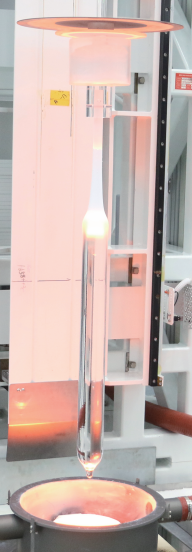
G.652.D Wavelength-extended Non-dispersion Shifted Single-mode Optical Fiber
HONGAN GROUP CO., LTD.




Flat Portable Satellite Terminal 0.35m Aperture Manual Portable Terminal
China Starwin Science & Technology Co., Ltd.