Vercel Reveals Two Killer Apps for AI Agents: Coding and Internal Operations
en.Wedoany.com Reported - In an exclusive interview following the ShipNYC conference, Vercel CEO Guillermo Rauch revealed that two "killer applications" for AI agents have entered production: coding agents and internal operations agents. Vercel currently records 6 million deployments per day, half of which are triggered by coding agents, with over 1 trillion tokens flowing through the company's AI gateway daily, demonstrating the large-scale adoption of AI agents in software development.
Rauch stated that last year was a prototyping phase where ideas had no boundaries. However, after internally developing and deploying hundreds of agents, the company recognized the real-world challenges in production. The biggest lesson was identifying two primary applications for AI agents: coding agents drive most token usage—the more code generated, the greater the deployment demand—while internal agents help operate the company, such as sales agents or operations agents.
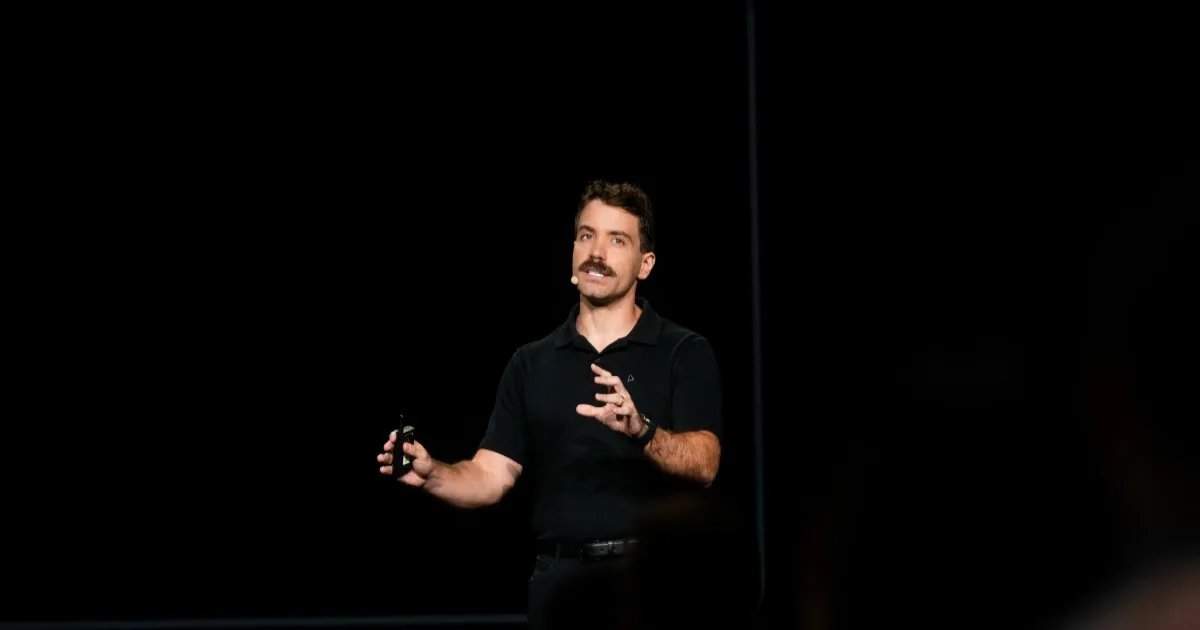
Rauch pointed out that the biggest challenges lie in protecting data access, auditing agent behavior, and obtaining tool call traces and the required access controls. To address these challenges, Vercel developed the Eve framework and the Vercel Sandbox tool. Eve allows users to write agent instructions and skills in natural language, while Sandbox acts as a "fence" to limit the agent's operational space—agents can still freely express intelligence, but policies can be applied to data access and outflow.
Rauch emphasized a serious risk of AI: when IDE coding tools like Devin or Cursor are used in the wrong environment, they may train models on the entire company codebase. He cited an example of speaking with the president of Airbus, who was concerned that decades of accumulated specific aerospace C++ code could leak to the cloud for training.
Rauch provided specific examples of Vercel's internal agent implementation. Sales representatives responsible for expanding existing accounts are often limited by data access, previously unable to quickly answer questions like "which account is growing the fastest" or "which five accounts added the most courses in the past two weeks." Now, with Eve, agents can be used to boost productivity across the entire company, including customer-facing agents.
Rauch stated that agents are forcing companies to become more open, which will have a significant long-term impact. Many SaaS giants built their empires by locking down user data, a model incompatible with the agent era that requires more flexible data access. Regarding relationships with major AI labs, he sees significant changes. Last year, many companies chose a single lab partner; now the approach is more modular, with models, tools, data platforms, sandboxes, and gateways all plug-and-play. Rauch noted that Google Gemini has seen significant growth because companies are optimizing for production, with price-performance ratio becoming a primary consideration—Gemini models are considered to have excellent price-performance characteristics. Open-source models like Deepseek and GLM-5.2 are also beginning to see widespread adoption.
Rauch said that data doesn't lie, and some places will directly compete with AI labs. He mentioned that OpenAI released new tools allowing users to publish directly to the web, which he sees as a natural step for OpenAI to become a small-scale website hosting provider. When users ask about web hosting, the model recommends Vercel. The key question is whether models and agents will merge or remain independent modules. Rauch said, "Do you get all your intelligence from one place? Or do you get modules, libraries, or building blocks from one vendor and build on top of that? This is exactly what we've been doing in software engineering, and it's what we bring to the market." He stated that Vercel's ambition is to become the AWS of this generation, striving for a world of open protocols. The future of AI will not be monopolized by a single large lab but will become an open ecosystem where various components can interconnect, allowing developers and companies to choose the technology best suited to their needs without being locked into a single vendor. Vercel has proven itself a key player in AI infrastructure, strategically positioned at the intersection of AI agent development and secure, efficient production deployment, processing millions of deployments and trillions of tokens daily.
Related Products


Flat Portable Satellite Terminal 0.35m Aperture Manual Portable Terminal
China Starwin Science & Technology Co., Ltd.
G.652.D Wavelength-extended Non-dispersion Shifted Single-mode Optical Fiber
HONGAN GROUP CO., LTD.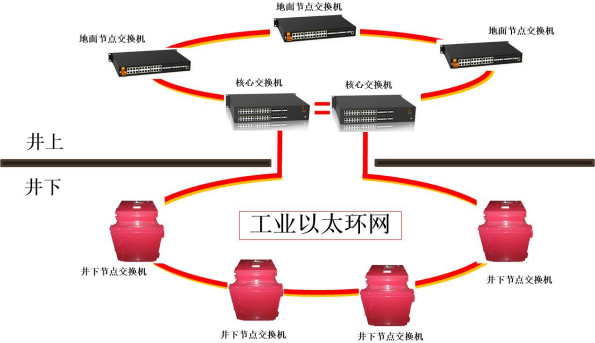
Mine Explosion-proof and Intrinsically Safe Industrial Ethernet Ring Network (10 Gigabit/Gigabit)
Chongqing Mas Sci&Tech Co., Ltd.

Multi-function Marine Monitoring Low-altitude Detection Radar Sea-air Boundary Ocean Dynamic Environment Measurement
Chengdu Dixin Technology Co., Ltd.



Comprehensive Mining Automation Control System
Beijing Tianma Intelligent Control Technology Co., Ltd.