T-Mobile and Starlink Partner to Launch Monthly Satellite Service
en.Wedoany.com Reported - The surge in satellite launches is reducing consumer costs in two distinct ways.

For users living in dense urban centers, satellite broadband does not directly lower monthly home internet bills. Taking Starlink as an example, its standard residential service costs between $55 and $130 per month, plus a prepaid hardware fee of $340. The fundamental law of physics facing satellites is the limited bandwidth capacity per square kilometer. A satellite passing over a large city must share its data beam with millions of people crowded together, leading to immediate network congestion.
The surge in satellite launches is impacting consumer costs in the following ways. The first is mobile satellite add-on services. Satellite operators are broadcasting signals directly to unmodified smartphones through Direct-to-Device (D2D) technology. Mobile operators are leveraging space as a tool to reshape how mobile plans are packaged. T-Mobile has launched the "T-Satellite" service, powered by Starlink's cellular satellites, which provides satellite messaging and data coverage in cellular dead zones at a fixed monthly fee of $10, and includes it completely free in premium unlimited plans. AT&T and Verizon are forming a joint venture to pool spectrum resources to offer a similar competitive open-access satellite layer. By offloading emergency coverage, basic text messaging, and remote map data to space networks, mobile providers are compelled to introduce more competitive data plans.
The second way is the "good enough" threat limiting local price increases, with its mechanism rooted in contestable market theory. Historically, regional cable and fiber providers operated with near-monopoly status; today, the ubiquity of Low Earth Orbit (LEO) constellations means traditional internet service providers (ISPs) no longer have a captive user base. With budget tiers such as the Starlink Access-level 100 Mbps residential plan at $55 per month now widely accessible, traditional broadband companies face a price ceiling. Consumers can immediately switch to satellite alternatives. According to the telecommunications industry's annual Broadband Pricing Index, the real cost of entry-level terrestrial internet plans has seen its sharpest decline in over a decade. Terrestrial providers are actively cutting prices, investing billions of dollars in fiber upgrades, and eliminating mandatory long-term contracts to prevent their user base from migrating to space-based alternatives.
Related Products



TWP16 P-Band Tropospheric Wind Profile Radar
China Huayun Meteorological Technology Group Co., Ltd.

Comprehensive Mining Automation Control System
Beijing Tianma Intelligent Control Technology Co., Ltd.

20 Inch 1600*900 Full HD 60Hz TFT LED Monitor with VGA and DP Interfaces for Desktop Computers-Business Use
Guangzhou Zanying Optoelectronics Technology Co., Ltd.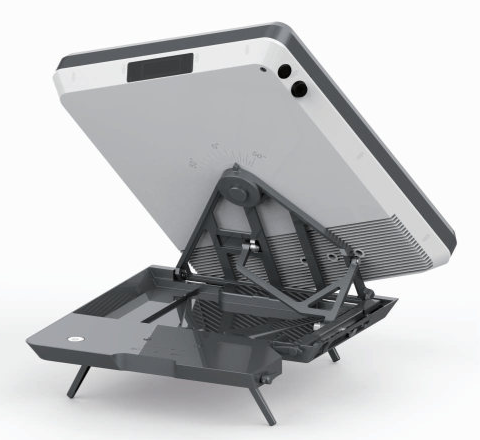
Flat Portable Satellite Terminal 0.35m Aperture Manual Portable Terminal
China Starwin Science & Technology Co., Ltd.
Automatic Aiming Laser Remote Obstacle Removal Robot
Pinggao Group Weihai High-Voltage Apparatus Co., Ltd.
Hot Selling 10 Inch Intel N5100 I5 I7 FHD 8 +128GB 16+256GB Win10 Pro Win11 Pro 4G 5G Rugged Tablet PC Pad with NFC Barcode
Highton Electronics Co., Ltd.