Japan's IPS Announces Plan to Build $141 Million Cable Landing Station on July 2
en.Wedoany.com Reported - On July 2, Japanese telecom operator IPS announced plans to build a cable landing station in Wakayama City, near Osaka, with an initial investment estimate of approximately 23 billion yen, or about $141 million. This investment includes the development cost of a branch line for the proposed Candle submarine cable project. A commercial feasibility study for the project has been launched, aiming to add a new access node to Japan's international communication infrastructure.
The cable landing station is located in Wakayama City, complementing the international communication infrastructure of the Kansai region. Japan's existing international submarine cable landing resources are largely concentrated in a few coastal areas. A more dispersed distribution of landing stations can reduce risks associated with single-point failures, natural disasters, or network congestion in any one region. By placing the new station near Osaka, IPS also aims to serve the Kansai metropolitan area, data centers, cloud computing nodes, and cross-border communication business needs.
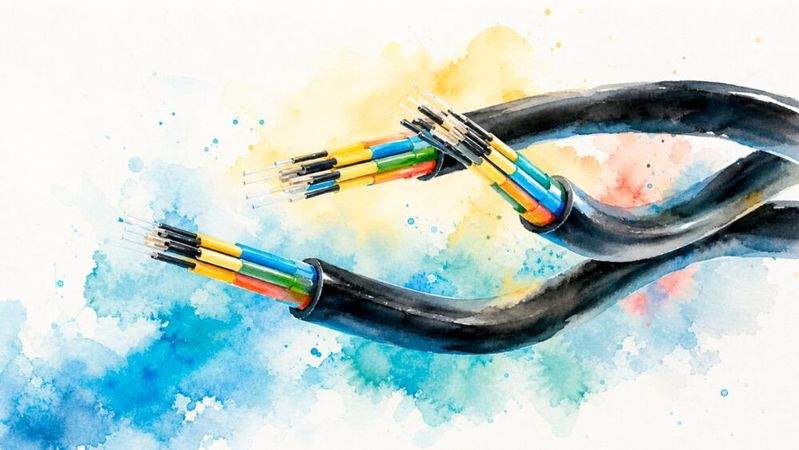
A cable landing station is a critical facility for connecting a submarine optical cable system to the terrestrial network. After the submarine cable makes landfall, the landing station handles optical signal transmission, network interconnection, monitoring, maintenance, and service distribution, further connecting to backbone networks, data centers, operator networks, and internet exchange points. For international communication systems, the landing station is not only a physical access point but also crucial infrastructure affecting network redundancy, latency control, and operational security.
The Candle submarine cable project is a core background for this investment. According to disclosed information, Candle is led by companies such as SoftBank and Meta, with participation from IPS, Malaysian telecom technology service company, and Indonesia's XLSmart. It plans to connect Japan, Taiwan, the Philippines, Indonesia, Malaysia, and Singapore, spanning approximately 8,000 kilometers, with a target operational date of 2028.
The system is designed with 24 fiber pairs. SoftBank previously noted that traditional submarine cable systems commonly feature 16 to 20 fiber pairs. By adopting 24 fiber pairs, Candle can provide greater capacity and lower latency for international communications to cope with the growth of data traffic in Asia. The expansion of AI, 5G, cloud services, cross-border e-commerce, video transmission, and enterprise dedicated lines is continuously increasing the load on submarine cable systems.
IPS's role in this project is not just that of an ordinary participant. The company has long operated communication services related to Japan and the Philippines and owns the Philippine network business Infinivan. Advancing the construction of the Wakayama cable landing station indicates that IPS aims to further integrate its submarine cable assets, landing station resources, and cross-border communication services, enhancing its control over infrastructure in the Japan-Southeast Asia digital corridor.
Japan is strengthening the decentralization of international submarine cable landing nodes. SoftBank has already designated the Maruyama International Relay Center in Minamiboso City, Chiba Prefecture, as Candle's landing station in Japan and is simultaneously promoting the construction of new landing nodes in Tomakomai City, Hokkaido, and Itoshima City, Fukuoka Prefecture, Kyushu. If the Wakayama cable landing station materializes, it will further expand the geographical coverage of Japan's international communication network, creating a more dispersed submarine cable access pattern across regions such as Kanto, Kansai, Hokkaido, and Kyushu.
The 23 billion yen investment is still a preliminary estimate, and the project is in the commercial study phase. Subsequent focus will be on station construction plans, submarine cable branch access design, regulatory approvals, shore-end engineering, terrestrial backhaul networks, and commercial customer access arrangements. For submarine cable projects, the construction cycle of the landing station often progresses in parallel with cable laying, equipment supply, system testing, and cross-border coordination. Changes in any of these aspects could affect the final operational timeline.
The supply chain requirements for such projects are relatively clear, typically involving the construction of cable landing station facilities, optical transmission equipment, power supply systems, cooling systems, monitoring and security systems, network equipment, backup power systems, fire protection systems, civil engineering, and coastal construction services. As the Candle project moves into a more specific engineering phase, demand for equipment related to landing station construction, branch line access, and terrestrial network interconnection will gradually be released.
The growth of data traffic in Asia is reshaping the logic behind submarine cable construction. In the past, submarine cable projects primarily served traditional international voice and internet connections. Now, they more directly support cloud computing, AI training and inference, enterprise cross-border data transmission, video content distribution, and regional data center interconnection. IPS's plan to build a cable landing station in Wakayama is essentially an infrastructure investment to expand the capacity of the Japan-Southeast Asia communication corridor, which will further enhance the node value of the Kansai region in the international digital network.
Related Products


Industrial and Commercial Point-Type Gas Detector
Jinan Benan Technology Development Co., Ltd.
TWP16 P-Band Tropospheric Wind Profile Radar
China Huayun Meteorological Technology Group Co., Ltd.
20 Inch 1600*900 Full HD 60Hz TFT LED Monitor with VGA and DP Interfaces for Desktop Computers-Business Use
Guangzhou Zanying Optoelectronics Technology Co., Ltd.
Automatic Aiming Laser Remote Obstacle Removal Robot
Pinggao Group Weihai High-Voltage Apparatus Co., Ltd.
Flat Portable Satellite Terminal 0.35m Aperture Manual Portable Terminal
China Starwin Science & Technology Co., Ltd.

GYTA Type Non-Self-Supporting Aerial/Duct Optical Cable
TONGDING INTERCONNECTION INFORMATION CO., LTD.