Polish Exatel Consortium Completes 75 km Quantum Key Distribution Test
en.Wedoany.com Reported - Polish company Exatel, together with German KEEQuant, Czech CESNET, and the Poznań Supercomputing and Networking Center (PCSS) as part of the SEQRET consortium, has successfully tested a quantum-secure communication system on an existing operational fiber optic line, achieving secure exchange of encryption keys over a distance of 75 kilometers.

SEQRET consortium partners confirmed that existing fiber optic networks can simultaneously carry quantum-secure communication and high-throughput classical data transmission using the same pair of standard optical fibers. During the test, they achieved parallel transmission of Quantum Key Distribution (QKD) alongside classical traffic with throughput up to 64 Tb/s over a distance of 75 kilometers.
This result is particularly important for telecommunications operators and infrastructure owners. Previously, limited fiber availability was a major obstacle to deploying quantum key technology, as reserving dedicated fibers for QKD was costly and organizationally challenging. The possibility of coexistence between the two transmission types changes this situation, enabling the deployment of quantum key distribution within the same fiber infrastructure that also carries classical telecommunications traffic. Exatel stated that the test conclusions are clear: QKD technology can be deployed in existing transmission infrastructure without the need to build parallel networks using dedicated dark fibers or to undertake costly network modifications.
Mateusz Ozimek, SEQRET Project Manager and Head of the Space Technology Team at Exatel, emphasized that for operators serving critical infrastructure and the public sector, trust must be based on verifiable results. The verification conducted provides such evidence and lays the foundation for assessing the possibility of integrating quantum key distribution technology into reliable network services tailored for environments with the highest security requirements.
The verification was carried out in a two-node configuration using standard G.652.D optical fibers. To fully simulate the working conditions of a modern telecommunications network, six optical transceivers were used, and the remainder of the transmission environment was filled with noise-loaded channels to simulate a fully loaded DWDM system. Meanwhile, KEEQuant's QKD module generated encryption keys, which were then passed to the encryptor via the KEEQuant Key Management System (KMS). To demonstrate a complete system solution, an encrypted video stream was transmitted using end-to-end encryption.
The test confirmed the stable coexistence of quantum and classical transmission under three system operating configurations: 80 × 800 Gb/s (64 Tb/s) over C and L bands at a distance of 60 kilometers; 40 × 800 Gb/s (32 Tb/s) over C band at a distance of 65 kilometers; and 80 × 400 Gb/s (32 Tb/s) over C and L bands at a distance of 75 kilometers.
SEQRET project partners include: KEEQuant (Germany), which provided the quantum key distribution system and key management system, and was responsible for the overall solution's integration concept design and end-to-end demonstration; Exatel (Poland), which defined the operational requirements for deploying the solution in real networks from a telecommunications operator's perspective; CESNET (Czech Republic), which provided an advanced testing environment and supported the verification process; and PCSS (Poland), which provided the fiber optic infrastructure for distance testing.
Related Products


TWP16 P-Band Tropospheric Wind Profile Radar
China Huayun Meteorological Technology Group Co., Ltd.

Mine Explosion-proof and Intrinsically Safe Industrial Ethernet Ring Network (10 Gigabit/Gigabit)
Chongqing Mas Sci&Tech Co., Ltd.

Flat Portable Satellite Terminal 0.35m Aperture Manual Portable Terminal
China Starwin Science & Technology Co., Ltd.
MUX Series Communication Interface Device for Security and Stability Control System
Nanjing NR Electric Co., Ltd.

Multi-function Marine Monitoring Low-altitude Detection Radar Sea-air Boundary Ocean Dynamic Environment Measurement
Chengdu Dixin Technology Co., Ltd.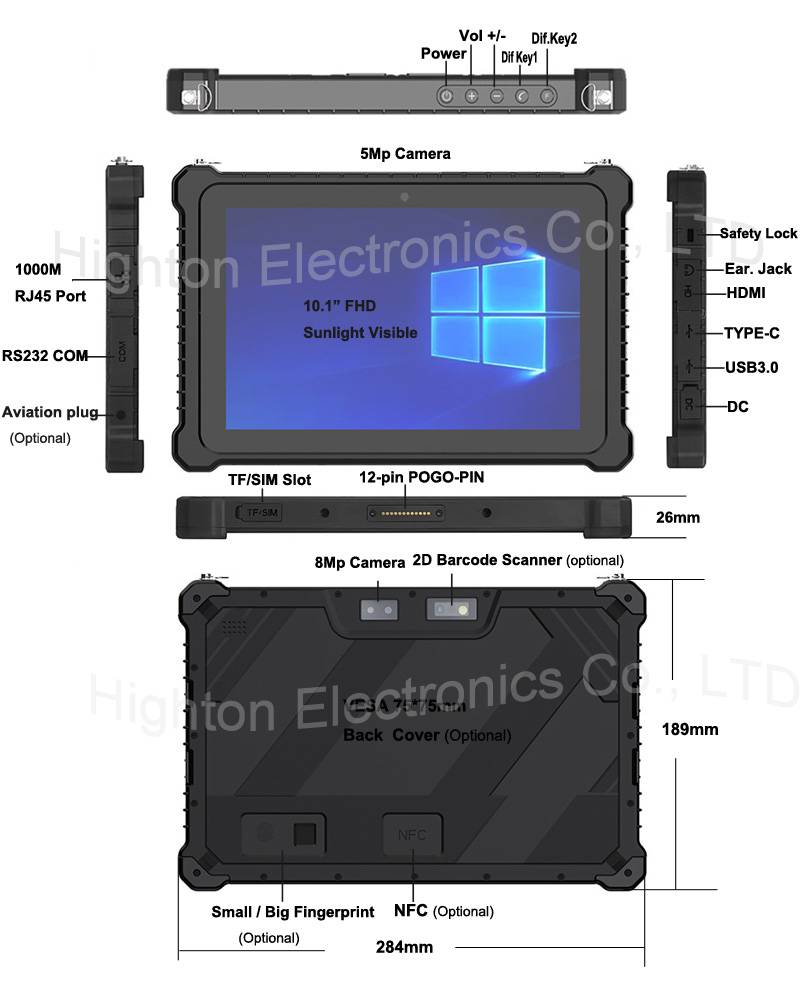
Hot Selling 10 Inch Intel N5100 I5 I7 FHD 8 +128GB 16+256GB Win10 Pro Win11 Pro 4G 5G Rugged Tablet PC Pad with NFC Barcode
Highton Electronics Co., Ltd.

Industrial and Commercial Point-Type Gas Detector
Jinan Benan Technology Development Co., Ltd.