China's Ant Lingbo Releases 150 Million Data Spatial Perception Model LingBot-Depth 2.0
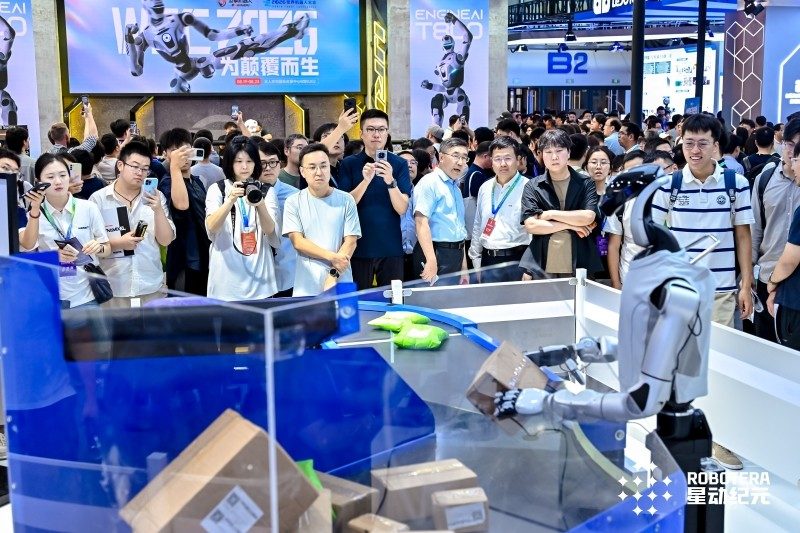
en.Wedoany.com Reported - Lingbo Technology, an embodied intelligence company under Ant Group, released the spatial perception model LingBot-Depth 2.0 on July 7. The model is trained on 150 million data samples and achieves comprehensive upgrades in edge clarity, small object recognition, long-distance depth estimation, and robustness in complex scenes.
LingBot-Depth is a self-developed spatial perception model by Lingbo Technology, serving as the robot's eyes in the physical world. The previous version had already solved the spatial perception challenges of robots in complex scenes such as transparent and reflective objects. Compared to LingBot-Depth 1.0, the training data for version 2.0 has expanded from 3 million to 150 million samples, with comprehensive performance upgrades: it achieved first place in 12 out of 16 evaluations on the depth completion benchmark; in the most challenging indoor large-area depth missing scenes, the depth error was halved compared to the previous generation, with RMSE dropping from 0.132 to 0.062; performance is particularly outstanding in scenes where traditional depth cameras are most prone to failure, such as glass, mirrors, and transparent objects.
This release also includes the visual foundation model LingBot-Vision for LingBot-Depth 2.0, establishing a capability chain for robots from "understanding" to "accurately seeing," aimed at addressing core challenges in robot vision, including spatial perception, fine recognition, and adaptation to complex environments.
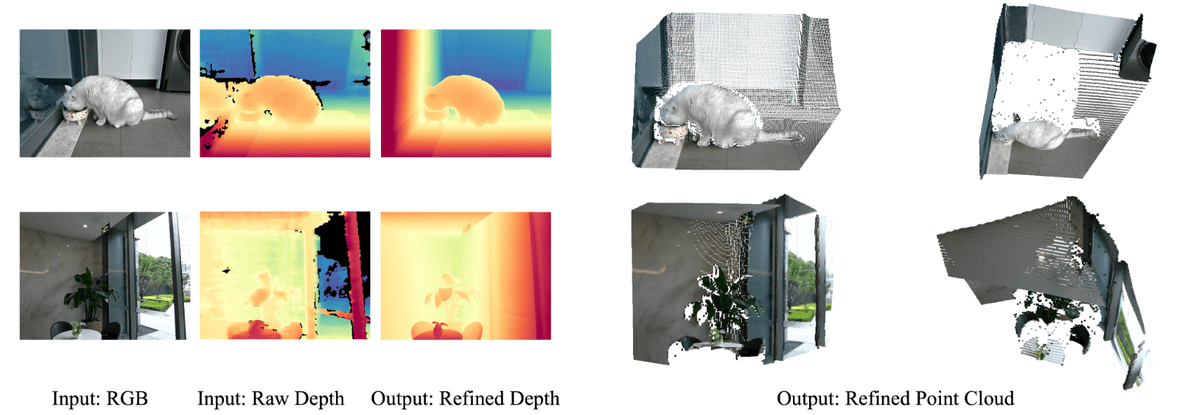
The breakthrough progress of LingBot-Depth 2.0 is attributed to the outstanding visual representation capabilities of LingBot-Vision. As a general-purpose visual model, LingBot-Vision is the industry's first visual foundation model to use "boundary structure" as a pre-training objective, achieving a paradigm shift in spatial perception training. It possesses sub-pixel-level boundary localization and spatial structure understanding capabilities, enabling higher precision and more stable spatial perception.
LingBot-Vision's pre-training corpus consists of only 160 million images, an order of magnitude smaller than DINOv3, yet its depth estimation accuracy surpasses DINOv3. Moreover, LingBot-Vision's judgment of object boundaries is sufficiently stable, allowing continuous tracking of object boundaries in videos. LingBot-Vision has open-sourced four versions: ViT-G/L/B/S.
It is understood that LingBot-Vision not only supports the training of LingBot-Depth 2.0 but also possesses the general capability of "one model for multiple uses."
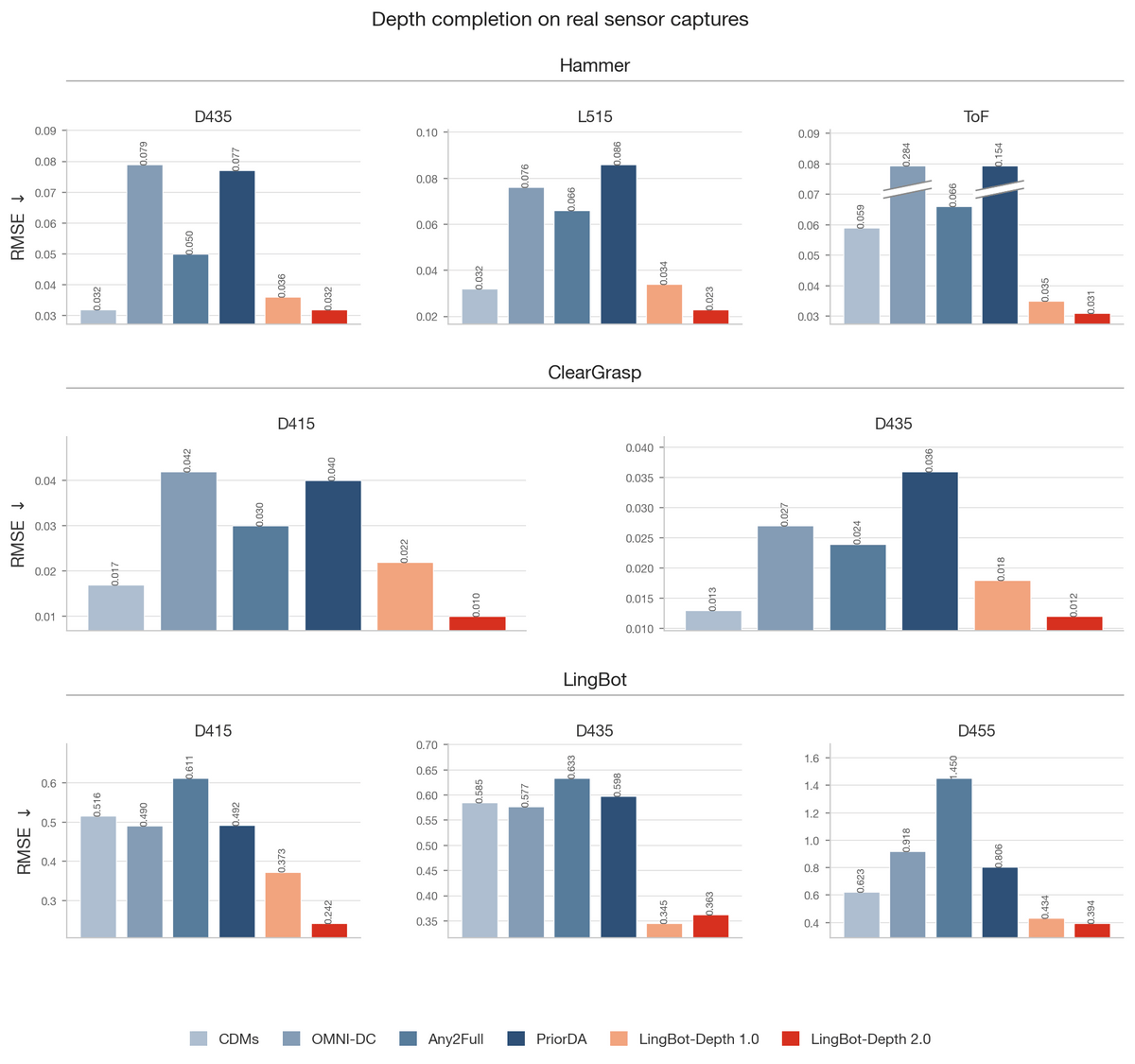
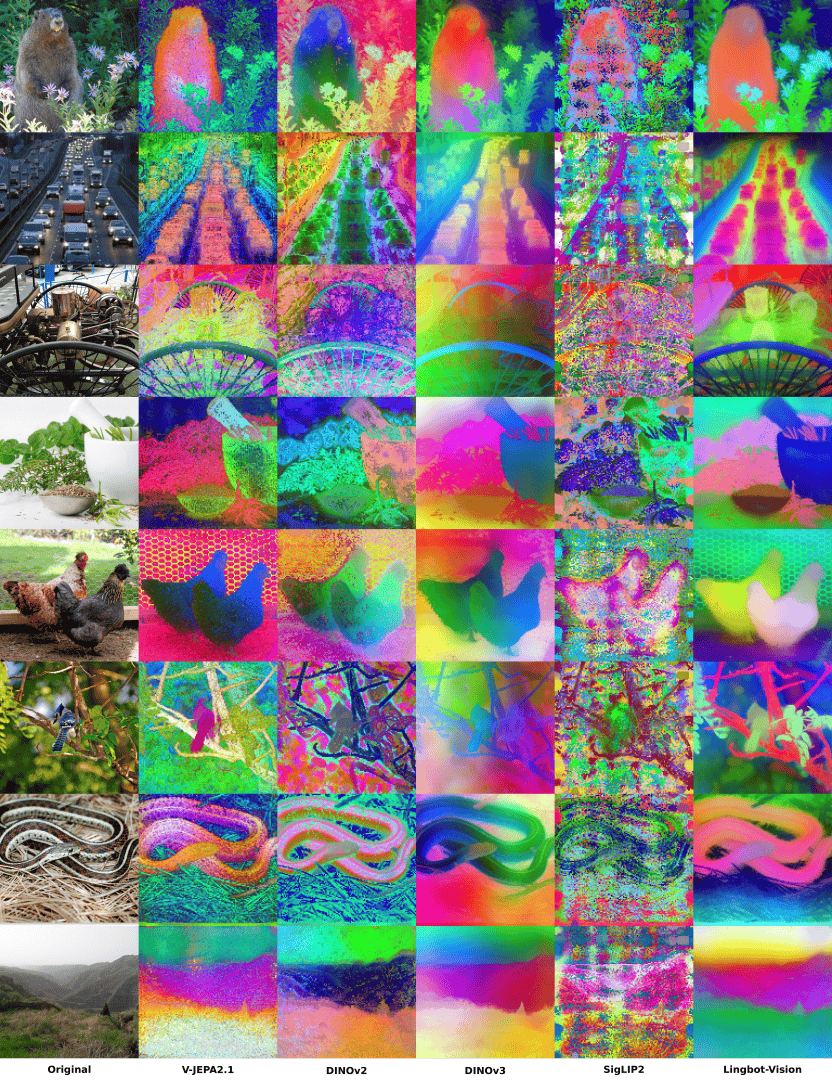
Currently, LingBot-Depth 2.0 has received professional certification from Orbbec's Depth Vision Lab. Real-world scenario tests show that, based on the chip-level 3D raw data provided by Orbbec's Gemini 330 series binocular 3D cameras, LingBot-Depth 2.0 has significantly improved in edge clarity, object contour completeness, small object recognition, long-distance depth estimation, and robustness under complex lighting and material scenarios.
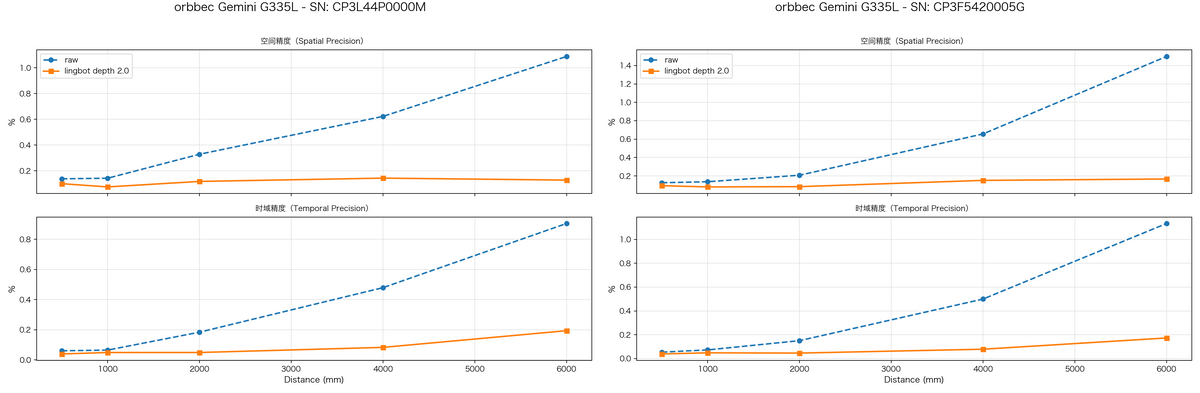
In terms of commercialization, Ant Lingbo has engaged in deep cooperation with Orbbec in many areas. It is understood that in Orbbec's newly released product matrix for data acquisition without a physical body, the RGB-D version of the EGO device will be adapted to a LingBot-Depth version specifically optimized by Lingbo Technology for data collection scenarios. Subsequently, higher-level commercial version models will be further integrated to continuously fill depth gaps, optimize object edges and spatial structure details, providing a more accurate, stable, and usable real-world data foundation for embodied intelligence model training.
Additionally, Orbbec will launch an SDK product integrating the latest LingBot-Depth model capabilities for robot customers to use on the edge side, enabling robots using Gemini 330 series cameras to achieve better depth effects. It also plans to launch an integrated camera product incorporating the commercial version of LingBot-Depth by the end of the year, achieving an integrated delivery of "3D camera + spatial perception capability." With the release of the two models, cooperation between the two parties is expected to extend to more fields.
Currently, the technical reports for both models and the model weights for LingBot-Vision have been open-sourced. Lingbo Technology stated that it hopes to build the robot vision foundation with the industry in an open manner, helping robots overcome the industry bottleneck of "understanding, accurately seeing, and stably seeing" in the real physical world, and accelerating the large-scale deployment of the embodied industry.
Related Products


Industrial and Commercial Point-Type Gas Detector
Jinan Benan Technology Development Co., Ltd.

CAP1400 main feedwater flow nozzle flowmeter.
Jiangsu Hongda Instrument Technology Co., LTD.
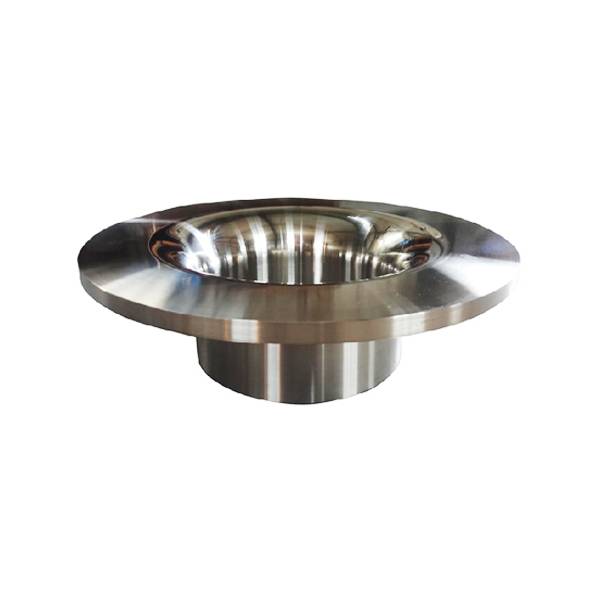
Standard Nozzle Flowmeter
Jinggong Automatic Control Instrument Complete Technology Development Company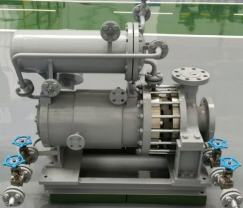

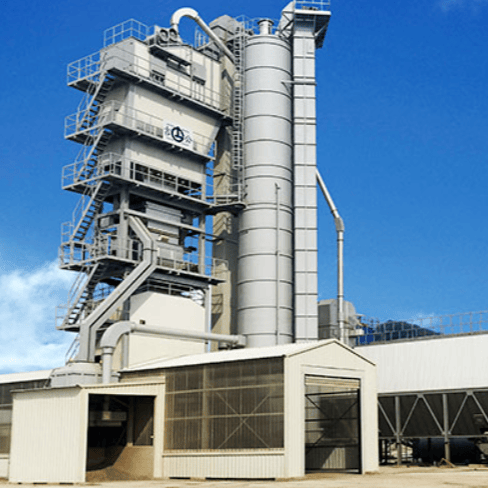
LBH4000 Batch Environmental Protection Asphalt Mixing Plant | Asphalt Batching Plant | Asphalt Mixing Plant
Jilin Province Road Construction Machinery Co., Ltd.