Chinese Academy of Engineering academician Fang Zhiyuan promoted over 150 million mu of cabbage varieties
en.Wedoany.com Reported - Chinese Academy of Engineering academician Fang Zhiyuan dedicated his life to cabbage breeding. Starting with the development of "Jingfeng No. 1" in 1973, he ended China's long-term reliance on imported cabbage varieties. He led his team to cultivate over 30 new cabbage varieties, which at their peak accounted for more than 60% of the planting area, with a cumulative promotion area exceeding 150 million mu.
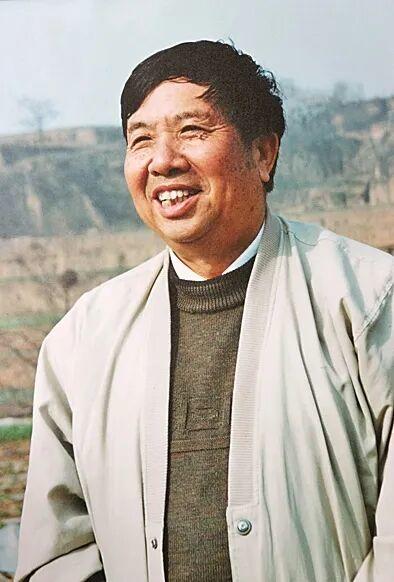
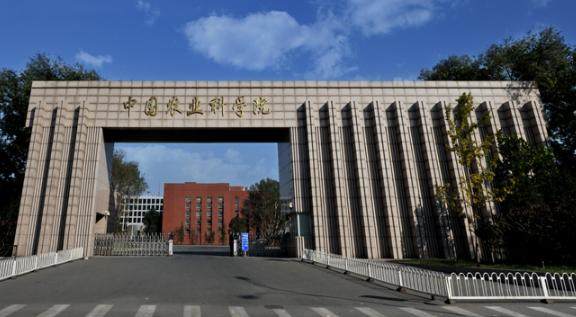
Born in 1939 in a mountain village in Hengyang, Hunan Province, Fang Zhiyuan worked alongside his mother in the fields during his childhood, deeply understanding the hardships of grain cultivation. In 1957, while studying at Hengyang No. 1 Middle School, he wrote in his diary the motto: "On the path of science, there is no smooth road to travel." In 1959, he was admitted to the Biology Department of Wuhan University and, after graduation, was assigned to the Vegetable Research Institute of the Chinese Academy of Agricultural Sciences.
In the spring of 1967, due to foreign merchants raising prices and lowering the quality of cabbage seeds, millions of mu of cabbage in southern China bolted without forming heads. Fang Zhiyuan accompanied experts to the fields in Guangdong, where he saw vegetable farmers in tears over the premature bolting of cabbages. He resolved to develop China's own cabbage varieties. Starting from scratch, Fang and his colleagues scoured the country to collect germplasm resources. Cabbage flower buds are extremely small, and each day they had to manually pollinate nearly 400 flowers using medical tweezers, causing stiffness and numbness in their hands. In 1973, Fang's team pioneered the use of self-incompatibility lines in China to develop the country's first hybrid cabbage variety, "Jingfeng No. 1," ending the long history of reliance on imported cabbage varieties.
In 1974, "Jingfeng No. 1" led to severe market oversupply due to its high yield and concentrated harvest period. Fang Zhiyuan realized that breeding needed to balance market supply and demand. Subsequently, he successively introduced early, mid, and late-season varieties such as "Baochun," "Qiufeng," and "Shuangjin," enabling staggered planting and phased market availability of cabbages. From the 1980s to the 1990s, in response to prevalent issues like viral diseases and black rot in autumn cabbages, he led the team to develop disease-resistant and stress-tolerant varieties such as "Zhonggan No. 8" and "Zhonggan No. 11." At that time, some spring cabbages also suffered from tipburn and premature bolting, and these varieties addressed those problems as well. Later, to meet new consumer demands for quality, he continued his research and developed "8398" and "Zhonggan No. 15," which featured round heads, bright green color, and a crisp, sweet taste.
Fang Zhiyuan actively promoted the establishment of over 10 seed production demonstration bases and more than 30 improved variety sales outlets nationwide by the Institute of Vegetables and Flowers of the Chinese Academy of Agricultural Sciences, with a cumulative promotion area exceeding 150 million mu. He insisted on serving farmers, keeping seed prices far lower than imported varieties, saving growers tens of billions of yuan in costs. Upon hearing that "Zhonggan No. 21" fetched two to three jiao more per jin due to its superior quality, he was even happier than the farmers. In 2018, when a journalist interviewed him at the Nankou planting base, Fang Zhiyuan broke off a piece of cabbage and ate it directly, exclaiming, "So sweet." By then, he was nearly 80 years old but still personally went to the fields to observe the entire growth process of cabbages. In January 2023, Fang Zhiyuan passed away. At his memorial service, someone quoted Lu You's poem, "The true purpose of reading lies in serving the people," to describe his lifelong dedication to the common people. After the news spread, numerous farmers left messages online expressing their condolences.
Related Products


714CD Series C-Band Weather Radar
Chengdu Zhongdian Jinjiang Information Industry Co., Ltd.
4HS-8 High-efficiency Peanut Inverted-laying Harvester
Hebei Yongfa Hongtian Agricultural Machinery Manufacturing Co., Ltd.

Industrial and Commercial Point-Type Gas Detector
Jinan Benan Technology Development Co., Ltd.