Lenovo's Kaitian Wujie Solution Resolves Peripheral Compatibility, Ensuring Stable Operation of Over 7,000 Terminals
en.Wedoany.com Reported - Lenovo's Kaitian Wujie solution leverages WINE's non-virtualized API translation technology to enable financial institutions to reuse existing peripherals and business systems in a Xinchuang environment. This solution focuses on addressing the most prominent peripheral compatibility challenges in the financial industry's Xinchuang replacement, involving high-end meetings and multi-screen collaboration in office scenarios, as well as the invocation of specialized equipment at bank branch counters.
During the advancement of financial Xinchuang, the deep integration of existing peripherals with core business systems has become a major obstacle. A single driver anomaly can cause the entire workflow to stall, while conventional temporary driver replacements only solve basic identification issues, still resulting in format errors and output garbled text in real business environments. Virtualization technology, due to environmental isolation, also struggles to meet the requirements of local specialized peripherals for underlying signal and physical device interaction.
Lenovo's Kaitian Wujie solution supports the direct operation of original drivers and applications in the Xinchuang environment, helping domestic terminals connect to existing assets.
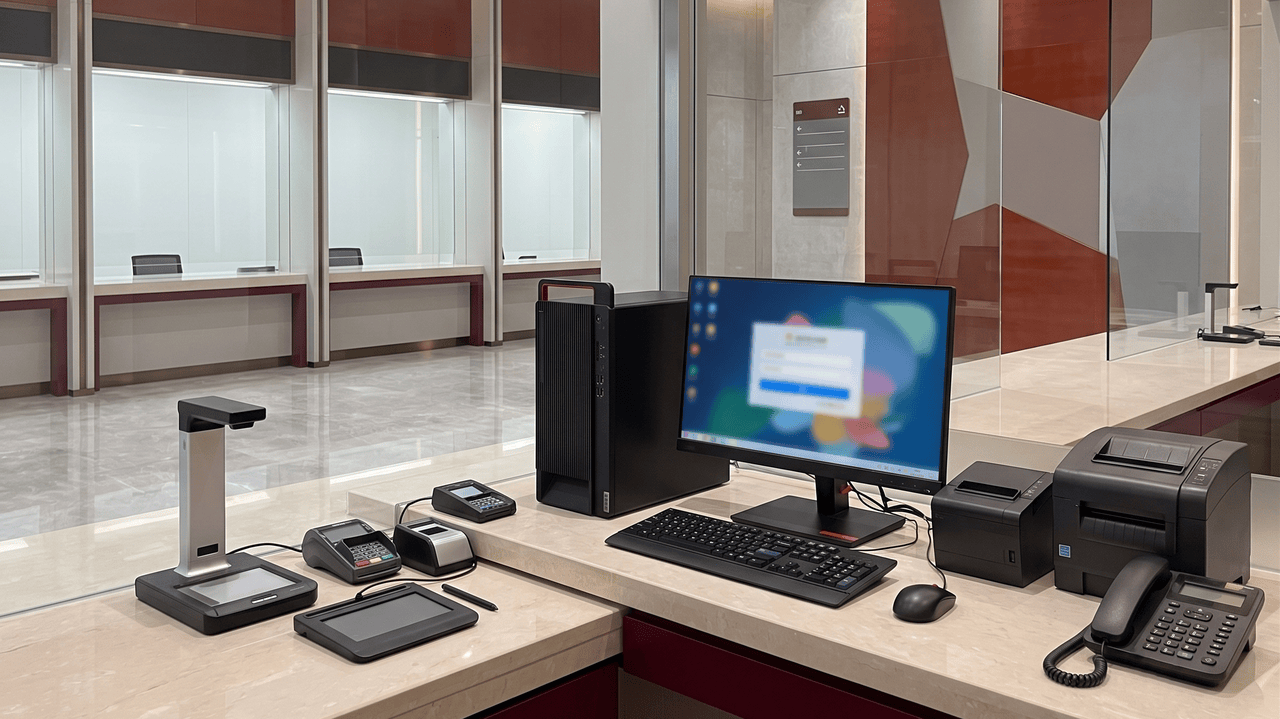
In bank branch counter business lines, the variety of device models and differences in on-site environments lead to concentrated compatibility issues. A leading bank faced challenges with the tight coupling of specialized peripherals such as high-speed document scanners and card readers with business systems, where the lack of a unified driver standard caused devices to fail easily during system upgrades. Lenovo's Kaitian Wujie solution assisted the bank's headquarters in developing a unified driver adaptation package. After internal validation, it achieved "one adaptation, multiple reuses," successfully activating nine peripherals that were previously unusable in the initial phase. The process shifted from manual per-device debugging to a standard capability of rapid deployment through batch distribution. The solution further launched an automated remote adaptation system, where after branch outlets install the client and connect peripherals, the server can remotely complete device information collection, driver distribution, and verification and repair. Currently, the solution covers all city outlets, ensuring the stable operation of over 7,000 terminals, with plans to expand to 20,000 units.
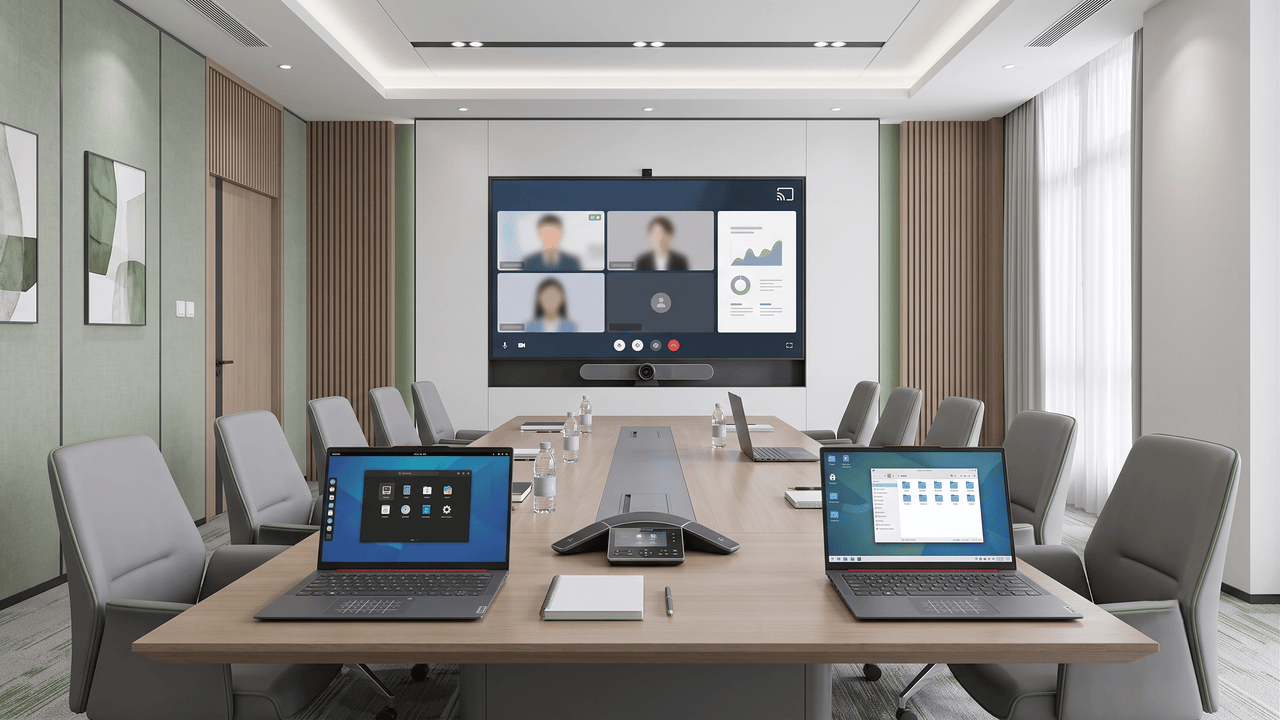
In headquarters office scenarios, a leading fund institution encountered peripheral compatibility bottlenecks during the initial deployment of Xinchuang devices, with some departments even refusing to accept the equipment. The institution's daily operations heavily rely on multi-channel audio and video input in meeting rooms and high-end multi-screen collaboration at workstations. After the introduction of Xinchuang terminals, previously invested high-end meeting systems experienced issues such as device non-recognition, audio loss, and resolution errors. Lenovo's Kaitian Wujie solution, through underlying driver adaptation, established a connection pathway between Xinchuang terminals and existing meeting systems, eliminating the need for environmental modifications or additional procurement.
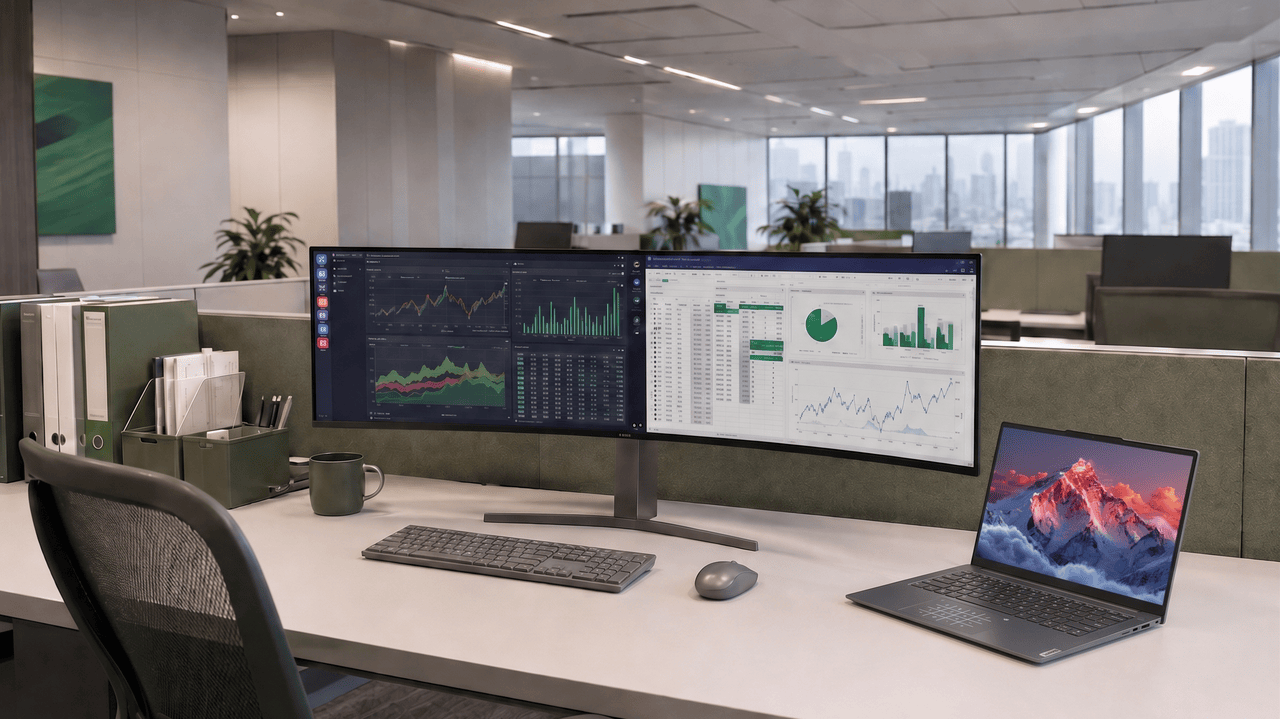
In workstation scenarios, daily trading in the fund and securities industry relies on high-end ultra-wide monitors supporting dual-machine split-screen. The solution addresses both device connection and display output aspects, identifying and distinguishing between monitor power supply and computer original power supply, while optimizing video signals during Type-C transmission to reduce flickering, screen tearing, and black screens. Within a week, the solution broke down the underlying barriers between the Xinchuang architecture and existing peripherals, eliminating the need for secondary procurement costs of high-end monitors and meeting terminals for the client, stably supporting the daily operations of approximately 3,000 workstations.
These two cases demonstrate that the challenges faced by financial Xinchuang encompass complex chain compatibility involving existing peripherals, operating systems, business software, and security mechanisms. Lenovo's Kaitian Wujie solution provides a systematic delivery capability with three key values: maximizing the protection of existing assets, enabling continued use of high-end meeting systems and specialized peripherals in the Xinchuang environment; significantly reducing migration complexity through full compatibility adaptation for smooth transitions; and robustly ensuring business continuity by fostering deep integration between Xinchuang terminals and existing software and hardware systems, supporting financial institutions in overcoming the painful period of device replacement.
Related Products


Industrial and Commercial Point-Type Gas Detector
Jinan Benan Technology Development Co., Ltd.



MUX Series Communication Interface Device for Security and Stability Control System
Nanjing NR Electric Co., Ltd.
Multi-function Marine Monitoring Low-altitude Detection Radar Sea-air Boundary Ocean Dynamic Environment Measurement
Chengdu Dixin Technology Co., Ltd.


G.652.D Wavelength-extended Non-dispersion Shifted Single-mode Optical Fiber
HONGAN GROUP CO., LTD.
GYTA Type Non-Self-Supporting Aerial/Duct Optical Cable
TONGDING INTERCONNECTION INFORMATION CO., LTD.