en.Wedoany.com Reported - Li Huidong, Vice President of China Mobile, disclosed the progress of autonomous networks at the 2026 China Internet Conference: 21 L4 high-level autonomous scenarios have been realized, saving 8 billion kWh of network energy annually and reducing manual workload by over 6,000 person-years.
On July 7, the 2026 China Internet Conference was held in Beijing. Li Huidong, Vice President of China Mobile, was invited to attend and delivered a keynote speech titled "Deepening High-Level Autonomous Networks, Ushering in a New Chapter for the Digital Industry."
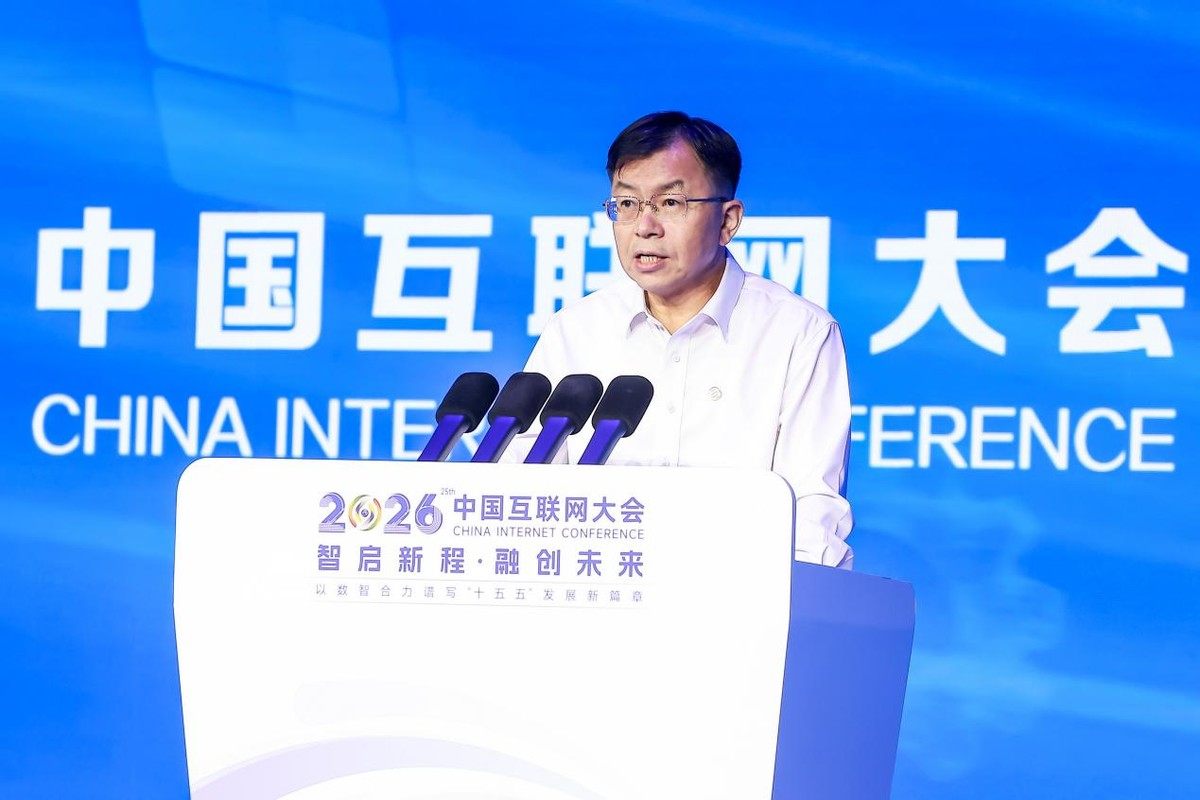
Li Huidong pointed out that the rapid development of AI technology is redefining the boundaries of operators' network services. On one hand, the subjects of connectivity are expanding from "interconnection of people, machines, and things" to "interconnection of intelligent agents," giving rise to a new intelligent agent internet, which requires networks to adapt to efficient interactions among massive intelligent agents. On the other hand, the content of connectivity has evolved from Byte to a combination of Byte and Token, imposing higher demands on network determinism and reliability.
Li Huidong stated that China Mobile, closely following the national "Six Networks" strategic deployment and facing the wave of intelligent agent internet development, is continuously improving its infrastructure layout. The company has taken the lead in deploying the world's largest 5G-A network, focusing on building ultra-large-scale intelligent computing centers, deepening inter-computing connectivity, and exploring computing-electricity synergy models.
In the field of autonomous networks, China Mobile originally proposed the concept of "autonomous networks" with the core vision of "Three Zeros and Three Autonomies." Li Huidong introduced four major progress areas: First, establishing a complete theoretical system for autonomous networks, transforming core achievements such as the "three-layer, four-closed-loop architecture, effectiveness indicator system, capability grading standards, and L4 high-value scenarios" into international universal standards. Second, advancing autonomous networks from concept to large-scale implementation, with 21 high-value scenarios currently achieving L4 high-level autonomous capabilities, featuring end-to-end fully automated closed-loop processing. This number is expected to increase to 38 by the end of this year. Third, achieving significant application results, with autonomous networks saving 8 billion kWh of network energy annually, reducing manual workload by over 6,000 person-years, improving the efficiency of enterprise business activation such as 5G private networks, IoT, and cloud-network dedicated lines by over 70%, and delivering network self-operation and maintenance solutions to over 6,000 customers. Fourth, contributing Chinese solutions to the global evolution of the autonomous network industry, having led the formulation of 59 international standards and 35 domestic industry standards, published 13 industry white papers, and won 22 international industry awards.
Li Huidong also introduced several benchmark practices of autonomous networks: launching differentiated tiered experience packages based on the integration of 5G-A and AI in Shanghai, covering key areas such as transportation hubs, business districts, and campuses; pioneering the A2A-T intelligent agent protocol in Guangdong to achieve multi-agent collaboration in the network domain, enabling precise root cause localization and rapid remote recovery in complex cross-domain fault scenarios; and creating the industry's first IP digital twin network, establishing the first "lights-out factory" for IP network operation and maintenance, automatically scheduling over 300 Tb of traffic daily, accelerating service provisioning and policy optimization cycles from days to minutes.
Looking to the future, Li Huidong proposed three cooperation initiatives: First, deepening joint innovation in autonomous networks to accelerate the large-scale implementation of L4+ high-level autonomous networks, consolidating China's leading position in standards and technological advantages. Second, jointly tackling key technologies for next-generation communication networks to promote intelligent, green, and integrated network development. Third, collaboratively building a robust integrated computing network, innovating computing-electricity synergy models, and advancing the large-scale, intensive, green, and inclusive development of computing resources.