Resource Recycling Is Raising Demand for More Accurate Sorting Systems
en.Wedoany.com Reported - As waste volumes increase and recycled material quality becomes more important, Intelligent Sorting Machines are becoming key equipment in solid waste treatment, plastics recycling, metal recovery, paper sorting and electronic waste processing. Traditional recycling lines often relied on manual picking, screening, magnetic separation and air separation. These methods remain useful, but they are no longer sufficient for complex mixed waste streams that require higher purity and stable output quality.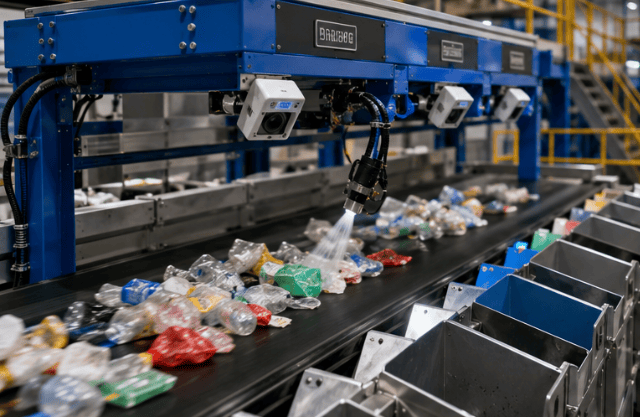
The first value of intelligent sorting lies in recognition capability. By using near-infrared sensors, visible light cameras, X-ray systems, metal detection, color recognition, shape recognition and machine vision, sorting equipment can identify materials according to composition, color, density and form. In plastics recycling, resin type, color and contamination level directly affect the value of recycled pellets. In metal recycling, accurate separation of aluminum, stainless steel, non-ferrous metals and composite materials can improve downstream smelting and reuse efficiency.
The second value is process stability. Manual sorting is affected by fatigue, experience and working conditions. Intelligent equipment can maintain more consistent recognition and execution during continuous operation. For large recycling centers and industrial-scale recovery plants, stable sorting purity is often more important than short-term throughput, because downstream customers care about whether recycled materials can be used repeatedly in production.
The technology is also moving from single-sensor recognition to multi-sensor fusion. Color or shape recognition alone may struggle with dirty materials, overlapping objects, composite packaging and small fragments. Combining multiple sensors with AI algorithms can improve recognition under more difficult real-world conditions. Air-jet ejection, robotic picking, conveyor speed control and online data feedback are also becoming important parts of the sorting system.
In the future, competition in the recycling industry will not only be about processing more waste. It will be about producing higher-value secondary materials. Intelligent sorting machines can help reduce labor dependence, increase material purity, lower downstream processing cost and support circular economy goals. For equipment suppliers, material understanding, recognition algorithms, line integration and operation service will become more important than selling a single machine.
Related Products

High-temperature Equal Wall Thickness High-power Screw Drilling Tool
Orient Energy & Technologies Co., Ltd.

Industrial and Commercial Point-Type Gas Detector
Jinan Benan Technology Development Co., Ltd.
Quick-Change Single-Seat Control Valve / Quick-Change High-Pressure Single-Seat Control Valve
Beijing Consen Automation Technology Co., Ltd.