Brazilian ANM Minute No. 14/2026 Clarifies Pelletizing as Beneficiation
en.Wedoany.com Reported - The Brazilian National Mining Agency (ANM) recently issued Minute No. 14/2026, clarifying that iron ore pelletizing is considered a beneficiation activity, not an industrial transformation. The document is binding on all its organizational units and consolidates the view that the calculation basis for the Financial Compensation for Mineral Resource Exploration (CFEM) should be determined upon the sale or export of the mineral commodity. ANM DG Vote No. 137/2026 considers that this measure does not constitute an interpretive innovation but aims to unify the institution's historical stance, previously reflected in PFE-ANM Opinion No. 190/2020 and GAB-D4/ANM Vote No. 80/2025, namely that pelletizing is merely an agglomeration process of ultrafine mineral powder and does not constitute industrial transformation.
The practical impact of this minute is significant because the market value of pellets is substantially higher than that of natural ore, which could significantly increase the CFEM calculation basis. According to Article 2, Paragraph 1 of ANM Normative Instruction No. 15/2023, the minute is binding on all its organizational units, but not on the Collegiate Board and the ANM Federal Special Prosecutor's Office. Therefore, while this instrument is used to unify interpretations within the regulatory scope, it lacks the authority to define the constitutional scope of CFEM application.
The constitutional basis for CFEM stems from Article 20, Paragraph 1 of the Federal Constitution, which ensures the Union and federal entities share in the results of mineral resource exploration. The Brazilian Supreme Federal Court (STF) has characterized it as a form of original property income, i.e., a royalty paid for the use of non-renewable public property, rather than a tax in the strict sense. This characterization has direct interpretive consequences: ordinary legislators may stipulate calculation standards for the basis, but cannot alter the substantive criteria set by the Constitution. This criterion is mineral resource exploration, which, according to Article 176 of the Constitution and the Mining Code, includes research and extraction, ending with the conclusion of extraction activities.
However, the concept of extraction defined in Article 36 of the Mining Code is "a series of coordinated operations aimed at the industrial utilization of a deposit, from the extraction of useful mineral substances contained therein to their beneficiation." Iron ore pellets belong to the industrialization stage following beneficiation. According to mining regulations, beneficiation is the final stage of extraction; therefore, pelletizing does not fall within the concept of extraction or mineral resource exploration. Article 14, Paragraph 3 of Decree No. 001/91, when defining the beneficiation process, lists operations such as crushing, grinding, sizing, concentration, flotation, and pelletizing, provided these operations "do not alter the mineralogical characteristics of the processed mineral substance" or subject it to the Industrialized Products Tax (IPI). Conversely, if the process alters the mineralogical characteristics or results in a new species under new legislation, it is not considered simple beneficiation. This indicates two types of beneficiation: one is complementary beneficiation that does not alter the natural state, serving as a supplementary stage of extraction; the other constitutes industrialization, occurring when the activity changes the natural state of the substance and perfects it for consumption. Pellets fall into the second category, as they promote changes in the mineralogical characteristics of the processed substance.
In the pelletizing process, limestone, anthracite or petroleum coke, bentonite or organic binders, caustic soda, binders, and copolymers are added to iron ore concentrate to produce spherical pellets. Their characteristics, such as size, iron content, silica concentration, and purity, are entirely different from the original mineral, accompanied by material loss. This is an industrial product, with specifications varying according to customer requirements, serving as steelmaking raw material for different industrial plants. Therefore, pellets are not a uniform mineral product but an industrial raw material whose value reflects the economic outcome of the transformation process, not the result of mineral resource exploration. This conclusion is supported by Article 46 of the National Tax Code, which states: "Products subjected to any operation that alters their nature or purpose, or perfects them for consumption, are considered industrial products." Iron ore pellets, after fine processing, yield a product different from the original, clearly fitting this concept. The technical basis of Minute No. 14/2026 classifies pellets as a form of agglomeration within the NRM-18 beneficiation concept but does not overcome the obstacle of Article 176 of the Constitution.
Classifying minerals as "NT" (Not Taxed) in the IPI Taxation Table (TIPI) does not exclude the industrial nature of pellets. The non-imposition of IPI on mineral operations stems from a constitutional exemption under Article 155, Paragraph 3 of the Federal Constitution, which excludes the levy of taxes other than ICMS, Import Tax, and Export Tax on domestic mineral operations. The very existence of such a blocking constitutional rule presupposes that the product falls within the scope of IPI, because if it were outside the concept of industrial products, no exemption would be necessary. Therefore, "NT" does not indicate that the product is outside the concept of industrialization, but rather that, despite being an industrial product, its taxation is blocked by constitutional provisions. Applying this reasoning to CFEM, the "NT" classification in TIPI fails to justify levying financial compensation on the value of pellets; instead, it confirms that pelletizing is an industrialization process beyond the constitutional limits of mineral exploration.
Law No. 13,540/2017 and Decree No. 9,406/2018, cited in the minute, also cannot overcome this obstacle. Ordinary legislators may adjust the method for determining the CFEM calculation basis, define deductions, and specify collection scenarios, but they lack the authority to alter the substantive criteria set by the Constitution by including industrialization stages excluded by the Constitution in the calculation basis. If ordinary legislators themselves lack this power, the ANM, as a regulatory body, has even less.
In cases where miners consume ore for their own industrialization processes, such as integrated pelletizing, there is no sales price for the intermediate mineral product. Under the old regime, Article 14, Paragraph 1 of Decree No. 001/91 stipulated that net revenue should equal the "consumption value at the time of the taxable event," up to the final stage of the beneficiation process and before industrial transformation. With the enactment of Law No. 13,540/2017, Article 6, Paragraph 3 of Law No. 7,990/89 began to stipulate that when mineral substances are consumed, transformed, or used by the mining right holder, the CFEM calculation basis should be the "current price" of the mineral commodity, not the price of the industrialized product. The legislative intent is clear: even under the new framework, the calculation basis should reflect the value of the mineral product before industrial transformation, not the industrial product price; otherwise, it would improperly capture the value added by industrialization.
Consequently, Minute No. 14/2026 formalizes at the administrative level an understanding that lacks constitutional support. At the judicial level, this understanding has not yet reached a consensus. In an appeal heard on July 10, 2025 (Case No. 6003157-93.2025.4.06.0000/MG), the Federal Regional Court of the 6th Region (TRF6) ordered expert evidence in the field of metallurgy in a case involving CFEM levied on the sales value of iron ore pellets. The court acknowledged the prominently technical nature of the dispute, with the expert evidence tasked with determining whether pellets constitute the final stage of the ore beneficiation process, which directly affects the definition of the CFEM calculation basis. This ruling indicates the existence of judicial possibilities opposing the ANM minute and consistent legal elements capable of refuting the agency's position.
Related Products


Industrial and Commercial Point-Type Gas Detector
Jinan Benan Technology Development Co., Ltd.
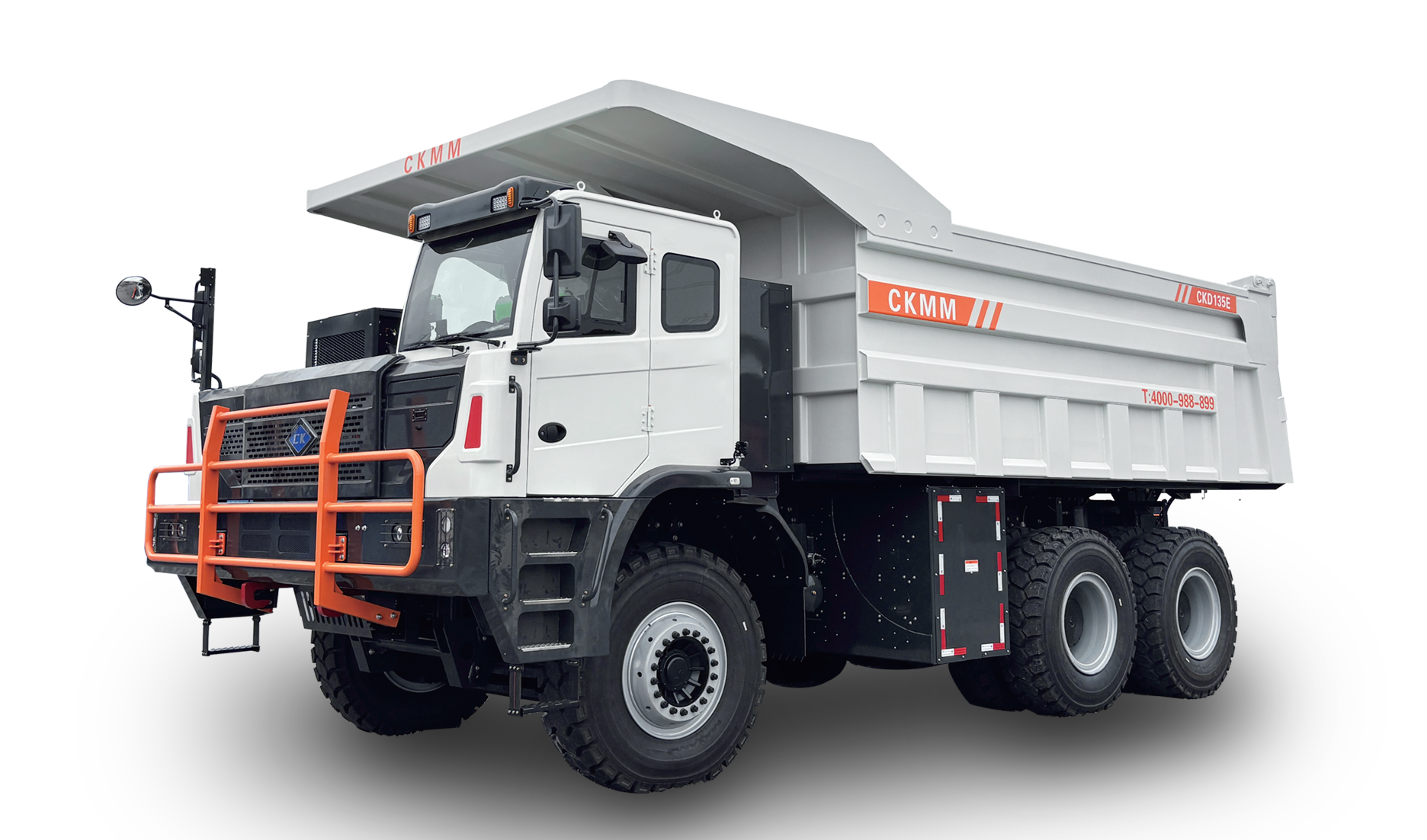
CKD135E Pure Electric Wide-body Dump Truck
Jiangsu Changkuang Engineering Machinery Co. Ltd.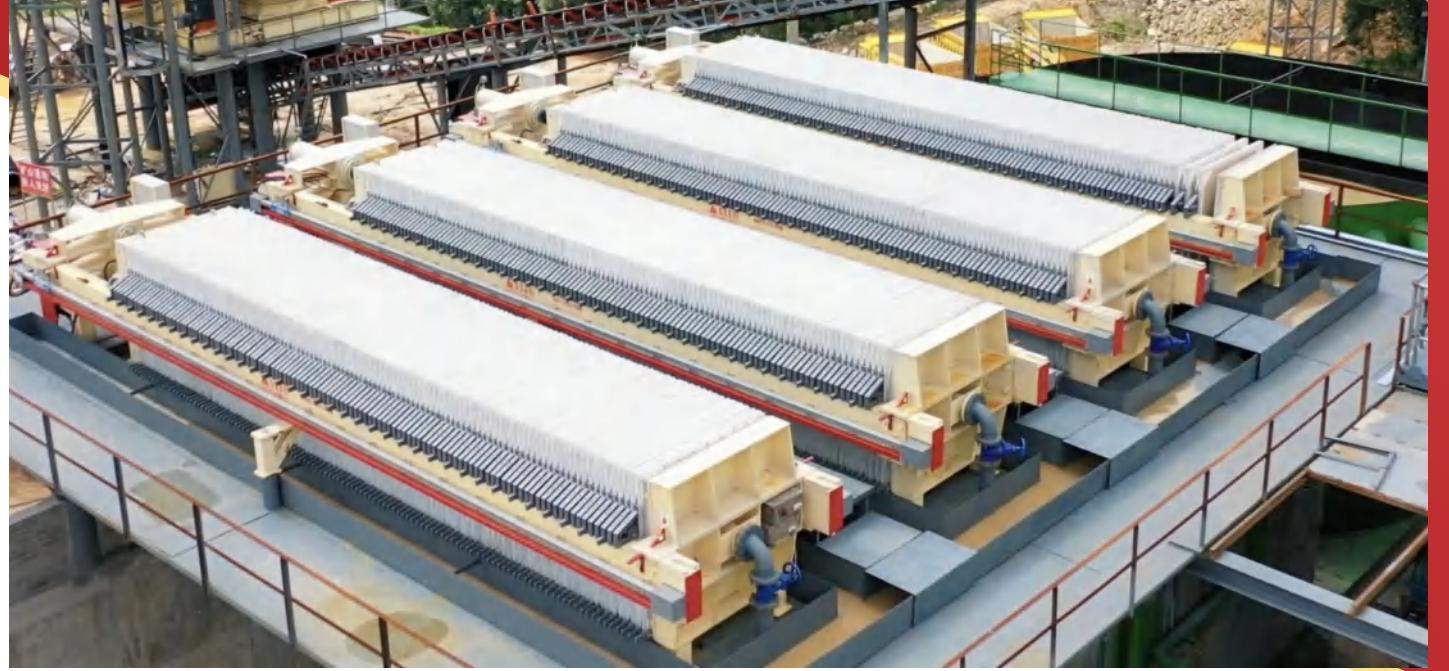
Hydraulic Plate and Frame Filter Press
Guangdong Leimeng Intelligent Equipment Group Co., Ltd.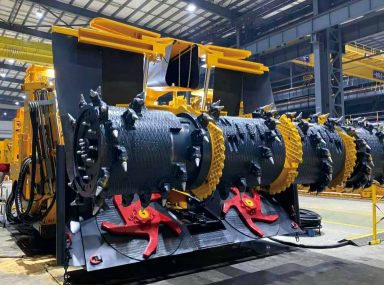
Integrated Excavation and Anchoring Machine (EJM Series)
China Railway Construction Heavy Industry Corporation Limited
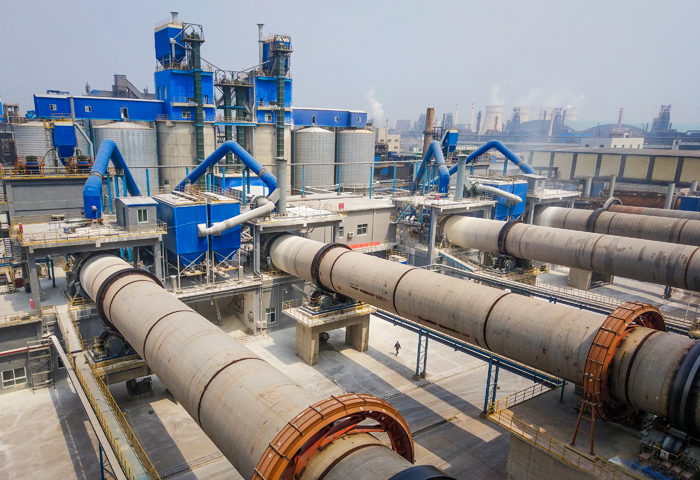
CITIC Heavy Industries Metallurgical Equipment Steel Smelting Engineering Equipment
CITIC Heavy Industries Co., Ltd.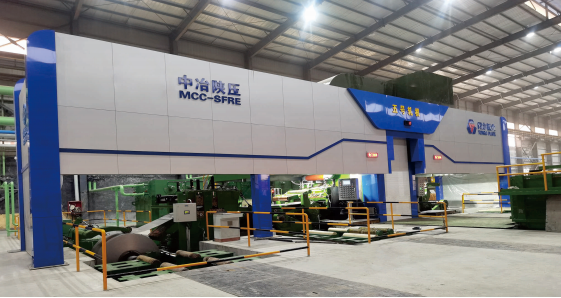
1050-1750mm Steel Strip Single-stand Reversible Cold Rolling Production Line
MCC-SFRE HEAVY INDUSTRY EQUIPMENT CO., LTD.