Microsoft Shifts to In-House Small AI Models to Cut Costs
en.Wedoany.com Reported - Microsoft is adjusting its generative AI deployment strategy, shifting from reliance on large general-purpose models to developing smaller, domain-specific models to reduce costs and improve efficiency. A recent Bloomberg report noted that these in-house models are steadily replacing OpenAI models as the core engines for AI features in Microsoft products.
Large general-purpose models, such as OpenAI's GPT series and Anthropic's Claude series, can handle multiple tasks when provided with sufficient computing power, but they prove costly and inefficient for everyday scenarios like email summarization and draft replies. In contrast, training and deploying smaller specialized models is more economical, as they can run dozens of instances on a single accelerator, and developers need not worry about behavioral deviations caused by model replacements from suppliers.
At the Build developer conference in June, Microsoft unveiled the MAI series of models, covering areas such as general reasoning, programming, image generation, editing, and speech processing. By shifting from reliance on OpenAI's general-purpose models to in-house models, Microsoft aims to more precisely match real-world application scenarios, completing the same tasks at lower costs.
Microsoft described MAI-Thinking-1 as "a medium-sized model, one of the strongest in its weight class," and stated that it "is comparable to leading models in key software engineering benchmarks, demonstrates advanced mathematical reasoning capabilities, and outperforms Sonnet 4.6 in our blind human evaluation."
Cost control is a key driver of this shift. Although AI has demonstrated value in specific areas, cloud service providers remain uncertain about the profitability of AI businesses. Smaller models free up memory and improve hardware utilization, allowing Microsoft to flexibly adjust the number of instances based on traffic demand to manage operational costs.
Microsoft is also optimizing the entire technology stack through its in-house AI accelerators. The Maia 200 series chips, released in January, promise performance comparable to Nvidia's Blackwell chips, enabling Microsoft to jointly optimize software, hardware, and models for greater efficiency. Amazon and Google are pursuing similar paths: Google is building around its self-developed TPU architecture with the Gemini and Gemma series models, while Amazon is investing in the Nova series models and programming assistants, relying on Anthropic's technology.
General frontier models still hold value in driving innovation, and cloud giants will continue to rely on companies like OpenAI and Anthropic to advance technology. However, reducing dependence on large model companies helps cloud service providers ultimately turn AI into a profitable business line.
Related Products
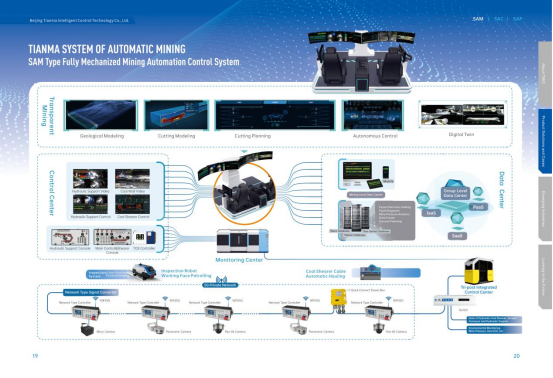

Comprehensive Mining Automation Control System
Beijing Tianma Intelligent Control Technology Co., Ltd.
GYTA Type Non-Self-Supporting Aerial/Duct Optical Cable
TONGDING INTERCONNECTION INFORMATION CO., LTD.



Mine Explosion-proof and Intrinsically Safe Industrial Ethernet Ring Network (10 Gigabit/Gigabit)
Chongqing Mas Sci&Tech Co., Ltd.
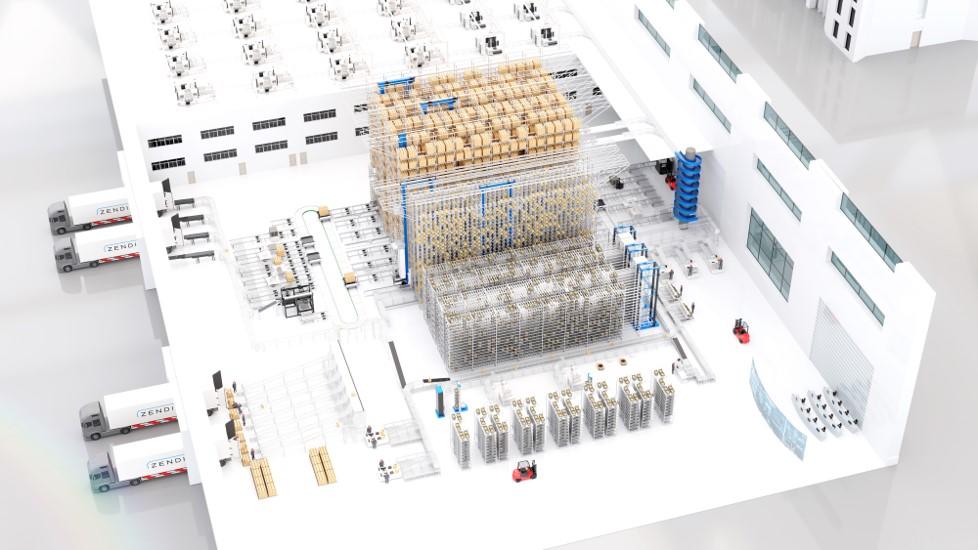
One-Stop Steward Service for the Entire Logistics System Integration Chain
Zhongding Intelligent (Wuxi) Technology Co., Ltd.

Automatic Aiming Laser Remote Obstacle Removal Robot
Pinggao Group Weihai High-Voltage Apparatus Co., Ltd.