en.Wedoany.com Reported - Mexico's Telecommunications Regulatory Commission (Comisión Reguladora de Telecomunicaciones, CRT) has published the detailed plan, including characteristics, basis, and timeline, for its radio spectrum allocation tender process aimed at the digital transformation of the production sector.
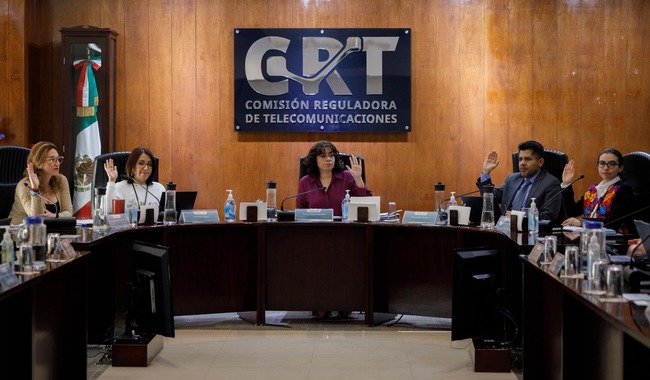
This tender, designated as CRT-RRI-01, involves the 2.3 GHz band and is the first of its kind conducted by the Mexican regulator. Its objective is to enhance dedicated connectivity and automation capabilities for enterprises through the deployment of advanced technologies nationwide.
The tender aims to provide capacity for intelligent radio communication networks to meet the demand for high-speed, low-latency internal connections in complex enterprise environments. Potential bidders are companies seeking to offer industrial connectivity services, while end users include key economic sectors such as industrial parks, mining, transportation and logistics, smart cities, tourism, and agribusiness.
The spectrum up for auction is in the 2.3 GHz band, specifically offering 40 MHz of capacity, which will be allocated in blocks of 10 MHz. Coverage is divided based on two main criteria: first, industrial zones, which are groupings of municipalities with similar industrial development patterns; and second, specific geographic polygon areas, defined or designated by stakeholders as "Economic Development Poles for Well-being." Concessions granted after the process conclude will have a validity period of 10 years, applicable to both industrial zones and geographic polygon areas.
Technically, the design considers a national map divided into 60 industrial zones, which group municipalities according to the density and behavior of productive activities. The bidding process consists of two stages. The first stage targets industrial zones using an ascending auction (clock rounds), auctioning up to 240 10 MHz blocks (4 per zone). Remaining or unallocated spectrum moves to the second stage, the polygon stage, where bids are received via sealed bid for polygons with a maximum area of 200 km².
To ensure competition, spectrum accumulation limits were defined jointly with Mexico's National Antitrust Commission (Comisión Nacional Antimonopolio): nationwide, it must not exceed 20% of the available spectrum in IMT bands (PCS, AWS, 2.3 GHz, 2.5 GHz, 3.3 GHz, and 3.5 GHz); within each industrial zone or polygon, the maximum occupancy in the 2.3 GHz band is 40% (equivalent to 40 MHz). The CRT also considered an international channelization plan for the 2.3 GHz band based on Time Division Duplex (TDD) mode, compliant with 3GPP specifications and the "Annual Plan for Frequency Bands 2026" (Plan Anual de Bandas de Frecuencia 2026), and will integrate coexistence with existing users who already hold secondary use authorizations for polygons.
Key dates in the proposed timeline include: the process officially launches from August 3 to 7, during which expressions of interest and submission of basic questions take place; responses are published on August 12; submission of proposals (PPO) begins on November 19; the award notice is issued 20 days after the PPO; and finally, the concession certificate is granted 10 days after verifying the corresponding payment.