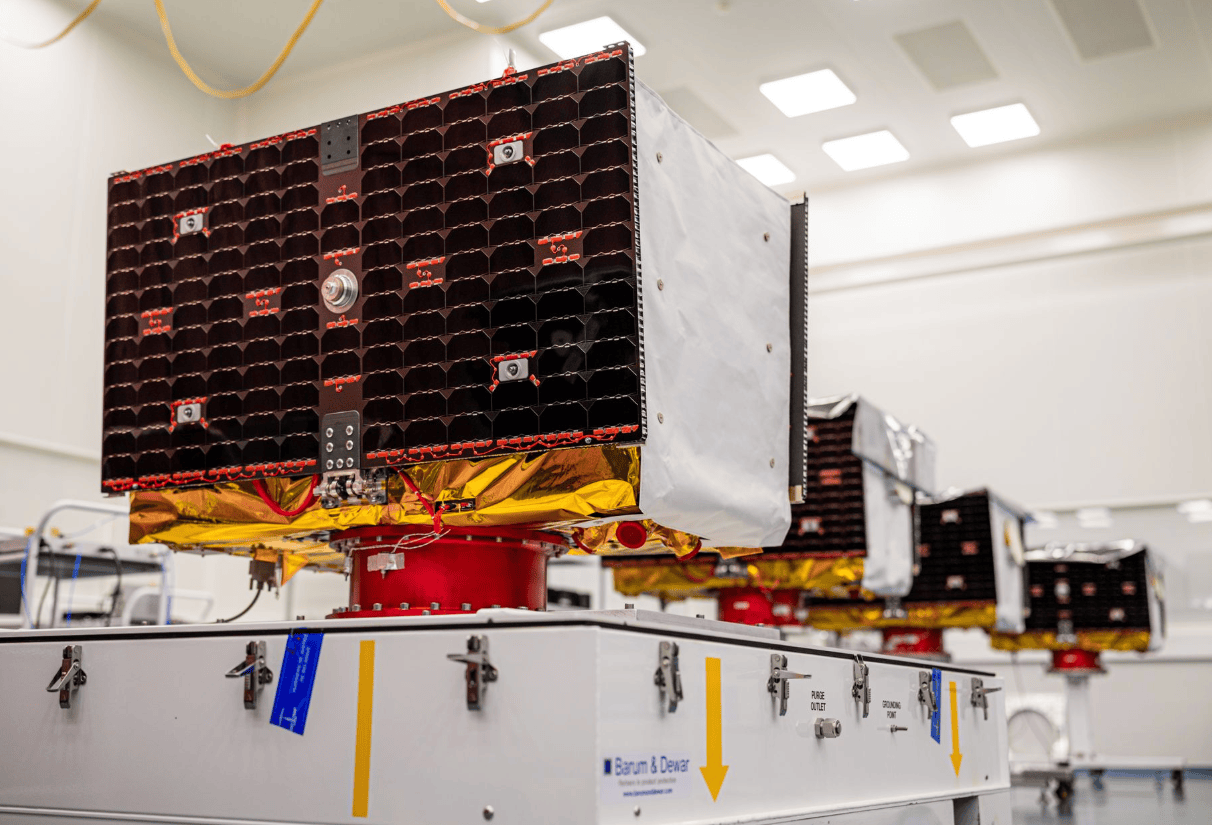
US York Space Systems Builds Multi-Orbit Satellite Communication and Positioning System
en.Wedoany.com Reported - Recently, York Space Systems, a major US defense and commercial space contractor, completed the integration of satellite communication capabilities by connecting ALL.SPACE's Hydra software-defined terminal to its satellite infrastructure, mission operations, and command and control systems. The new system is designed for mobile platforms in space, on land, in the air, and at sea, enabling simultaneous connections to multiple satellite networks. When a single link is interfered with, obstructed, or fails, it can switch to other available paths to continue providing communication and positioning data.
The integrated technology system goes beyond simply installing a satellite terminal on York Space Systems' space platforms; it connects the user end, satellite end, and mission control end into a continuous operational link. York Space Systems provides satellite platforms, in-orbit infrastructure, mission operations software, and command and control capabilities, while the Hydra terminal is deployed on vehicles, ships, aircraft, ground stations, and other mobile carriers to search for, establish, and maintain satellite links. Once mission data enters the satellite network from the user terminal, York's mission control system handles resource allocation, link management, and command execution, keeping nodes dispersed across different locations and platforms synchronized.
The Hydra series uses a software-defined architecture, capable of establishing multiple links simultaneously within a single terminal and connecting to low Earth orbit, medium Earth orbit, geosynchronous Earth orbit, and highly elliptical orbit satellite networks. Traditional satellite terminals are typically designed for specific orbits, frequency bands, or operators, and switching networks may require replacing antennas, RF equipment, or reconfiguring the communication system. The Hydra terminal integrates multiple antenna beams, RF links, and network management functions into a single platform, selecting communication paths based on satellite visibility, link quality, bandwidth requirements, and interference status.
Keeping multiple satellite links online within the same terminal is the system's primary method for enhancing anti-jamming capabilities. When mobile platforms perform missions, buildings, terrain, hull structures, and flight attitudes can obstruct satellite signals, and electronic interference may render a specific frequency band or satellite network unusable. The Hydra terminal can simultaneously connect to networks across different orbits, frequency bands, and operators, without waiting for the primary link to completely fail before searching for satellites. When one link's performance degrades, traffic can be transferred to other established connections, reducing the downtime caused by reacquiring satellites and restoring communications.
This process requires the terminal to continuously calculate the positions, beam directions, signal quality, and network status of each satellite. Low Earth orbit satellites move rapidly relative to ground terminals, causing available satellites to change constantly; geosynchronous Earth orbit satellites have relatively stable positions but longer propagation distances. A multi-orbit terminal must simultaneously handle different propagation delays, frequencies, Doppler shifts, and handover cycles, while maintaining antenna beam pointing as vehicles move, ships roll, or aircraft change attitude. ALL.SPACE uses electronic control to manage beams and links, allowing the terminal to continue tracking satellites during carrier motion without relying on a single fixed parabolic antenna for mechanical steering.
The communication system will also connect with York Space Systems' mission operations command and control capabilities. This system can manage satellites, terminals, and unmanned platforms distributed across different regions, issuing tasks to specific nodes, adjusting communication resources, and aggregating operational status. When drones, unmanned ground vehicles, or unmanned surface vessels form clusters, they need to continuously exchange their positions, sensor data, mission instructions, and coordination status. Simply extending the wireless communication range of a single platform is insufficient for large-scale coordination. The integrated system places satellite links, platform positioning, and mission execution under a single control layer, enabling the command end to grasp the positions and connection status of multiple unmanned systems and send control instructions to nodes that still maintain available links.
Positioning capability is also a key component of this system development. In areas where satellite navigation signals are suppressed or cannot be reliably received, mobile platforms may not be able to determine their position solely through the Global Positioning System. York Space Systems plans to use satellite infrastructure, terminal connection status, and mission control systems to provide auxiliary positioning capabilities, allowing platforms to obtain position references even when navigation satellite signals are limited. Available information has not yet disclosed specific positioning algorithms, accuracy, update frequency, or ranging methods used, nor has it indicated whether the system will integrate inter-satellite links, communication signal time of arrival, or ground inertial navigation data for fusion. Therefore, it can only be confirmed that the development scope covers both reliable communication and positioning, but it cannot be equated with a new satellite navigation system that has already been publicly validated.
In aerial applications, the Hydra terminal can maintain multi-network connections as aircraft change attitude; maritime platforms can simultaneously access different satellite networks in areas far from shore-based communication facilities; when ground vehicles traverse complex terrain, the system can reallocate links based on obstructions and signal changes. Terminals deployed on space platforms can be used to connect different satellite networks or support in-orbit mission data transmission. These four application types share multi-link, multi-orbit, and multi-band technologies, but terminal size, power consumption, mounting structure, and antenna field of view need to be configured according to the carrier.
Following this integration, ALL.SPACE will continue to operate as a wholly owned subsidiary of York Space Systems, with its existing terminal products, technical team, and customer projects remaining unchanged. In the next phase, both parties will further combine the Hydra terminal with York's satellite platforms, mission operations software, and command and control capabilities to form a complete system from user access and satellite link transmission to mission management. Public information has not yet disclosed the delivery quantity, deployment locations, satellite network list, or official operational timeline for the first batch of integrated systems.
Related Products


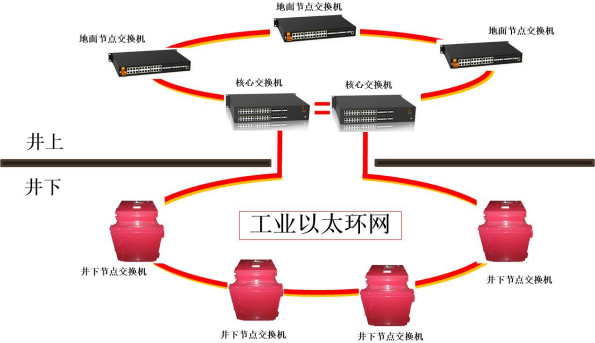
Mine Explosion-proof and Intrinsically Safe Industrial Ethernet Ring Network (10 Gigabit/Gigabit)
Chongqing Mas Sci&Tech Co., Ltd.
Multi-function Marine Monitoring Low-altitude Detection Radar Sea-air Boundary Ocean Dynamic Environment Measurement
Chengdu Dixin Technology Co., Ltd.


Comprehensive Mining Automation Control System
Beijing Tianma Intelligent Control Technology Co., Ltd.

MUX Series Communication Interface Device for Security and Stability Control System
Nanjing NR Electric Co., Ltd.

G.652.D Wavelength-extended Non-dispersion Shifted Single-mode Optical Fiber
HONGAN GROUP CO., LTD.