China Mobile Proposes 6G CIS-RAN: Training Data Reduced by 36% to 50%
en.Wedoany.com Reported - The China Mobile Research Institute team has proposed a CIS-RAN architecture for 6G, characterized by collaboration, intelligence, and service orientation. The team, comprising Wang Xiaoyun (China Mobile Group) and Li Nan, Sun Qi, Wang Yang, Yan Yiwei, Wang Sen, Xu Xiaofei, Li Na, Jin Jing (China Mobile Research Institute), expands the collaboration boundaries based on the C-RAN architecture proposed in 2010 and introduces endogenous intelligence and capability exposure mechanisms. This aims to address the stringent requirements of 6G scenarios such as autonomous driving, industrial automation, digital twins, and extended reality for extreme throughput, ultra-low latency, ultra-high reliability, and massive connectivity.
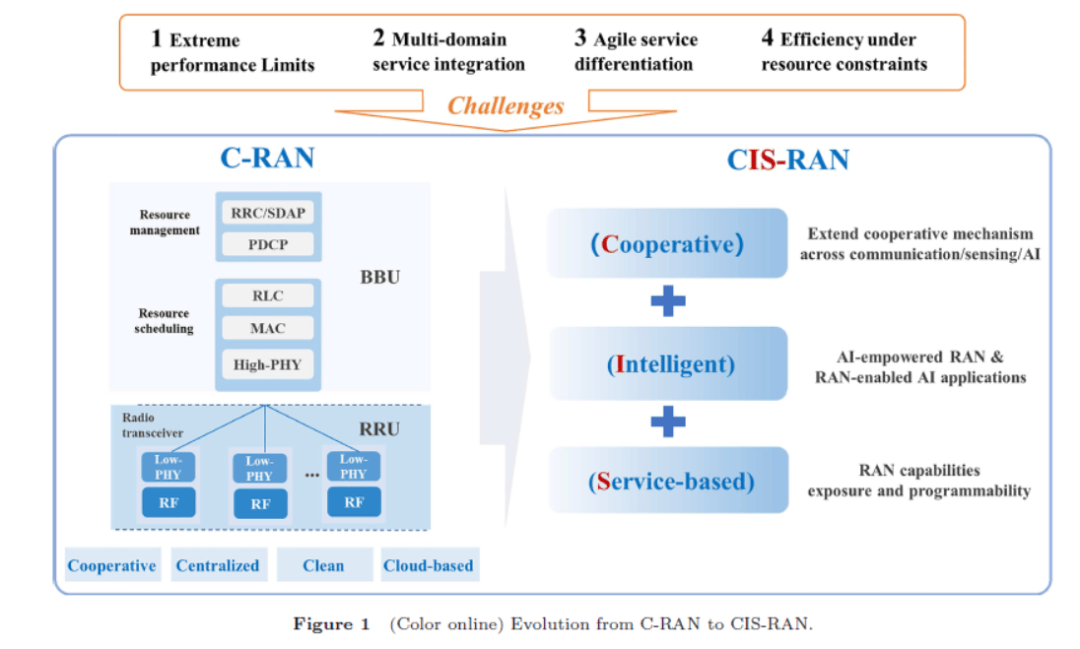
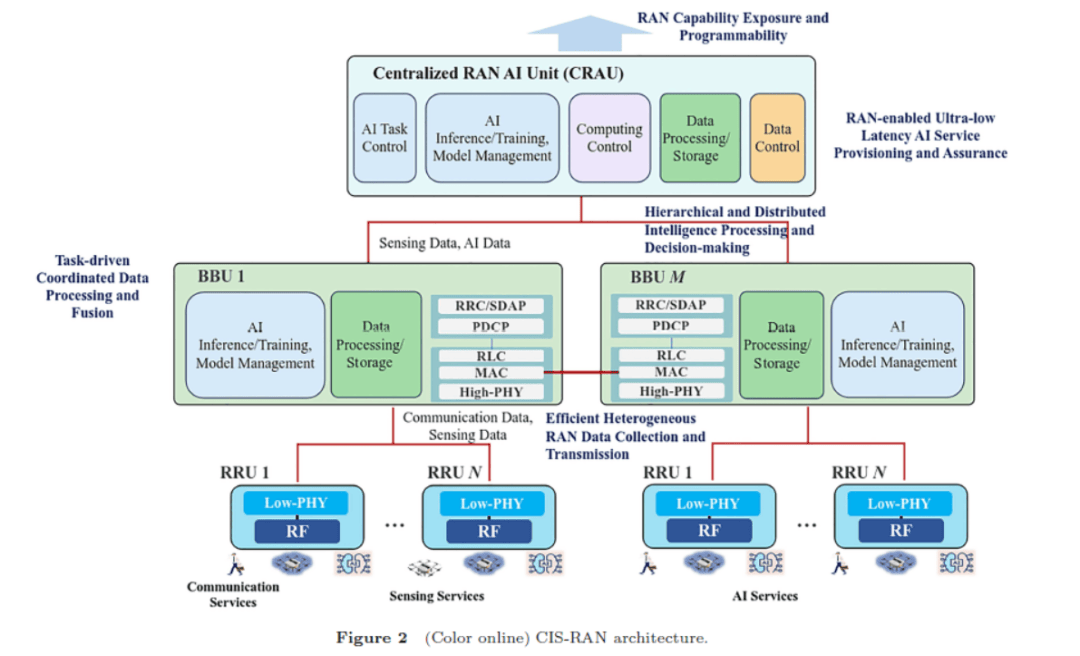
The research first analyzes the requirements faced by 6G radio access networks and the limitations of existing architectures. The proposed CIS-RAN architecture includes enhanced RRUs, BBUs, and a new RAN centralized intelligent unit, clarifying key functions and interface changes. Five enabling technologies include heterogeneous data collection, task-driven collaborative processing, hierarchical intelligent distribution, ultra-low latency AI service assurance, and unified RAN capability exposure. Through simulations and prototype experiments, the study validates the architecture's effectiveness from both AI4RAN and RAN4AI perspectives: In AI4RAN, uplink interference prediction is used as an example to demonstrate the advantages of collaborative intelligence in learning efficiency and system throughput; in RAN4AI, an indoor and outdoor AI visual inspection service prototype validates its performance in providing ultra-low latency AI services and capability exposure.
To validate the CIS-RAN architecture, the research designed experiments from two dimensions: collaborative intelligence and low-latency services, achieving significant performance improvements.
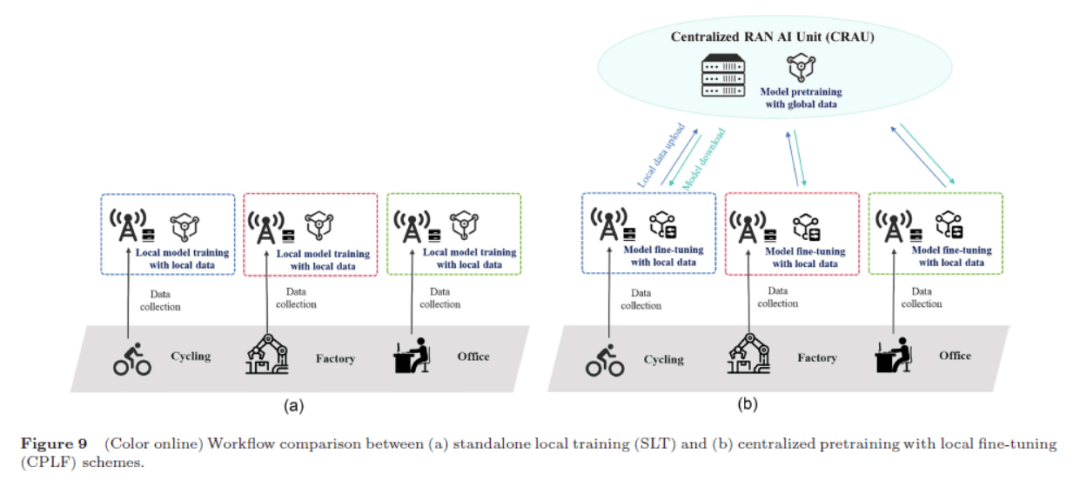
Case 1 targets dynamic interference environments in typical 6G scenarios (cycling, factory, office), comparing the CIS-RAN-enabled centralized pre-training plus local fine-tuning (CPLF) mechanism with the traditional single BBU local training (SLT) mechanism. Results show that compared to scenario-specific retraining, the CPLF mechanism reduces the required training data volume at the BBU side by 36% to 50%, and model update time is reduced by approximately 71% to 78%. The CPLF scheme exhibits faster error convergence and lower steady-state prediction errors across all scenarios. In terms of UE average uplink throughput, both CPLF and SLT achieve a 9% to 18% improvement over the non-AI baseline, but CPLF significantly reduces training overhead, balancing performance and efficiency.
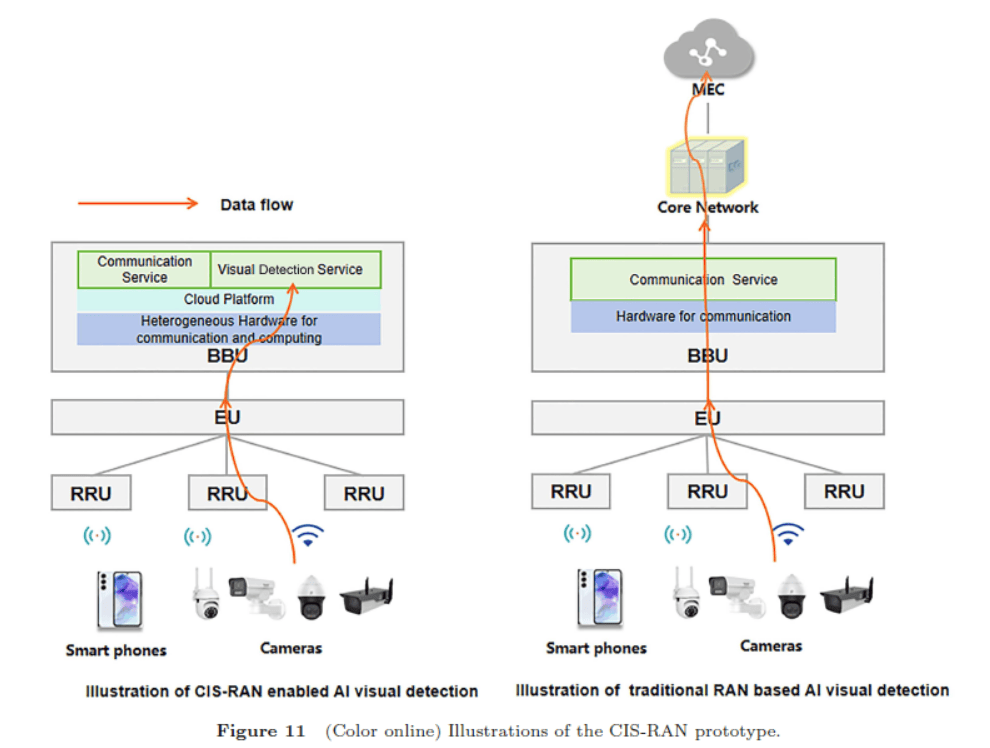
Case 2 deploys AI visual inspection services, including people counting, intrusion detection, and abnormal behavior recognition, based on a prototype system at a China Mobile business hall (indoor) and a crab pond (outdoor). Compared to the traditional scheme of forwarding via UPF to MEC, under the CIS-RAN architecture, AI inference is completed directly at the BBU side, with average end-to-end latency below 20 milliseconds in both indoor and outdoor scenarios, while the traditional architecture is approximately 60 milliseconds. This architecture achieves a tightly coupled perception-decision-action loop, laying the foundation for applications sensitive to deterministic latency, such as embodied intelligence.
Related Products



20 Inch 1600*900 Full HD 60Hz TFT LED Monitor with VGA and DP Interfaces for Desktop Computers-Business Use
Guangzhou Zanying Optoelectronics Technology Co., Ltd.
G.652.D Wavelength-extended Non-dispersion Shifted Single-mode Optical Fiber
HONGAN GROUP CO., LTD.


TWP16 P-Band Tropospheric Wind Profile Radar
China Huayun Meteorological Technology Group Co., Ltd.

Multi-function Marine Monitoring Low-altitude Detection Radar Sea-air Boundary Ocean Dynamic Environment Measurement
Chengdu Dixin Technology Co., Ltd.


Automatic Aiming Laser Remote Obstacle Removal Robot
Pinggao Group Weihai High-Voltage Apparatus Co., Ltd.