Madagascar's Yas Expands Communication Networks in Senegal and Kenya
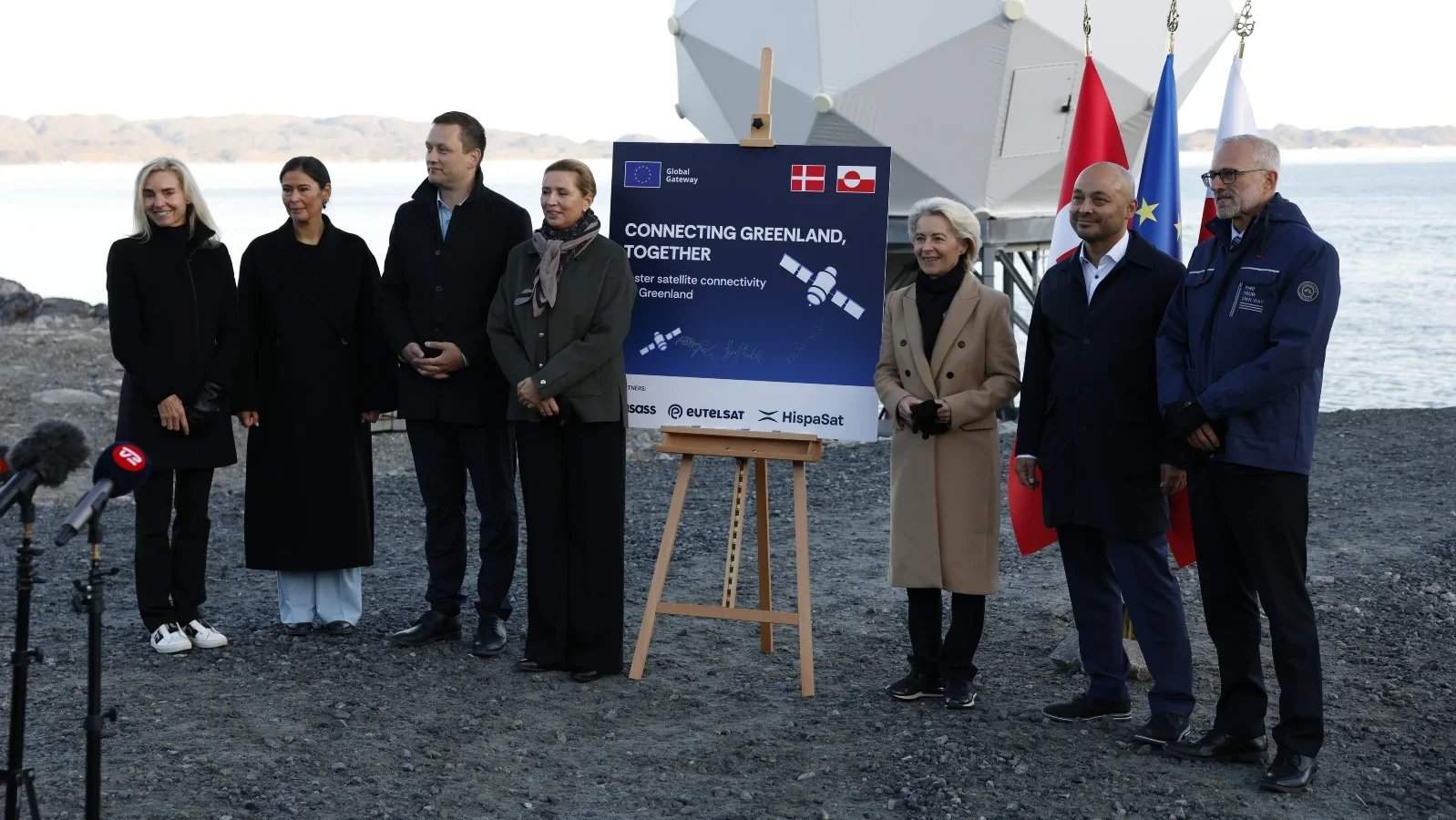
en.Wedoany.com Reported - Senegal's Sonatel recently completed the upgrade of the Gandoul satellite communication earth station, deploying 16 next-generation low-earth orbit satellite antennas across an area of approximately 5 hectares and constructing a Tier III-compliant technical room. The new facilities are connected to the OneWeb low-earth orbit satellite network under France's Eutelsat Group, linking the satellite constellation with Senegal's existing terrestrial communication network to transmit high-speed internet data to local and other West African markets.
The Satellite Portal Network, now operational, serves as the ground gateway for the OneWeb low-earth orbit satellite system. Communication signals from the satellites are received and transmitted through the 16 antennas, then routed via the technical room to the fiber optic backbone, submarine cables, and other terrestrial networks. Unlike satellite receiving equipment that serves only end users, this facility handles large-scale data exchange between the low-earth orbit satellite constellation and regional communication networks, serving as a critical infrastructure node for satellite internet to enter local operator networks.
The Gandoul earth station is not a newly built communication site but an enhancement of an existing satellite communication hub with low-earth orbit satellite access capabilities. Located in the Thiès region of Senegal, the station was commissioned in 1972 and has long undertaken international satellite communication and digital connectivity tasks. With a relatively open maritime view, low electromagnetic interference, and proximity to Dakar and Senegal's major digital infrastructure, it was chosen for the construction of the next-generation satellite gateway.
To ensure communication continuity, the new facilities are equipped with secure power supply infrastructure, redundant systems, and high-speed fiber optic connections. The satellite gateway is also interconnected with Sonatel's operated submarine cables, domestic backbone networks, and international terrestrial networks, allowing data to be transmitted between satellite and fiber optic paths based on network conditions. This hybrid networking helps increase international communication capacity and provides alternative connection paths in the event of line failures.
Low-earth orbit satellites, being closer to the ground, can provide supplementary connectivity to areas where traditional fiber optic and mobile networks are difficult to cover. However, low-earth orbit satellite services still require coordinated operation of ground gateways, fiber optic backhaul, power supply systems, and network control facilities. The 16 new antennas and Tier III technical room at the Gandoul project fill a key gap in connecting the OneWeb constellation with terrestrial networks in West Africa, also expanding Senegal's capacity to carry cross-border satellite data.
This project is part of Senegal's "New Deal Technologique" digital infrastructure plan, with construction goals including improving broadband access, enhancing network resilience, and diversifying international communication paths. Sonatel stated that the Gandoul gateway will not only serve the Senegalese market but also provide connectivity support for neighboring countries, enterprises, and public institutions, further developing the earth station into a regional hub for satellite communication and fiber optic networks in West Africa.
Currently, Sonatel has not disclosed the investment amount for this upgrade, the design capacity of the satellite gateway, or specific service clients. What is clear is that the 16 satellite antennas, Tier III technical room, redundant power supply, and high-speed fiber optic connections have all been deployed, upgrading the Gandoul earth station from a traditional satellite communication facility into a comprehensive communication infrastructure connecting low-earth orbit satellites, submarine cables, and terrestrial backbone networks.
Related Products

TWP16 P-Band Tropospheric Wind Profile Radar
China Huayun Meteorological Technology Group Co., Ltd.



Flat Portable Satellite Terminal 0.35m Aperture Manual Portable Terminal
China Starwin Science & Technology Co., Ltd.
GYTA Type Non-Self-Supporting Aerial/Duct Optical Cable
TONGDING INTERCONNECTION INFORMATION CO., LTD.
Automatic Aiming Laser Remote Obstacle Removal Robot
Pinggao Group Weihai High-Voltage Apparatus Co., Ltd.

Multi-function Marine Monitoring Low-altitude Detection Radar Sea-air Boundary Ocean Dynamic Environment Measurement
Chengdu Dixin Technology Co., Ltd.
Mine Explosion-proof and Intrinsically Safe Industrial Ethernet Ring Network (10 Gigabit/Gigabit)
Chongqing Mas Sci&Tech Co., Ltd.