China's Science Island Team Develops Novel Nanozyme Probe for High-Precision Simultaneous Detection of Harmful Substances in 10 Minutes
en.Wedoany.com Reported - The Optoelectronics Center of the Anhui Institute of Optics and Fine Mechanics, Hefei Institutes of Physical Science, Chinese Academy of Sciences, has made new progress in the research of environmental harmful substance detection technology. The research team has successfully constructed a novel composite mesoporous nanozyme probe composed of three metals—palladium, platinum, and iridium—which can simultaneously achieve high-precision detection of bacterial macromolecular pollutants and hormonal small-molecule pollutants. The relevant research results have been published in Biosensors and Bioelectronics.
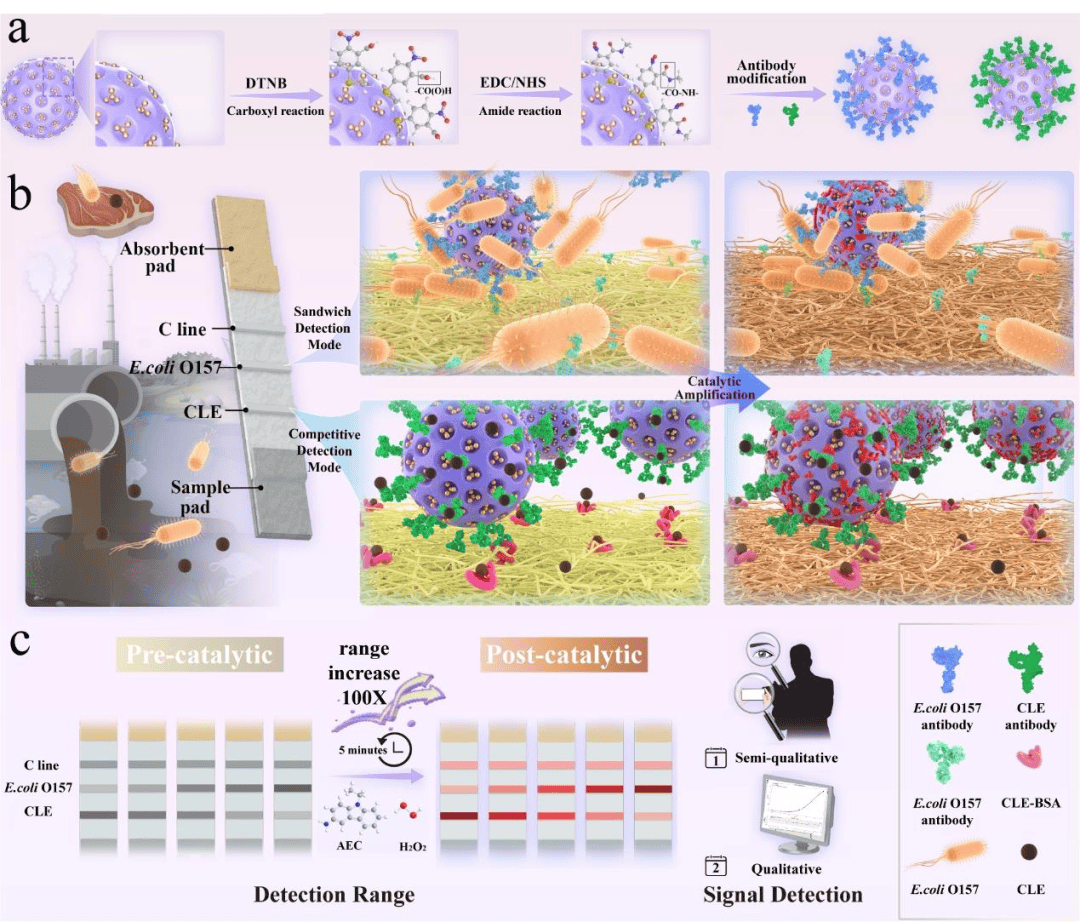
The sources of environmental and food pollution are mainly divided into two categories: biological harmful substances (such as bacteria and viruses) and chemical harmful substances (such as hormones and pesticide residues). In scenarios such as environmental monitoring, public health safety protection, and food production, the precise detection and traceability of these two types of pollutants are crucial. However, due to the significant difference in molecular weight between the two, simultaneous detection typically relies on different technical platforms, resulting in cumbersome operations and slow detection speeds.
The research team used palladium-platinum-iridium trimetallic mesoporous nanozymes as signal labels to construct a sandwich-competitive combined immunoassay system, achieving integrated simultaneous detection of harmful substances with different molecular weights. This technology offers two advantages: the ternary mesoporous framework structure provides abundant catalytic sites, enhancing peroxidase-like activity, sensitivity, and signal dynamic range; the highly rough mesoporous surface effectively increases the loading capacity of detection antibodies, improving target capture capability. The immunochromatographic sensor constructed based on this technology demonstrated excellent detection sensitivity when simultaneously detecting Escherichia coli and clenbuterol in environmental water samples. The minimum detectable concentration for E. coli was 35 cells/mL, and for clenbuterol, it was 7.15 pg/mL (1 pg = 1×10⁻¹² g). The repeat detection error was below 7%, and the detection time was only 10 minutes.
Doctoral students Bai Wenlong and Zhang Jin are the co-first authors of the paper, while Associate Researcher Wang Shu and Associate Researcher Zheng Shuai are the co-corresponding authors. This research was supported by the National Natural Science Foundation of China and the National Key Research and Development Program of China.
Related Products


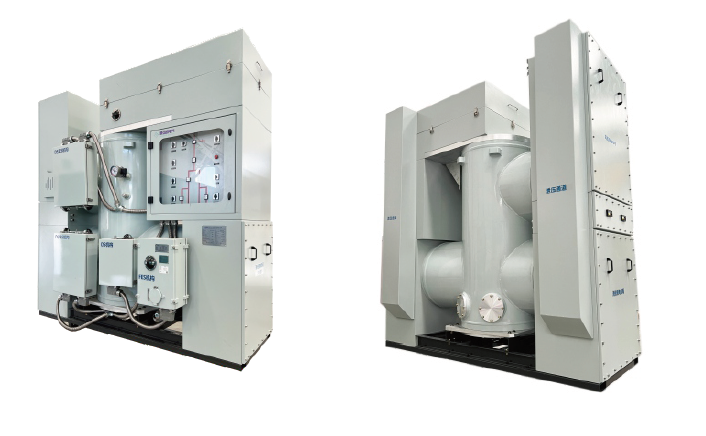
72.5kV 1250A 31.5kA SF6 free Gas-insulated Metal-enclosed Switchgear
Zhejiang Juhonkia Intelligent Electric Co., Ltd.



TAI Slew-drive Single-axis Independent 1P Tracking Bracket System
ANTAI TECHNOLOGY CO., LTD.
5012kWh DC Energy Storage System TD-EES-5012kWh
Suzhou Tongding Xindong Energy Storage Technology Co., Ltd.