en.Wedoany.com Reported - Johnson Controls has launched the latest version of its flagship building automation system, Metasys 16.0, designed to enhance building operational security and resilience in response to increasingly complex operating environments. By strengthening cybersecurity protection, accelerating integration deployment, and incorporating built-in redundancy mechanisms, the system helps customers reduce downtime risks and ensure the continuous operation of mission-critical buildings.
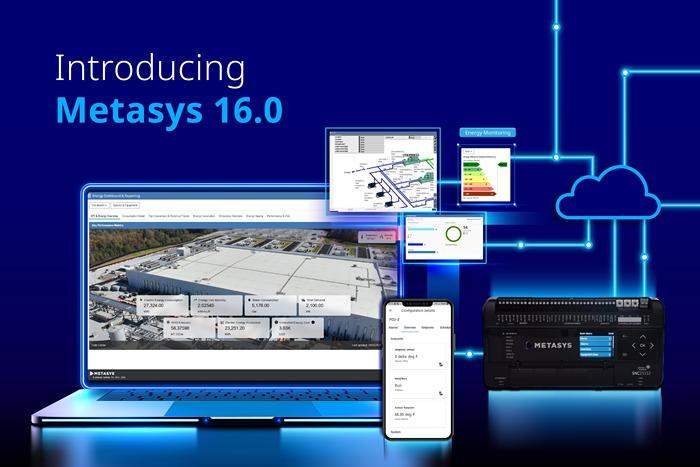
M. Faisal Pandit, President of Johnson Controls Building Automation, stated that customers' operating environments are becoming increasingly complex, with continuously rising demands on building performance. Even brief system interruptions can impact business outcomes. Customers need a secure, reliable, resilient, and easily deployable and scalable building automation system. Metasys 16.0 integrates these capabilities into a unified platform, helping customers achieve continuous operations and mitigate risks. Currently, cutting-edge technologies such as artificial intelligence, biotechnology, and advanced manufacturing are accelerating large-scale deployment. These industries have urgent needs for precise and reliable operating environments, making thermal management capabilities central to system operation and expansion, while digital lifecycle services are crucial for ensuring continuous operations and business outcomes.
Metasys 16.0 addresses the performance requirements of these high-growth industries, offering faster deployment speeds and more autonomous operational modes. The system features several new capabilities: In terms of cybersecurity, it complies with the IEC 62443-4-2 Security Level 2 standard and reduces upgrade time by 40% through a "fast track" configuration tool. For integration and deployment, the system leverages an open interconnection architecture equipped with visual integration tools such as Node-RED, which can increase integration deployment speed by 80% and reduce costs by 60% to 70%, compressing the time to launch new features from months to days. The system incorporates built-in cross-server redundancy and failover mechanisms, allowing uninterrupted operation even when a single server goes offline, without requiring dedicated hardware or third-party software. Additionally, standardized workflows can reduce engineering design and deployment time by 30%. The system also provides an integrated energy and performance visualization dashboard, enabling real-time viewing of peak load, energy consumption, indoor air quality, and emissions data within a single system. In terms of scalability, a single server supports up to 1,300 IP devices, a 30% increase over the previous version. For energy efficiency optimization, the system adopts standardized control strategies compliant with ASHRAE Guideline 36, achieving energy savings of up to 30%. Compliance readiness is supported through built-in dashboards that help customers meet reporting requirements for emerging global standards such as the Energy Performance of Buildings Directive.