Mexico's Direct Investment in Data Centers Could Exceed $20.63 Billion by 2031
en.Wedoany.com Reported - The Mexican Data Center Association (MEXDC) stated that driven by cloud services, artificial intelligence, and nearshoring expansion, Mexico is expected to attract over $20.63 billion in direct investment by 2031, which will strengthen the country's digital infrastructure and its position as a technology hub in Latin America.
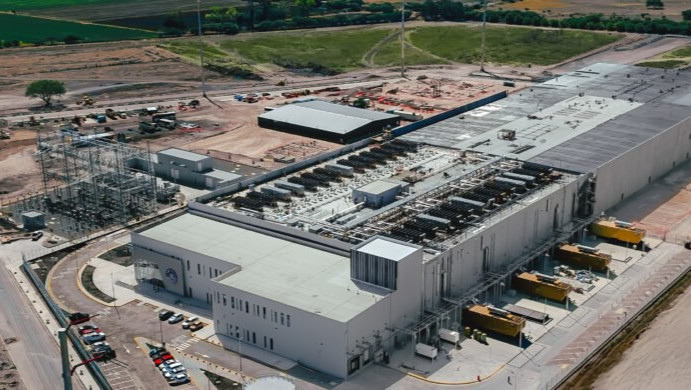
Mexico's data center industry has become one of the pillars of digital transformation, providing strategic support to sectors such as manufacturing, financial services, e-commerce, healthcare, education, and telecommunications. Its growth no longer relies solely on building new infrastructure but on strengthening a multi-sector ecosystem composed of specialized enterprises, technology suppliers, educational institutions, and public agencies.
According to MEXDC, Mexico is undergoing a transformation into a digital hub for Latin America. By 2031, driven by demand for cloud services, artificial intelligence, enterprise digitalization, and nearshoring, the country is expected to attract over $20.63 billion in direct investment and $61.89 billion in indirect investment.
Currently, Mexico's data center installed capacity is 279 megawatts, with an additional 205 megawatts under construction, and over 1,730 megawatts have been announced for addition within the next five years, significantly enhancing the country's available digital infrastructure.
While data centers are often understood as buildings housing servers, they actually represent critical infrastructure whose operation depends on the coordination of multiple industries. MEXDC explained that each project requires the participation of experts in engineering, construction, energy, telecommunications, cooling technology, power backup, hardware manufacturing, talent training, and government regulation.
Key players in this ecosystem include: engineering and design companies focused on construction, resilience, and energy efficiency; construction firms and integrators responsible for developing high-complexity facilities; power suppliers, one of the most relevant factors as energy consumption can account for up to 75% of data center operating costs; companies specializing in cooling systems, including advanced technologies supporting AI applications; manufacturers of servers, storage systems, network and security equipment; telecommunications companies providing fiber optics, international infrastructure, and connectivity; suppliers of backup power systems through UPS, batteries, and generator sets; universities and training centers cultivating specialized talent; and government agencies responsible for permits, environmental regulation, and energy policy.
Currently, the Mexican Data Center Association comprises 190 companies, including 14 data center operators and 176 supplier organizations, offering over 70 specialized services. The association noted that each participant directly impacts a project's feasibility from planning to operation. Delays in any link of the supply chain could affect billions of dollars in investment and the delivery timeline for new digital capabilities.
In addition to supporting daily digital services such as electronic payments, streaming platforms, instant messaging, and e-commerce, the data center industry drives competitiveness in production sectors. Its expansion fosters the creation of highly specialized jobs, technological development, attraction of foreign investment, and growth in industries such as fintech, advanced manufacturing, digital health, online education, and e-commerce. The industry's growth also responds to the greater demand for digital infrastructure driven by artificial intelligence, industrial automation, and the reconfiguration of supply chains.
For MEXDC, Mexico's growth potential will depend on its ability to coordinate all participants in this ecosystem. The association believes that strengthening collaboration among technology companies, energy suppliers, educational institutions, developers, operators, and government agencies will help accelerate the construction of new infrastructure, meet the growing demand for digital services, and consolidate Mexico's position as one of the leading data center markets in Latin America.
Related Products



Multi-function Marine Monitoring Low-altitude Detection Radar Sea-air Boundary Ocean Dynamic Environment Measurement
Chengdu Dixin Technology Co., Ltd.
Conveyor Belt Intelligent Monitoring System
LUO YANG WIRE ROPE INSPECTION TECHNOLOGY CO., LTD.



Comprehensive Mining Automation Control System
Beijing Tianma Intelligent Control Technology Co., Ltd.

Automatic Aiming Laser Remote Obstacle Removal Robot
Pinggao Group Weihai High-Voltage Apparatus Co., Ltd.