Portuguese Catholic University Launches Projects on Micropollutant Removal from Wastewater and Soil Bioremediation
en.Wedoany.com Reported - Two research projects at the Escola Superior de Biotecnologia da Universidade Católica Portuguesa (Portuguese Catholic University's School of Biotechnology) focus on the removal of micropollutants from wastewater and the bioremediation of contaminated soil, respectively, both based on biotechnology, waste valorization, and low environmental impact processes. The AStUTe project is dedicated to removing micropollutants from wastewater, while the BioElectroSoil project aims to accelerate the bioremediation of contaminated soil containing persistent compounds.
These two projects are led by researchers Catarina L. Amorim and Irina Susana Moreira from the Centro de Biotecnologia e Química Fine (Center for Biotechnology and Fine Chemistry) at the Portuguese Catholic University's School of Biotechnology. Catarina L. Amorim stated that the AStUTe project primarily explores two strategies: developing multi-specific biological inoculants for degrading micropollutants to enhance bioaugmentation in treatment systems, and developing adsorbent materials derived from waste from the food, agricultural, and agroforestry industries for designing filtration units. This approach combines biological and physicochemical processes. The project focuses on certain priority micropollutants identified in the EU Urban Wastewater Treatment Directive, including pharmaceutical compounds and endocrine disruptors detected in wastewater treatment plant effluents, such as diclofenac, venlafaxine, carbamazepine, and β-estradiol. Catarina L. Amorim noted that endocrine disruptors like 17β-estradiol may be the most ecologically relevant micropollutants due to their high biological activity at extremely low concentrations and their adverse effects on aquatic organisms.
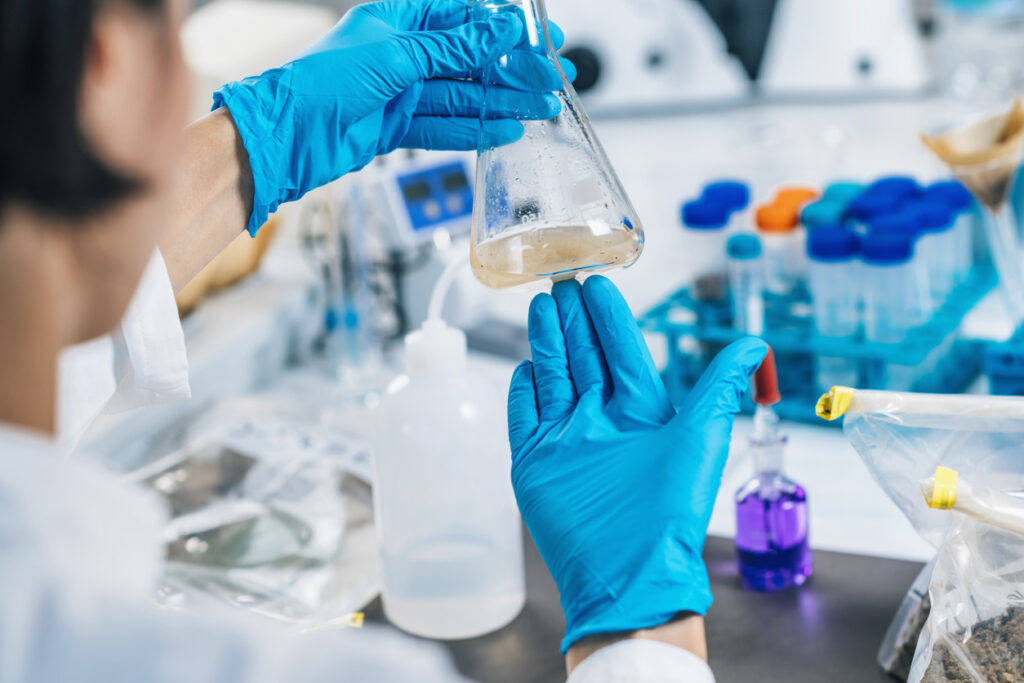
The BioElectroSoil project accelerates bioremediation by combining electroactive microorganisms with conductive materials, enhancing the bioavailability of pollutants and stimulating metabolic pathways that are slower under natural conditions. According to Irina Susana Moreira, this combination enables the degradation of persistent compounds in a shorter time, with low energy consumption and without the need for harsh chemicals. The research focuses on persistent organic pollutants that can remain in soil for years or decades even after conventional interventions, particularly PFAS (per- and polyfluoroalkyl substances) and phenolic compounds. Both types of pollutants are toxic even at low concentrations, affecting aquatic and soil organisms, and may act as endocrine disruptors.
In the BioElectroSoil project, bioelectrochemical systems transform the soil into an environment where microorganisms can more efficiently manage electron flows associated with biochemical transformations. The system integrates conductive materials, creating an electron network within the soil that accelerates metabolic reactions even in areas with low oxygen or high pollutant loads. Compared to conventional bioremediation, the main advantage is the acceleration of biodegradation through electron transfer between microorganisms and conductive materials. The project also aims to develop in situ treatment methods suitable for anaerobic, compacted, or heterogeneous soils, reducing the need for excavation, soil transport, or the use of harsh chemicals. For phenolic compounds, electroactive microorganisms can accelerate the breakdown of aromatic structures. For PFAS, the strategy involves creating bioelectrochemical microenvironments that favor defluorination reactions.
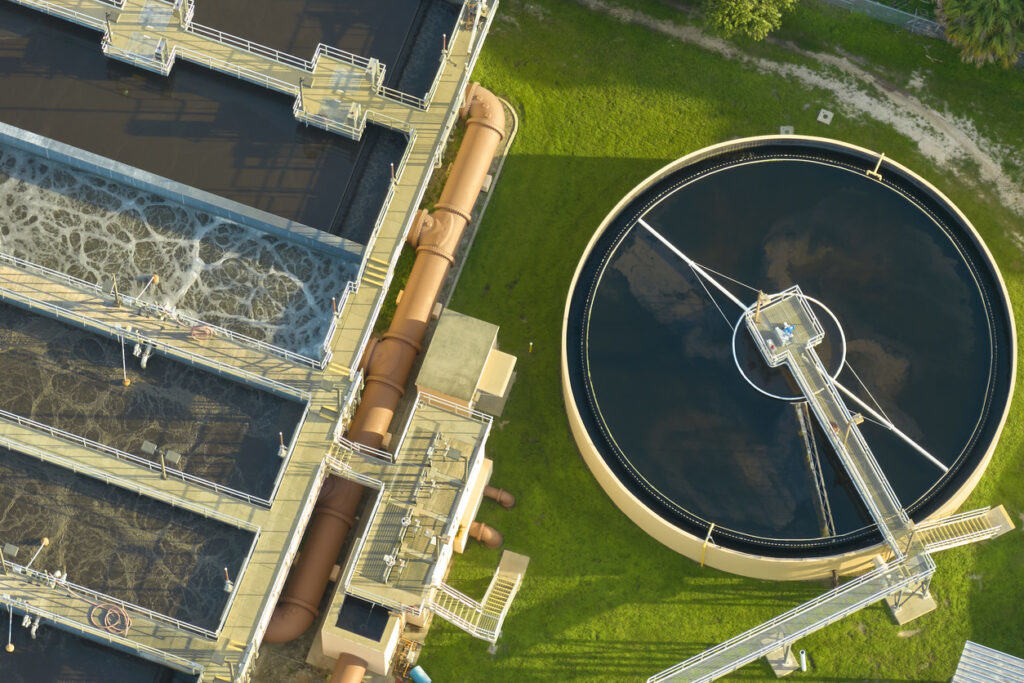
Waste valorization is a common element in both projects. In the AStUTe project, industrial waste is used to produce adsorbent materials, transforming low-value streams into value-added materials. The development of multi-specific biological inoculants also utilizes materials recovered from residual biomass generated by wastewater treatment plants. In the BioElectroSoil project, the circular economy is integrated through the use of biochar as a conductive material, produced from agro-industrial by-products and organic waste. The in situ operation of the system can also avoid steps associated with the excavation, transport, and disposal of contaminated soil, reducing waste volume and emissions from these processes. For businesses, the AStUTe project can help some industries convert waste into resources, creating new value chains. For companies in the water treatment sector, these solutions may lead to new technological products to comply with EU environmental regulations on micropollutant removal. For the BioElectroSoil project, companies dealing with contaminated soil face opportunities, particularly in the agro-industrial sector, through the valorization of organic by-products by producing biochar; and in urban and environmental contexts, through the possibility of remediating degraded soil without excavation, reducing costs, emissions, and intervention time.
Both projects are still in early development stages. The AStUTe project started last October, with a focus on developing biological inoculants and producing adsorbent materials derived from waste. Preliminary results for the biological inoculants show that immobilization of the strains does not appear to impair degradation activity and maintains bacterial functionality during storage. For the adsorbents, several materials have been developed using non-valorized waste, and performance evaluation tests are expected to begin. The BioElectroSoil project started in September and is currently in its initial phase. According to Irina Susana Moreira, the bioelectroactivity of the microbial community and the degradation of target pollutants have already been verified in the laboratory. For the AStUTe project, the next steps involve evaluating the effectiveness of the solutions in complex matrices, optimizing production processes, and studying stability, durability, and economic feasibility before integration into a pilot-scale wastewater treatment system. For the BioElectroSoil project, work will advance to microcosm pilot tests using real soil and complex mixtures of pollutants. No full-scale trials are planned during the three-year project period, but the research aims to consolidate the scientific and technical foundations necessary for future pilot and field applications.
Related Products

714CD Series C-Band Weather Radar
Chengdu Zhongdian Jinjiang Information Industry Co., Ltd.


Industrial and Commercial Point-Type Gas Detector
Jinan Benan Technology Development Co., Ltd.
4HS-8 High-efficiency Peanut Inverted-laying Harvester
Hebei Yongfa Hongtian Agricultural Machinery Manufacturing Co., Ltd.
MH220E Two-Row Hybrid Packaged Cotton Picker
CHINA RAILWAY CONSTRUCTION HEAVY NDUSTRY XINJIANG CO., LTD.