Main Structure of Beidi Island Section of Guangzhou Yuzhu Tunnel Completed
en.Wedoany.com Reported - The main structure of the Beidi Island section of the Guangzhou Yuzhu Tunnel, constructed by China Railway 18th Bureau Group, has been completed, with the final cubic meter of concrete precisely poured, laying the foundation for subsequent immersed tube connection.
The Guangzhou Yuzhu Tunnel project spans approximately 2.6 kilometers, designed as a six-lane, two-way urban arterial road. The immersed tube section is 935 meters long, with a cross-section width of 30.6 meters and a height of 8.9 meters. The route starts south from Xingang East Road in Haizhu District, crosses under the Pearl River twice using immersed tube tunnels, passes under Huangpu Avenue on the north bank of the Pearl River before surfacing, and ends south of Shenchong Zuozhi Creek.
The Beidi Island section is the core part of the entire tunnel, responsible for immersed tube connection, structural transition, and precision control. The construction area, adjacent to the Pearl River waters, features complex hydrogeological conditions and faces multiple challenges: difficulty in water stopping near the river, high risks of deep foundation pits, poor geological conditions, and stringent alignment precision requirements. Tidal fluctuations in the Pearl River increase the risk of water seepage, placing high demands on foundation pit waterproofing; the deep and extensive excavation creates significant lateral soil pressure, requiring strict deformation and settlement control standards; the site predominantly consists of fluid-plastic silt and fine sand layers, which are loose and highly permeable, prone to water seepage and collapse; and the need for millimeter-level precision in immersed tube connection leaves extremely low tolerance for construction errors.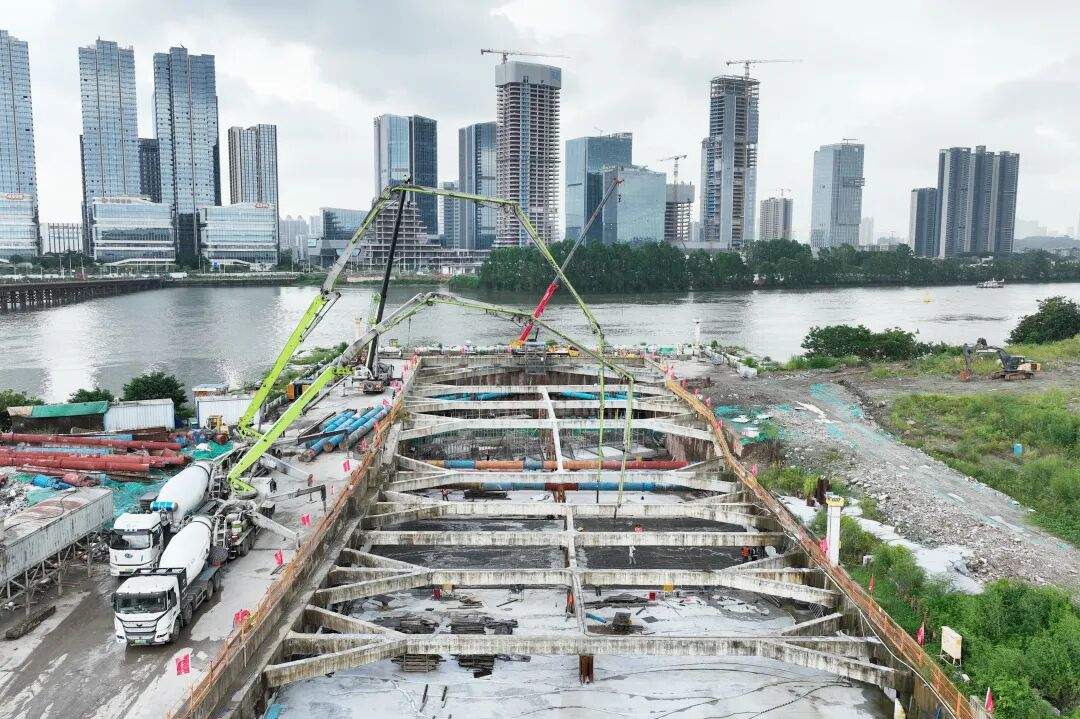
During construction, the project team established a precision monitoring network, employing comprehensive point monitoring and closed-loop coordinate control to prevent cumulative construction errors. Additionally, customized integral steel formwork combined with symmetrical layered pouring techniques were used to control tunnel shape and structural dimensions, avoiding issues such as concrete deformation and shrinkage.
End steel shells are installed on both the left and right sides of the Beidi Island section, serving as precision positioning and sealing reference interfaces for immersed tube connection. The project adopted factory-integrated prefabrication and on-site integral hoisting for component formation, coupled with specialized equipment for fine adjustment, controlling all construction indicators to millimeter-level precision. Rigid fixation and real-time monitoring and correction throughout the process ensured the accuracy of tunnel connection.
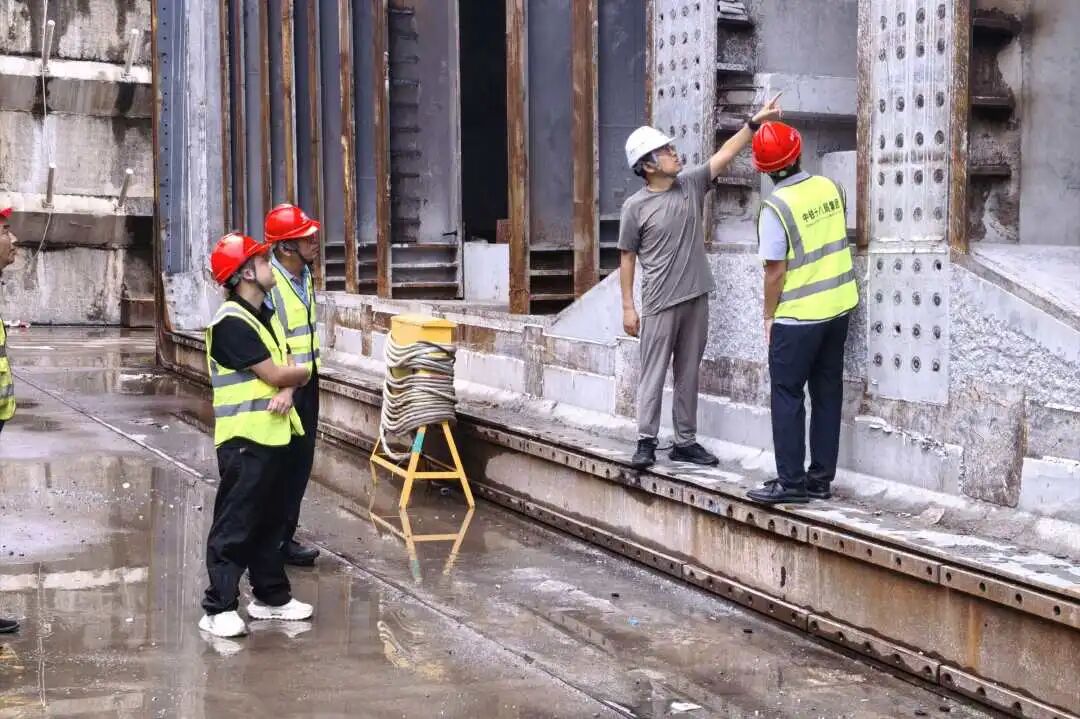
Through the "Two Entries" team activities, the project team collaborated with frontline industrial workers to innovate a composite support process, combining three support techniques—locking steel pipe piles, cast-in-place piles, and diaphragm walls—to address construction challenges and strengthen the safety of deep foundation pits. Leveraging this technology, the project team completed the main structure pouring, providing assurance for precise underwater immersed tube connection.
The completion of the main structure of the Beidi Island section has unlocked the core construction pathway of the project, providing a working reference plane for the excavation of E5 and E6 tube element trenches, subsequent installation, and immersed tube floating and positioning. The Yuzhu Tunnel is a key node in Guangzhou's "Eastward Expansion and Southward Development" strategy. Once completed and opened to traffic, it will create a north-south cross-river connection channel, alleviating traffic pressure on both sides of the Pearl River, enabling a 5-minute interchange between the Pazhou and Yuzhu business districts, and significantly enhancing urban development vitality and connectivity within the Guangdong-Hong Kong-Macao Greater Bay Area.
Related Products


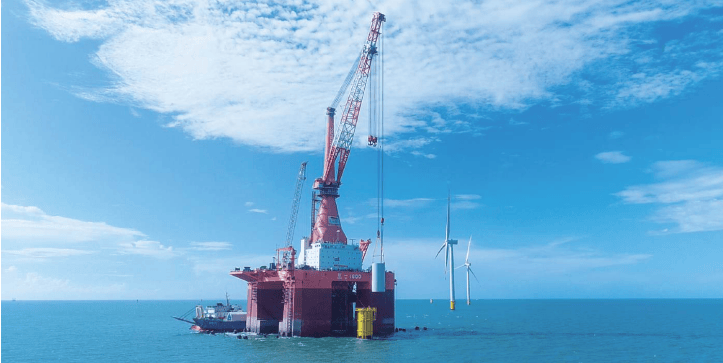
"Shunyi 1600" Deep-submerging Bottom-sitting Multi-functional Wind Power Engineering Vessel
Zhengli Offshore Engineering Co., Ltd.
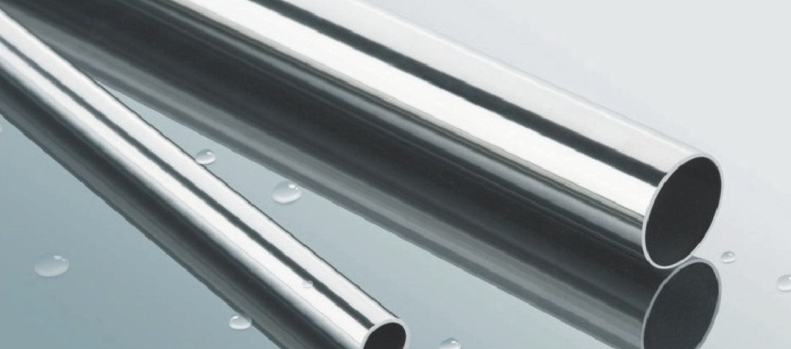
ERW Welded Pipe (Black Pipe and Hot-dip Galvanized Steel Pipe)
Handan Zhengda Steel Pipe Co., Ltd.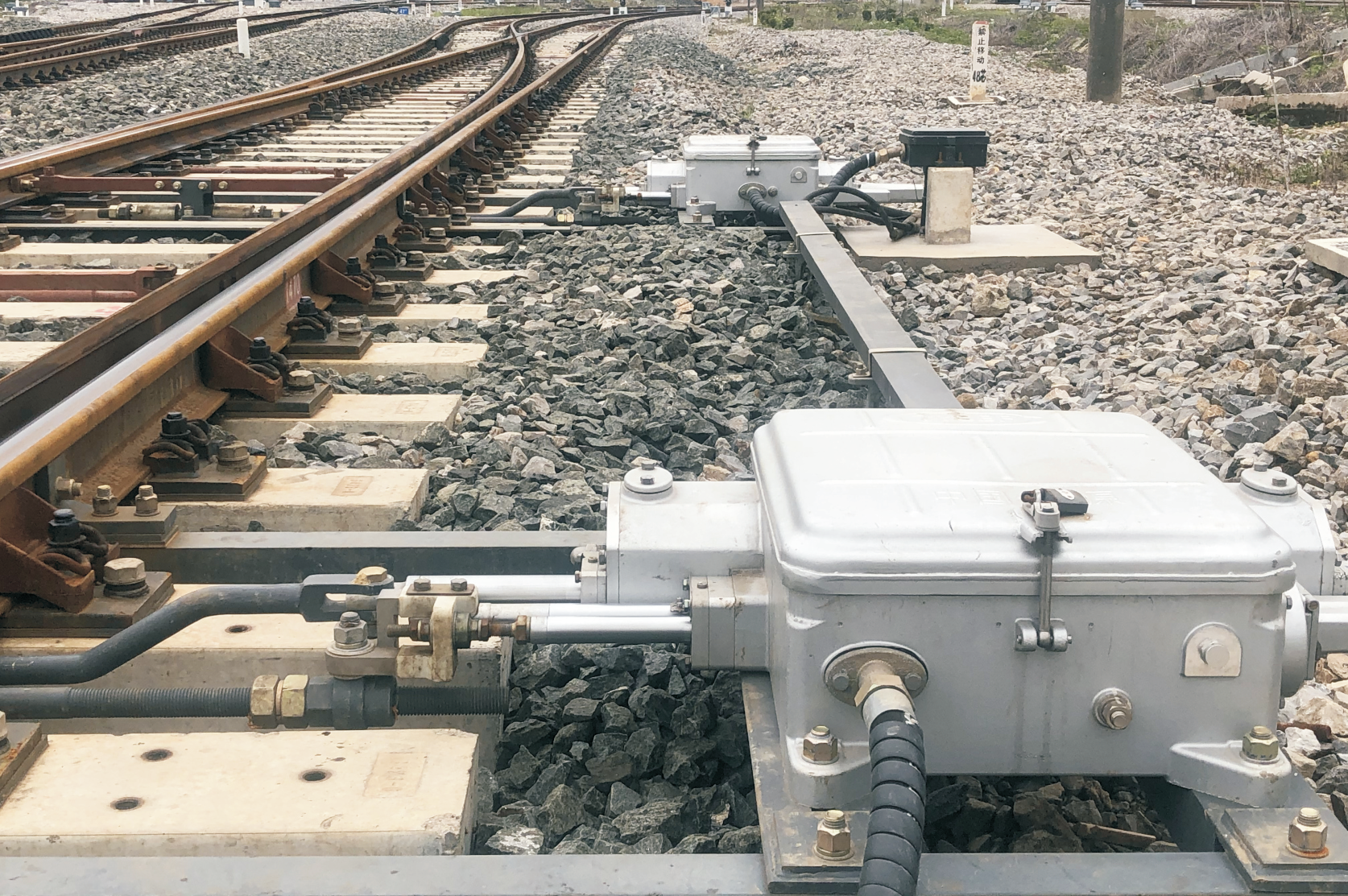
ZY(J)7(M) Sealed Type Electro-Hydraulic Turnout Machine
TAIYUAN CR JINGFENG EQUIPMENT TECHNOLOGY CO., LTD.
Wheel and Track Technology Business
Beijing Research & Design Institute of Rubber Industry Co., Ltd.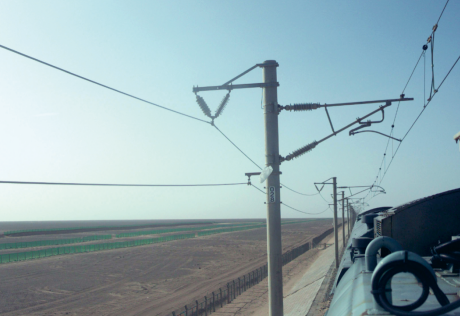
Pantograph-Catenary Comprehensive Detection Device (1C)
CHENGDU TANGYUAN ELECTRIC CO., LTD.