No steering wheel, no accelerator or brake pedals! Tesla officially unveils production version of Cybercab driverless robotaxi
en.Wedoany.com Reported - On September 3, local time, Tesla held an event in Austin, Texas, and officially unveiled the production version of the Cybercab driverless robotaxi.
This model completely eliminates the steering wheel and accelerator and brake pedals, adopting a two-door, two-seat layout that relies entirely on Tesla's FSD (Full Self-Driving) system to operate, marking a substantive step forward in the commercialization of Tesla's Robotaxi business.
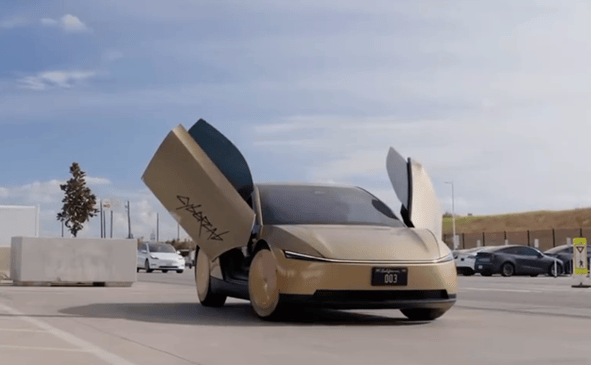
Tesla CEO Elon Musk has previously stated that the Cybercab's price will be kept under $30,000, equivalent to approximately RMB 210,000. According to documents disclosed in the U.S. EPA certification filing, the Cybercab is equipped with an approximately 48 kWh lithium-ion battery pack and a front-wheel-drive motor with a maximum output of 163 kW (approximately 219 hp). Its curb weight is just 1,412 kg, and its combined range is approximately 418 miles (about 673 km).
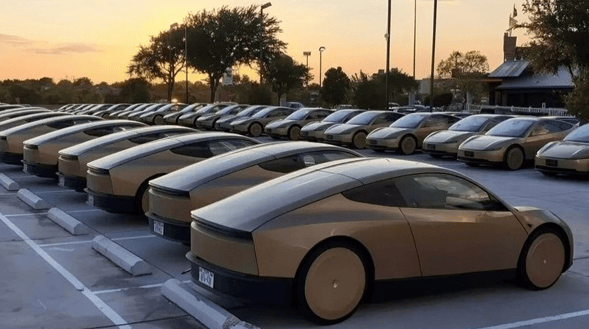
In February this year, the first production Cybercab rolled off the line at the Texas Gigafactory, and engineering testing on public roads in Austin began in June.
The production Cybercab has a height of 1,407 mm and a width of 1,753 mm, with a ground clearance of 145 mm and an entry height of just 419 mm — lower than the vast majority of production passenger vehicles, allowing passengers to sit down without having to step up.
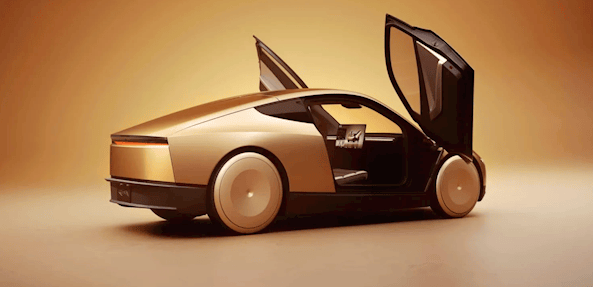
Inside, legroom measures 1,102 mm, headroom 973 mm, and hip room 1,273 mm. The backrests of the two seats can be independently adjusted for recline angle, but the seats can only move forward and backward in sync. Tesla explicitly requires in its guide that passengers keep both feet flat on the floor and that the seatback recline angle not exceed 35 degrees, meaning there is only one correct sitting posture inside the vehicle.
The trunk offers 572 liters of storage space with a maximum load capacity of 100 kg, enough for two checked suitcases plus two carry-on bags, and can also accommodate a folded large stroller and a folded compact wheelchair. However, the Cybercab has no front trunk, the hood cannot be opened at all, and there is no glove box inside the cabin.
Since the vehicle has only one row of seats, it is not possible to fold down rear seats to expand trunk space as in traditional cars, so the vehicle's loading capacity is actually smaller than that of an average sedan.
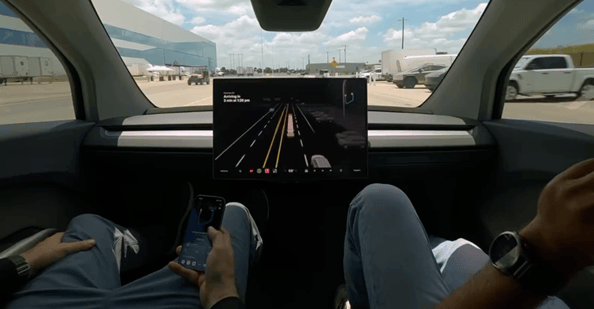
The Cybercab is equipped with nine cameras in total, eight of which are mounted on the exterior, while the ninth is an interior camera primarily used to check cabin cleanliness and for any lost items between trips. When the interior camera is active, a green indicator light appears on the touchscreen to inform passengers.
Above the overhead light, the vehicle is also fitted with a cabin radar for occupant status classification, which determines whether the front airbags should deploy. The radar can distinguish between an empty seat, a rear-facing child seat, a forward-facing child seat, a booster seat, and occupants of older-child or adult size, thereby precisely controlling the airbag deployment strategy.
The Cybercab's user interface is developed on Epic Games' Unreal Engine, a relatively uncommon technology choice in the in-vehicle UI field.
The airbag system includes front airbags, knee airbags, seat side airbags, seat cushion airbags, and side curtain airbags, providing comprehensive passive safety protection. The electric seatbelts not only tighten automatically but can also deliver haptic feedback through vibration or pulses to draw the passenger's attention. When the system predicts or detects sudden braking, loss of traction, or other unexpected road conditions, the seatbelts proactively tighten.
It should be noted that the Cybercab does not offer LATCH/ISOFIX rigid anchor points for child seats; compatible child seats or booster seats can only be secured using the vehicle's seatbelts. Tesla currently prohibits children under 13 from riding in the vehicle, even when accompanied by an adult.
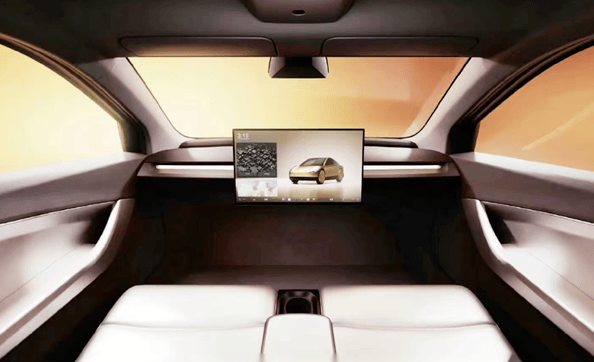
Both side doors are equipped with mechanical handles that can be opened normally even when the vehicle is completely powered off. The door handles feature a two-stage design: a gentle pull opens the door normally, while pulling fully to the end triggers the mechanical release, which ends the current trip and brings the vehicle to a stop within its lane. A light pull on the handle while driving produces no response, and triggering the mechanical release at high speed initiates a pull-over maneuver rather than an immediate stop.
Another noteworthy detail is that if the vehicle is completely powered off with the windows fully raised, triggering the mechanical release may cause the window glass to shatter. Tesla advises passengers to turn their heads to the side in such a situation. The windows cannot be fully lowered, and there are no physical window switches on the door panels; the controls are located beneath the touchscreen.
The climate control system also cannot be completely turned off. One reason for maintaining airflow is to ensure clear visibility for the vehicle's own sensors (to prevent window fogging from obstructing the view).
In terms of the user experience, the full-width light bar at the front of the Cybercab changes color when the vehicle arrives for pickup. The Robotaxi app informs passengers which color corresponds to their assigned vehicle, making it easy to identify the correct car in a multi-vehicle environment. Each passenger can independently adjust the airflow from the vent on their own side. The vehicle is equipped with USB-C charging ports, and the ambient lighting remains on with brightness and color adjustable via the app.
If a passenger logs into the in-car media services with their own account, their account data is wiped from the Cybercab at the end of the trip. Additionally, Tesla uses the interior camera to check whether the vehicle is ready for the next passenger, including whether the cabin is clean and free of any left-behind items.
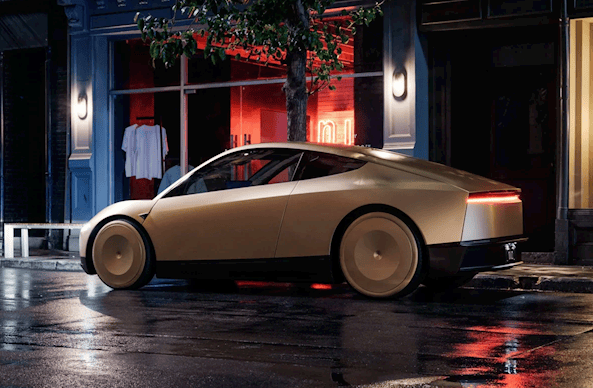
The official launch of the Tesla Cybercab marks the company's transition from the concept stage to the commercialization stage in the Robotaxi arena. On June 30 this year, the production Cybercab had already begun engineering testing on public roads in Austin, with plans to first open it to employees and later to the public. Musk has stated that the number of Robotaxis in the Austin area will be significantly increased.
From an industry perspective, the mass production of the Cybercab will directly compete with established Robotaxi services such as Waymo and Baidu Apollo. Unlike Waymo's retrofitted approach based on the Jaguar I-PACE, the Cybercab was designed from the ground up for driverless operation, eliminating traditional driving hardware such as the steering wheel, pedals, and mirrors, giving it a structural advantage in cost control and space utilization.
However, whether the $30,000 price target can be achieved, how the FSD system performs in scenarios without human intervention, and the pace of regulatory approval for steering-wheel-less vehicles in various countries remain key variables that will determine whether the Cybercab can be deployed at scale.
Related Products

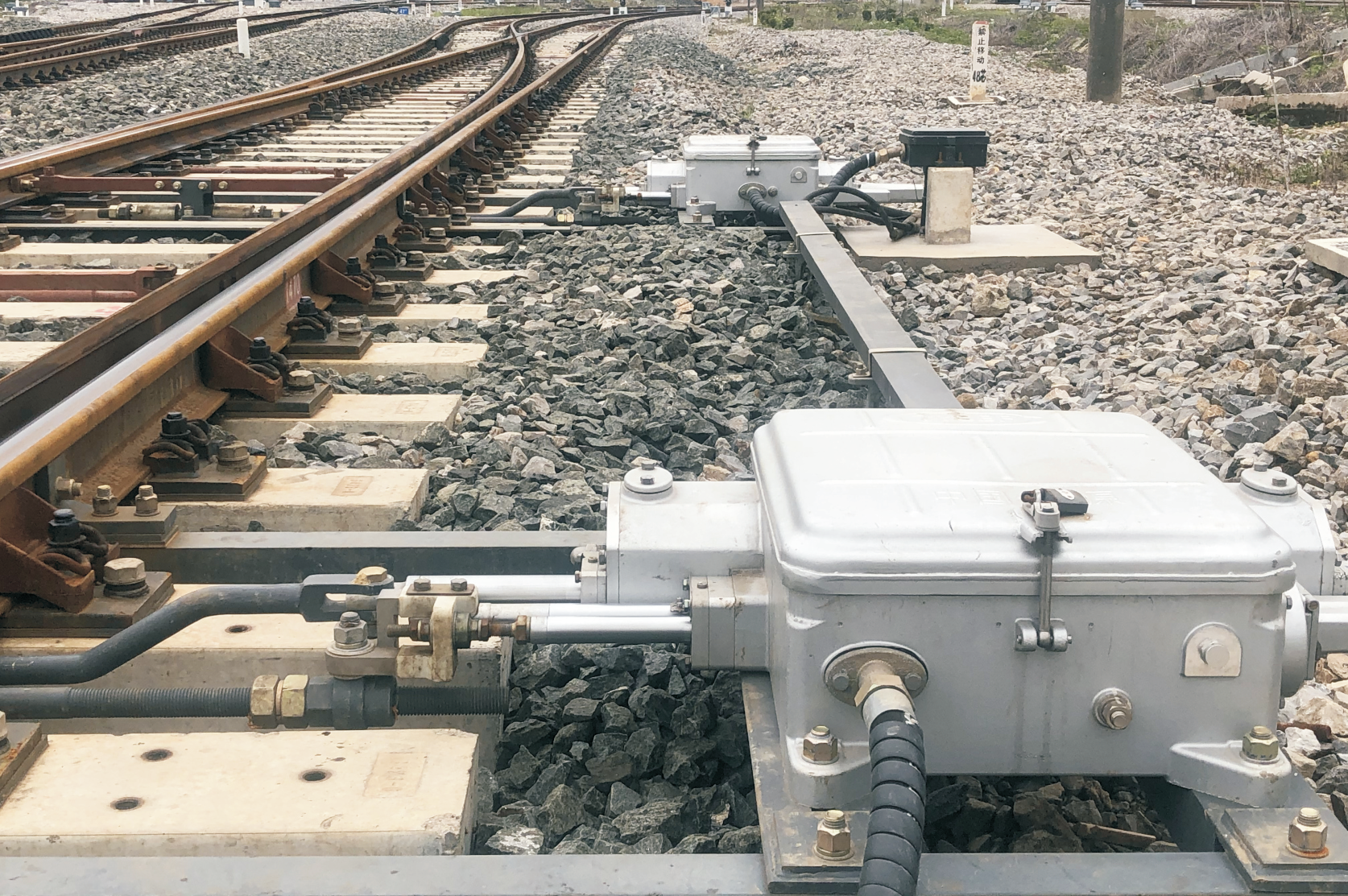
ZY(J)7(M) Sealed Type Electro-Hydraulic Turnout Machine
TAIYUAN CR JINGFENG EQUIPMENT TECHNOLOGY CO., LTD.


Industrial and Commercial Point-Type Gas Detector
Jinan Benan Technology Development Co., Ltd.

ERW Welded Pipe (Black Pipe and Hot-dip Galvanized Steel Pipe)
Handan Zhengda Steel Pipe Co., Ltd.