Brazilian Soybean Prices Hit 6-Month High, Planting Area May Reach 49.1 Million Hectares
en.Wedoany.com Reported - Brazilian soybean prices hit a near six-month high in mid-July, while market forecasts for the next planting season also expanded. Data from the Center for Advanced Studies in Applied Economics at the Luiz de Queiroz College of Agriculture, University of São Paulo, showed that a 60-kilogram bag of soybeans closed at 141.02 reais at the Port of Paranaguá in Paraná state last Friday (July 17). The Cepea/Esalq Soybean Indicator (Paranaguá) rose 0.31% on the day, accumulating a 5.57% gain in July. In the Paraná state market, a bag of soybeans closed at 134.11 reais, up 0.13% daily and 5.24% monthly.
Price support occurred during a period of low soybean supply in the domestic market. According to industry analysts, approximately 80% of the 2025/26 soybean crop has already been sold in parts of the north-central region. The remaining available volume includes lower-quality batches, mainly due to excessive humidity during the harvest period in some areas. This limitation keeps premiums firm and helps support Brazilian quotes, even amid international market volatility.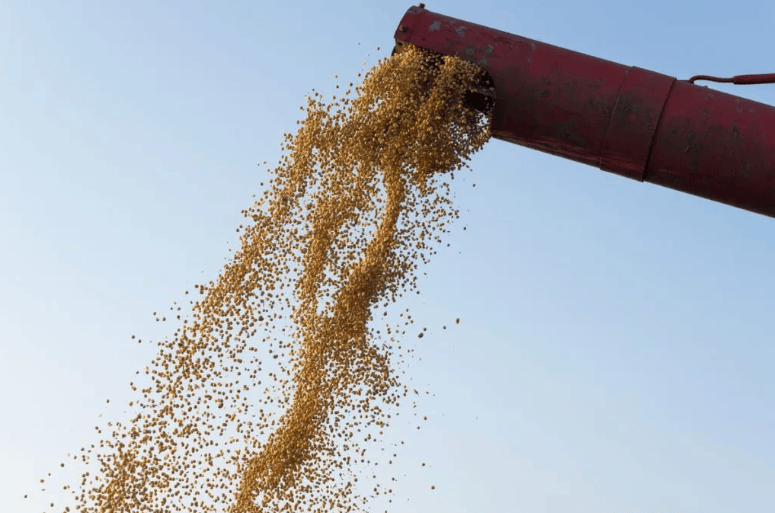
Exchange rate trends, Chinese demand, shipments from Brazilian ports, and the Chicago Board of Trade will continue to dictate business pace. Port schedules indicate that soybean exports in July are approximately 13.75 million tons, a volume that intensifies competition for available soybeans in the domestic market. While the market manages the remaining supply for the current season, producers are beginning to plan for the next planting. Initial forecasts for the 2026/27 season show that Brazil should plant 49.107 million hectares, a 1.2% increase from the 48.5 million hectares considered by the consulting firm for the previous cycle.
Growth should be concentrated mainly in Brazil's central-west region. In the largest producing state, Mato Grosso, the planting area may increase by about 1.5%. Goiás state should follow a similar trend, although producers there face more challenging financial conditions, with lower profit margins and greater difficulty financing the next season. Expansion should also reach the southeastern region, but a significant portion of the growth should occur on already consolidated farms, by incorporating areas previously used for other activities or utilizing land suitable for planting. Soybean planting area continues to expand even amid lower profitability, due to high yields in past seasons that improved the cost-to-revenue relationship.
This balance remains fragile. Fertilizer prices rose in the first half of the year, increasing estimated costs for the 2026/27 season. With compressed profit margins, some farmers may reduce investments in fertilizers, technology, and management, a decision that will lower the crop's production potential, especially if weather conditions are also unfavorable. With area expansion, Safras & Mercado expects the 2026/27 harvest to reach 180.089 million tons, slightly above the 178.3 million tons calculated by the consulting firm for the 2025/26 season. Average yield is forecast at 3,686 kg per hectare (61.43 bags), compared to 3,692 kg per hectare (61.54 bags) in the previous cycle.
In a report released in July, Brazil's National Supply Company (Conab) calculated the 2025/26 production at 180.57 million tons, with a harvested area of 48.64 million hectares and an average yield estimated at 3,712 kg per hectare (61.87 bags). According to Conab, compared to the 2024/25 season, this season's production grew 5.3%, area increased 2.7%, and yield rose 2.5%. The main harvest ended in early June, although small areas of crops remain growing in Roraima, Tocantins, and Alagoas states. The company also raised its 2026 Brazilian soybean export forecast to 116.3 million tons. Domestic processing is estimated at 62.57 million tons, while carryover stocks should be 8.8 million tons, lower than the previously estimated 9.3 million tons.
The main risk for the next season lies in the climate. The increased possibility of a stronger El Niño during the critical months of soybean growth raises concerns about rainfall distribution, especially during the flowering and grain-filling stages. Planting should begin in September, in areas where the sanitary calendar allows and soil moisture is adequate. Before that, producers must balance three factors: recent price increases, high input costs, and climate risks. Brazil is moving toward maintaining its global leadership in soybean production and sales, but new records will depend more on the ability to sustain yields than on area expansion.
Related Products


Industrial and Commercial Point-Type Gas Detector
Jinan Benan Technology Development Co., Ltd.
4HS-8 High-efficiency Peanut Inverted-laying Harvester
Hebei Yongfa Hongtian Agricultural Machinery Manufacturing Co., Ltd.


714CD Series C-Band Weather Radar
Chengdu Zhongdian Jinjiang Information Industry Co., Ltd.