South Korea's Three Major Telecom Operators Accelerate AI Transformation
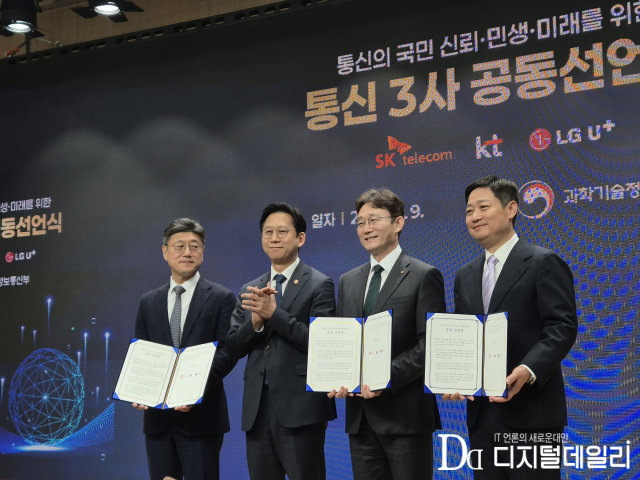
en.Wedoany.com Reported - South Korea's three major telecom operators—SK Telecom, KT, and LG U+—are accelerating their transformation from traditional communication companies to artificial intelligence (AI) enterprises, with their business scope expanding from infrastructure to the entire AI service domain. Instead of following the past model of direct competition in the telecom market, the three companies are each building differentiated competitiveness. The market generally believes that relying solely on existing business models offers no future, and attention is growing on whether the next-generation strategies of the three operators, which position AI as a new growth driver, will succeed.
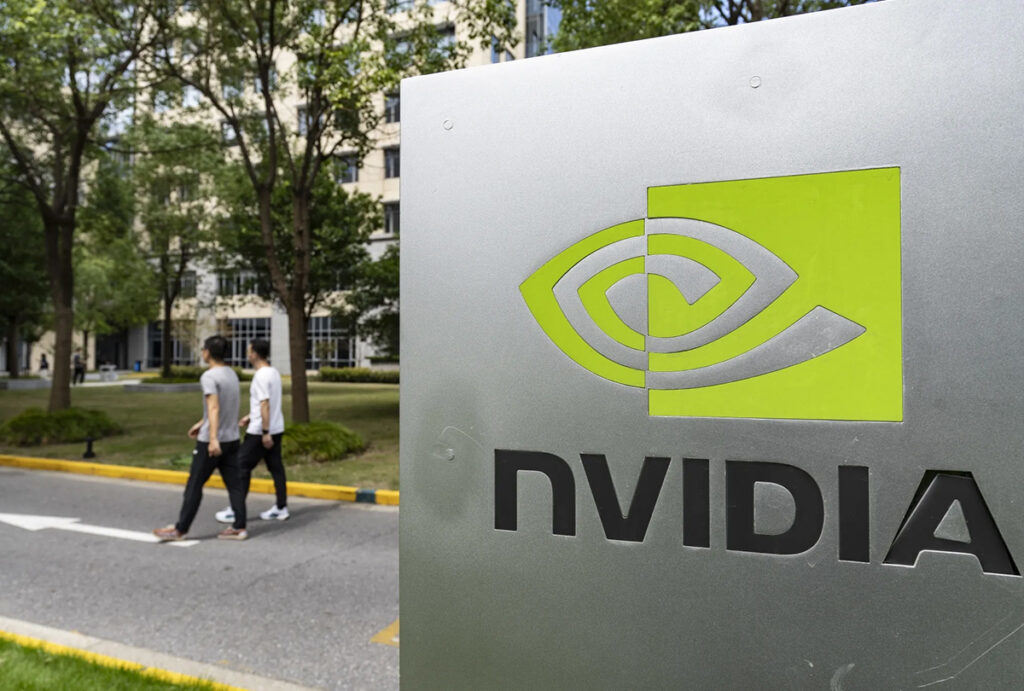
SK Telecom is pivoting to become an AI full-stack service provider, covering the entire spectrum from AI infrastructure to B2B/B2C services. Its AI Data Center (AIDC) business has already generated results, with AIDC sales reaching 131.4 billion KRW in the first quarter of this year, up 89.3% year-on-year. Following the launch of "GPUaaS," a service providing GPU resources via the cloud based on the Gasan AIDC, it also plans to build South Korea's largest hyperscale AIDC in Ulsan. SK Telecom maintains a collaborative relationship with NVIDIA, sharing technology every two weeks from the initial infrastructure construction phase of model development. Its AI model follows an independent path. After unveiling the ultra-large model "A.X K1" with 519 billion parameters, it is developing the successor model "A.X K2" and has been selected for the government's independent AI foundational model project. In the B2B sector, SK Telecom is advancing a Physical AI business targeting manufacturing sites, centered on three pillars: data intelligence, digital twins, and robotics, covering autonomous manufacturing solutions from process data analysis to virtual simulation and robot execution. Additionally, SK Telecom has established a new CEO-led enterprise integration promotion organization to formally target the corporate market. In the B2C sector, the core is the AI service "A. (A-dot)," which integrates features such as voice phishing detection, call recording and summarization, and meeting note generation. Through partnerships with global tech companies like OpenAI, Anthropic, and Perplexity, it aims to build a structure where users can experience the latest global AI services via SKT.
KT has made the transformation into an "AX platform enterprise" its core strategy, using AICC as a breakthrough for its B2B AI business. It adopts a dual-track approach: on one hand, it accumulates reference cases in the public and financial markets through its AICC solution based on its proprietary language model "M:um (믿:음)"; on the other hand, it expands its AX business domain through partnerships with Microsoft and Palantir. In the AICC business, KT has provided solutions to approximately 60 public institutions and over 400 companies. After applying "M:um" to AICC, each consultant's monthly consultation time was reduced by 4,500 hours, and the manual operation ratio for post-consultation processing dropped from 40% to below 3%. Its subscription-based solution "A'cen (에이센)" has renewed its CSAP certification, ensuring stable service provision to the public market until 2031. Last year, KT signed a 40 billion KRW contract with NH Nonghyup Bank for the construction of a next-generation AICC and won the operation rights for Samsung Electronics' online mall "Samsung.com (삼성닷컴)" chatbot service. In the AX business, leveraging partnerships with Microsoft and Palantir, KT has secured new orders primarily from financial clients and plans to expand reference cases in industries such as finance, public services, and manufacturing. In terms of infrastructure, KT aims to build data centers with a total capacity of over 500MW within five years, separately pursuing projects in the capital and non-capital regions. In the B2C sector, KT is upgrading IPTV to a "next-generation IPTV platform" that provides customized content and embedding an AI agent into its proprietary communication app "My KT (마이케이티)."
LG U+ is targeting the B2C market with its AI call service "ixi-O (익시오)" while strengthening infrastructure competitiveness through the AIDC business, which leverages the capabilities of the LG Group. Since its launch in November 2024, ixi-O has grown into a call application used by approximately 1 million people, integrating features such as call recording and summarization, voice phishing detection, and AI call answering. Among these, the voice phishing detection feature handles the entire process from call content analysis to warnings through on-device AI processing, alleviating concerns about personal information leakage. Its next-generation version, "ixi-O Pro (익시오 프로)," will evolve into a proactive AI assistant. LG U+ is also formally pursuing global expansion. In March this year, at MWC26, LG U+ CEO Hong Beom-sik introduced ixi-O to a global audience and proposed collaboration with global telecom operators. Subsequently, an agreement was reached with Malaysia's largest telecom operator, Maxis, to promote the commercial launch of ixi-O locally, marking an export based on the SaaS model. In the AIDC business, on a standalone basis, LG U+'s first-quarter AIDC sales reached 114.4 billion KRW, up 31% year-on-year. Its Paju AIDC, scheduled for completion in 2027, is a mega-facility capable of accommodating up to 120,000 GPUs, combining LG Electronics' liquid cooling technology and LG Energy Solution's power systems to improve energy efficiency by up to 24% compared to existing levels. LG U+ is also strengthening its integrated consulting business covering design, construction, and operation, based on 27 years of experience operating 15 data centers nationwide.
Related Products

20 Inch 1600*900 Full HD 60Hz TFT LED Monitor with VGA and DP Interfaces for Desktop Computers-Business Use
Guangzhou Zanying Optoelectronics Technology Co., Ltd.
Mine Explosion-proof and Intrinsically Safe Industrial Ethernet Ring Network (10 Gigabit/Gigabit)
Chongqing Mas Sci&Tech Co., Ltd.
One-Stop Steward Service for the Entire Logistics System Integration Chain
Zhongding Intelligent (Wuxi) Technology Co., Ltd.
MUX Series Communication Interface Device for Security and Stability Control System
Nanjing NR Electric Co., Ltd.
Hot Selling 10 Inch Intel N5100 I5 I7 FHD 8 +128GB 16+256GB Win10 Pro Win11 Pro 4G 5G Rugged Tablet PC Pad with NFC Barcode
Highton Electronics Co., Ltd.
Conveyor Belt Intelligent Monitoring System
LUO YANG WIRE ROPE INSPECTION TECHNOLOGY CO., LTD.

Industrial and Commercial Point-Type Gas Detector
Jinan Benan Technology Development Co., Ltd.