en.Wedoany.com Reported - Embraer released its latest 20-year market forecast ahead of the Farnborough Airshow, projecting a total of 8,500 orders for jets under 150 seats by 2045, valued at $650 billion, with replacement demand accounting for 53% and growth demand for 47%.
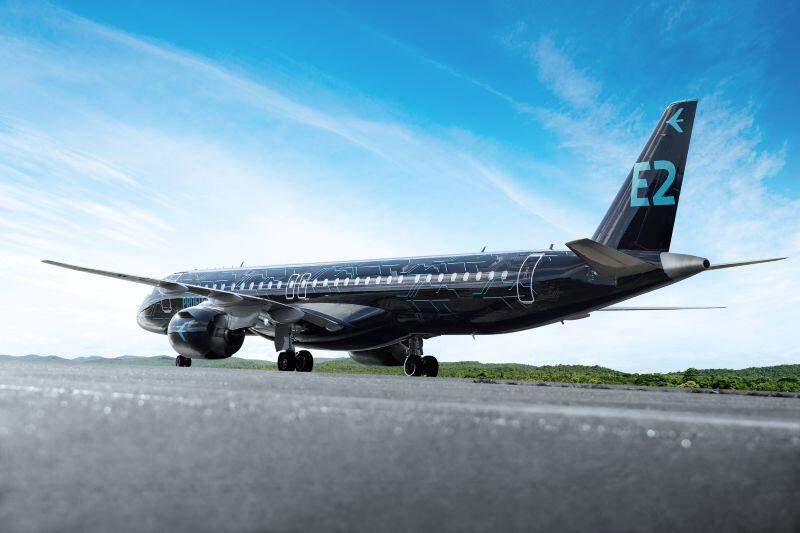
According to the forecast, the geographic distribution of these 8,500 orders is: North America 2,670 (31%), Europe and the CIS 1,870 (22%), China 1,470 (17%), Asia-Pacific 1,050 (13%), Latin America 740 (9%), Africa 370 (4%), and the Middle East 330 (4%).
Embraer believes that new economic growth regions and increasingly fragmented travel flows are the two main drivers of growth in the regional jet market. Arjan Meijer, President and CEO of Embraer Commercial Aviation, stated that the expansion of advanced manufacturing clusters and regional value chains is generating sustained demand for efficient, high-frequency connections between emerging economic centers. At the same time, travelers are increasingly seeking niche, unique destinations beyond traditional congested gateway cities. These forces are reshaping the geographic distribution of demand, requiring airlines to provide better connectivity across a broader and more diverse network of destinations. This necessitates moving away from relying solely on large, high-capacity jets, and a mixed fleet strategy is crucial for matching capacity with new and emerging passenger flows.
The forecast highlights new industrial developments driving above-normal growth in regional air transport. In Europe, the construction of gigafactories and other industrial projects is attracting supporting industrial ecosystems. As entire value chains concentrate around these emerging production hubs, the movement of executives, technicians, customers, investors, and service providers intensifies, generating sustained demand for air connectivity.
A typical example is the Northvolt gigafactory investment in Skellefteå, northern Sweden, which began battery production in 2021, making northern Sweden one of the fastest-growing industrial regions in Europe. The scale of investment has transformed Skellefteå and strengthened economic activity in neighboring cities like Umeå and Luleå. Between 2021 and 2026, the number of flights in Skellefteå is estimated to grow by an average of 12% annually, Umeå by 11%, and Luleå by 10%.
The Hungarian government has designated the city of Debrecen as a future European center for electric vehicle and battery manufacturing. A new factory investment of €2 billion ($2.3 billion) by German automaker BMW serves as a cornerstone investment, attracting numerous suppliers and battery manufacturers. To accommodate air travel growth, Debrecen Airport is planning a new runway and terminal expansion. However, Embraer notes that airlines serving Debrecen are deploying larger aircraft instead of adding new flights, leading to a reduction in flight frequencies.
Embraer has long argued that developing and expanding new or thinner routes requires smaller aircraft than mainstream narrowbodies. Smaller jets have lower range costs and can operate more frequent flights. As economic activity becomes increasingly organized around regional growth engines, the demand for intra-regional air services is likely to expand.