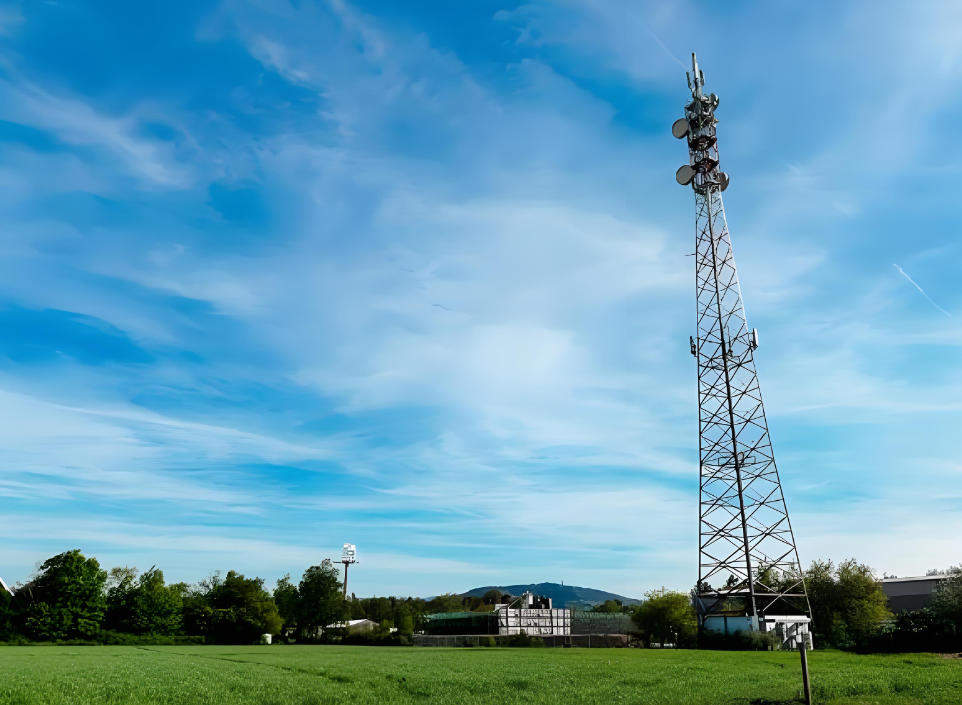
en.Wedoany.com Reported - China Unicom Beijing Branch and Huawei recently announced the launch of the world's largest 5G-A Gigabit Uplink (GigaUplink) commercial network. The network achieves continuous 100 MHz coverage in key areas of Beijing, with over 10,000 base stations deployed.

In a drive test involving seven invited third-party media representatives, the network demonstrated outstanding performance. Results showed a 100 MHz uplink effective ratio of 83%, with only 0.1% of cell edge weak coverage points (below 20 Mbps). China Unicom Beijing's premium network has evolved from citywide 5G-A deployment to regional gigabit uplink capability.
During the drive test, China Unicom Beijing utilized a coordinated network of 3.5 GHz and 2.1 GHz to evaluate large uplink network indicators and AI device service experience. Along a 34-kilometer test route, the network achieved a 100 MHz uplink effective ratio of 83%, peak uplink rate of 1 Gbps, average uplink rate of 397 Mbps, extreme uplink experience (above 300 Mbps) accounting for 72%, and a cell edge weak coverage point (below 20 Mbps) ratio of 0.1%. The uplink performance supported various in-vehicle mobile scenarios, including AI glasses, AI phones, and smart cameras, enabling millisecond-level transmission and real-time cloud interaction.
Miao Shouye, Senior Vice President of China Unicom, stated that with the emergence of new services such as AI phones, AI glasses, intelligent robots, industrial vision, and the low-altitude economy, mobile networks need to shift from focusing on "download speed" to simultaneously ensuring stable and precise real-time uplink transmission. Large uplink capability is becoming an important foundation for supporting real-time interaction in the AI era. David Li, President of Huawei Wireless TDD Product Line, pointed out that the "5G Capital" project has entered its sixth year. Huawei supports this network deployment through innovative 3.5 GHz and 2.1 GHz SUL (Supplementary Uplink) solutions, and will continue to innovate in technical directions such as multi-band pooling, uplink enhancement, and multi-dimensional coordination, helping China Unicom build a high-quality 5G-A network centered on user experience.